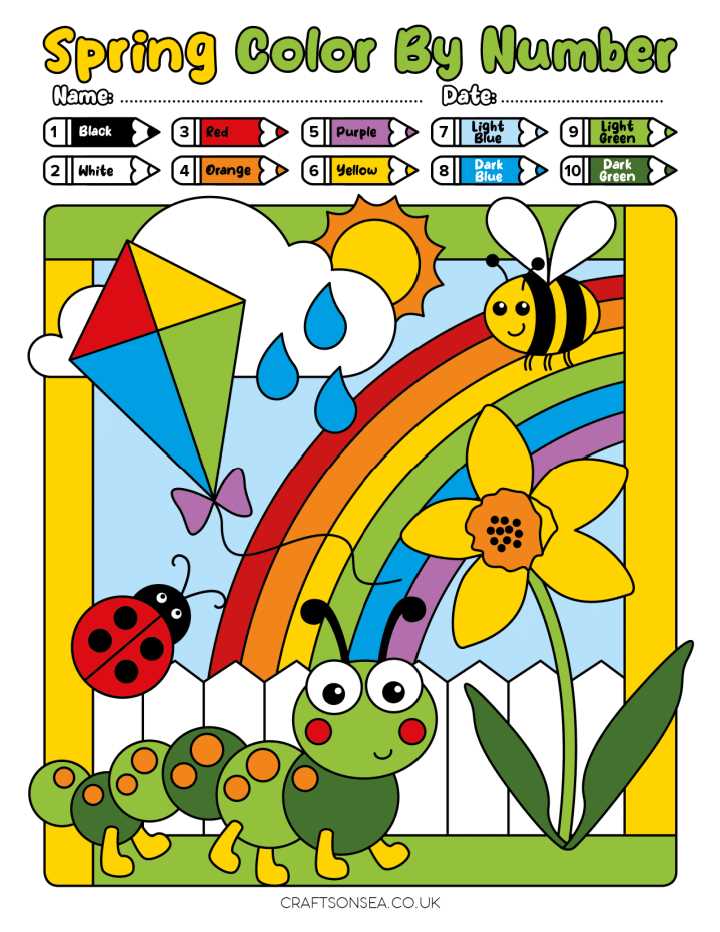
Choose themed paint-by-code worksheets with clear symbol legends and medium-complexity grids (25–40 cells) to keep children focused for at least 15–20 minutes without frustration. Files in PDF format with 300 DPI resolution produce sharper outlines on standard A4 paper, which reduces eye strain and prevents mistakes during filling.
High-quality activity sheets usually group shades into 6–10 distinct hues; this range helps young learners practice recognition without overwhelming them. Look for sets that include large-cell versions for ages 4–6 and denser mosaics for ages 7–9. This progression supports gradual skill growth in attention control and fine motor precision.
For home or classroom use, print on 90–120 gsm paper and provide wax crayons or broad-tip markers rather than thin pencils; thicker tools help children stay within boundaries more consistently. Worksheets featuring flowers, baby animals, and garden scenes tend to hold interest longer than abstract patterns, especially during March–May lesson blocks. Rotating new sheets every week maintains curiosity and prevents repetition fatigue.
Store finished pages in labeled folders or bind them into a themed booklet; this simple step gives children a visible record of progress and encourages completion of the next sheet. Teachers often report higher participation when each page includes a small preview image showing the final picture, so prioritize resources that provide this visual guide.
Spring Color by Number Printables: Practical Guide for Parents and Teachers
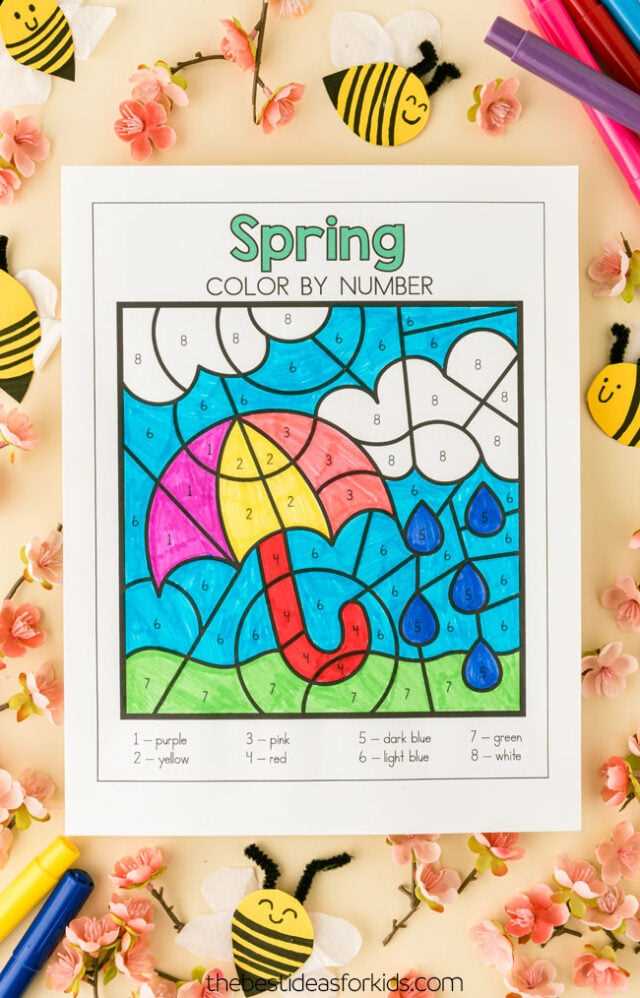
Choose activity sheets with clear coding keys and limited palettes for younger learners. Pages that use 4–6 shades help preschool and early primary students stay focused and avoid frustration. For children aged 6–8, select worksheets with up to 10 shade cues and smaller sections; this increases attention span and fine-motor control without overwhelming them.
Match each worksheet to a specific learning goal rather than using random themed pages. For example, use picture-coding tasks to reinforce arithmetic facts, letter recognition, or sight words. In classroom settings, align each sheet with the weekly objective so the activity supports measurable progress rather than serving as filler time.
Preparation matters more than many adults expect. Before handing out the pages, do the following:
- Pre-sort pencils or markers into small sets to prevent sharing delays.
- Circle the coding legend so children find it quickly.
- Model one section on the board to show how the key works.
- Provide scrap paper for testing shades.
Differentiate difficulty by adjusting three variables: section size, symbol complexity, and palette length. Learners who struggle benefit from larger shapes and simple digits, while advanced students respond better to mixed symbols (e.g., addition facts or letter blends). This approach allows one theme to serve mixed-ability groups without preparing entirely separate materials.
Use these sheets as structured stations rather than passive busywork. A productive rotation typically lasts 10–15 minutes and includes a clear finish rule such as “complete all areas labeled 1–5.” In home settings, pair the activity with a short goal: finish half the picture before a break. Timed sessions reduce fatigue and keep engagement steady.
After completion, extend learning with quick reflection tasks:
- Ask the child to count how many sections used each shade.
- Have students retell what the picture shows using full sentences.
- Display finished pages on a wall to reinforce pride in careful work.
- Store successful sheets in individual progress folders.
This turns a simple coded artwork into a repeatable teaching tool that supports math fluency, pencil control, and task persistence.
Where to Find Free Spring Color by Number Printables for Different Age Groups
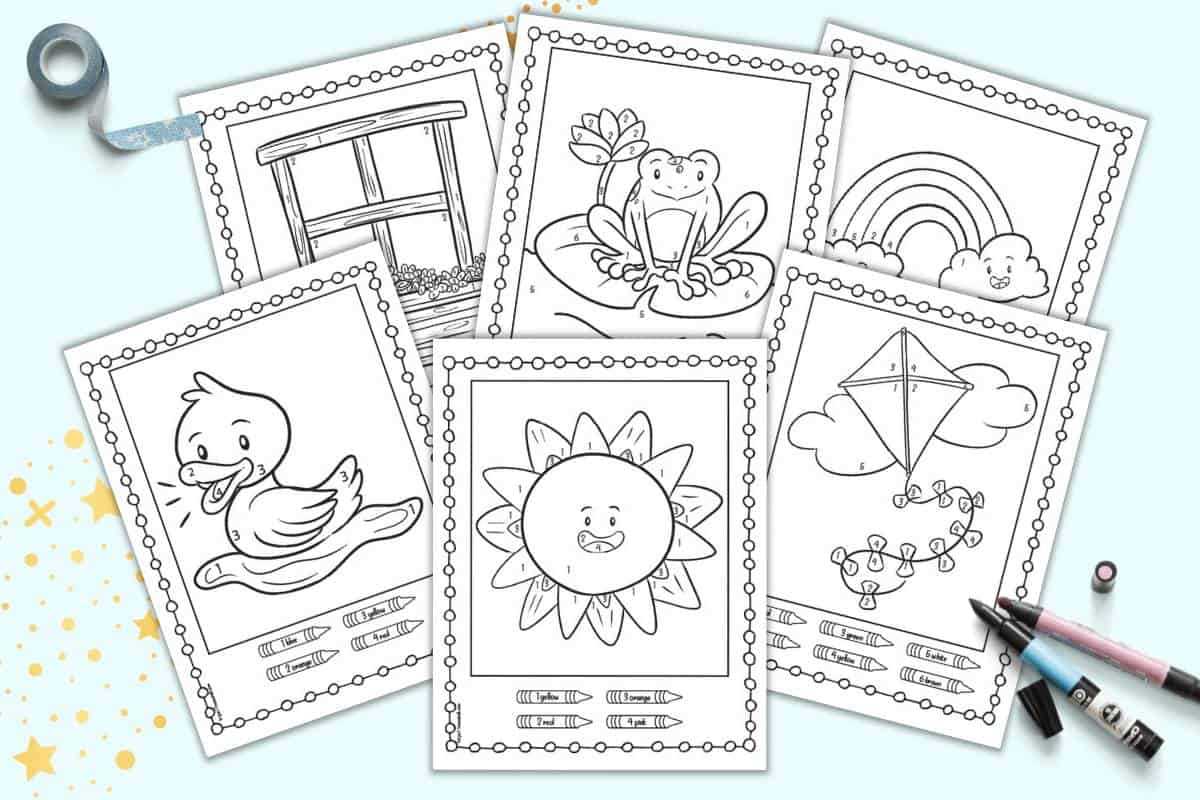
Check curated educational platforms first–sites like teachers’ resource hubs and homeschool libraries regularly publish free seasonal paint-by-code worksheets sorted by grade level. For preschoolers, search sections labeled “ages 3–5” where images use large shapes and palettes of 4–6 tones. Elementary students benefit from sheets with 8–12 shades and clearer legends, while tweens often prefer detailed scenes with 15+ tone keys.
Large printable repositories such as worksheet databases and parenting blogs frequently update their holiday and seasonal sections in March–May. Use precise search phrases like “flower paint code PDF age 6” or “garden mystery shading sheet teens” to filter out overly simple pages. Many of these libraries allow direct PDF download without sign-up, but some require free accounts to access higher-resolution files.
For younger children, prioritize early-learning sites that focus on fine motor practice. Look for pages that mention thick outlines, minimal tiny spaces, and single-digit legends. Good indicators of age-appropriateness include preview thumbnails showing bold shapes (butterflies, tulips, chicks) and file sizes under 1–2 MB, which usually means simplified artwork designed for beginners.
Older kids and adults often prefer more complex coded art. Craft blogs, printable marketplaces’ free sections, and art education forums frequently offer intricate sheets featuring gardens, rain scenes, and patterned eggs. When selecting, check whether the key uses addition/subtraction or only simple matching–math-based versions are better suited for ages 8+, while pure matching works for younger users.
Bookmark a few reliable sources and revisit them monthly, because many creators release new themed sheets each season. Building a small personal library organized by age (3–5, 6–8, 9–12, teen) saves time and prevents downloading duplicates. Prioritize PDFs labeled for standard US Letter or A4 format so they print cleanly without resizing.