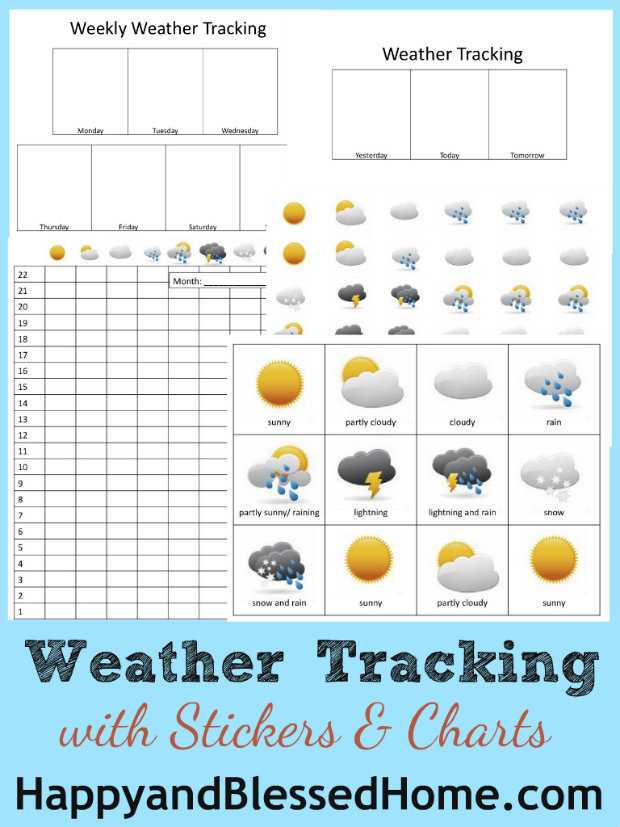
To introduce young children to the changing seasons and daily atmospheric conditions, use engaging visual aids. These resources allow students to connect with their surroundings, observe different patterns, and understand various types of conditions like sunny, rainy, cloudy, or snowy. Involving children in these learning exercises helps them identify and relate to the world outside the classroom.
Utilize activity sheets that feature simple images of different elements such as clouds, sun, raindrops, and snowflakes. These tools can spark conversations about temperature, dress code, and even the effects of weather on daily life. By incorporating activities like coloring, matching, or labeling, kids gain a more interactive and hands-on approach to understanding these topics.
Incorporating games and crafts that revolve around daily conditions enhances learning by making it fun. Use images that children can cut out and arrange to make weather scenes, or provide tracing exercises that help develop fine motor skills. This method of learning makes it easier for them to remember and connect ideas with real-world occurrences.
Engaging Activities for Learning About Different Conditions
Start by providing simple visual aids with images of sun, clouds, raindrops, and snowflakes. Let children color or label these pictures to help them associate the images with the corresponding conditions. This basic activity builds an initial understanding and is effective for younger learners.
Incorporate matching exercises where students match an image to a description. For example, a sun symbol with the word “hot” or a cloud with the word “cloudy.” This reinforces their ability to identify specific weather types and connect them with words.
Another helpful activity is a cut-and-paste worksheet where children create their own scenes. You can provide images of different elements, and they can cut them out to create scenes depicting a sunny day, rainy day, or snowstorm. This hands-on activity boosts both creativity and understanding of the subject matter.
For more advanced learners, try creating a weather chart that can be updated daily. Each child can mark the condition of the day with a symbol or color. This regular activity encourages observation and helps kids develop a routine for understanding daily changes in their environment.
Interactive games like “Weather Bingo” or “Weather Memory Match” can make learning more enjoyable. These games involve matching different icons to words, creating an exciting and competitive way for students to reinforce their knowledge.
How to Incorporate Weather Activities into Daily Lessons
Start each day with a quick activity that allows children to observe the conditions outside. You can use a simple chart where students check the outside environment and record what they observe, like sunny, cloudy, or rainy. This daily practice helps them develop an understanding of patterns and builds a connection with the changing environment around them.
Integrate related topics into different subject areas. For example, during circle time, have children discuss what clothes they might need for the day based on the outside conditions. Use drawings and visuals to connect the discussion to math, such as counting clouds or measuring temperature. These small, consistent interactions make learning about the outdoors part of their everyday routine.