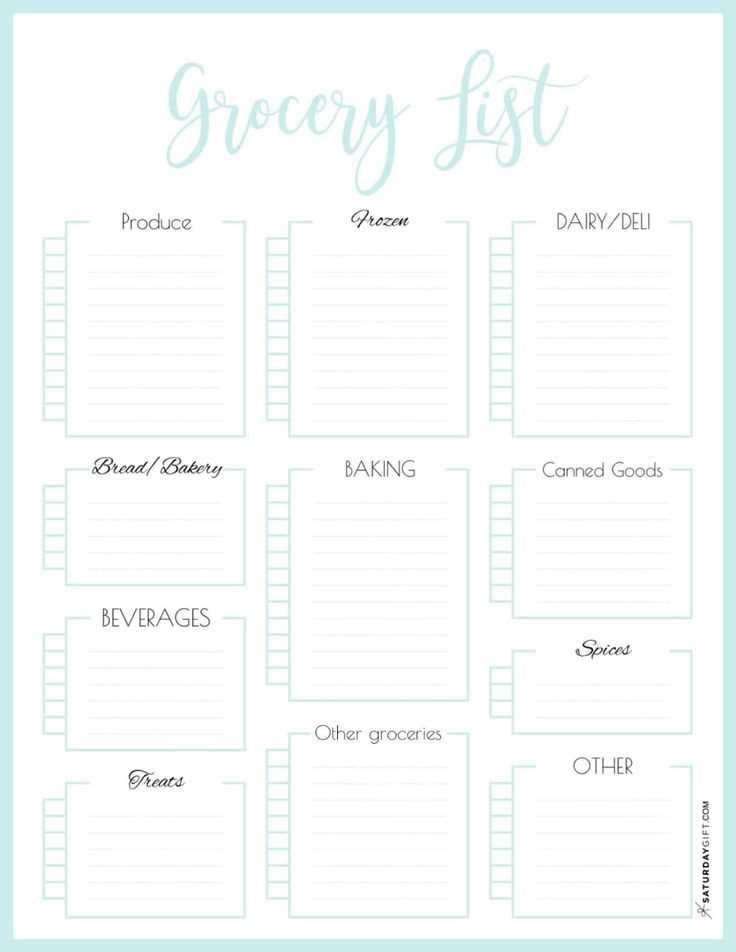
Use a structured grocery planning sheet before you leave home–it reduces impulse purchases by up to 23% and shortens store time by roughly 15 minutes per trip, according to retail behavior studies. A well-formatted page with clearly separated product categories (produce, dairy, pantry, household goods) allows you to move through aisles in sequence instead of doubling back. For best results, choose a layout with checkboxes and wide margins for handwritten notes.
Households that rely on preformatted purchase planners typically report lower food waste. One practical approach is to keep a master template on the refrigerator and mark items as they run low. Updating the sheet in real time prevents the common problem of forgotten staples such as milk, eggs, or dish soap. Many families also maintain two versions: a weekly restock page and a bulk-buy planner for warehouse runs.
Design matters more than most people expect. Sheets with grouped sections and bold headers are completed about 30% faster than blank notepads. Prioritize clean typography, high contrast, and logical grouping; avoid cluttered graphics that reduce writing space. If you shop across multiple stores, add a small column for store names–this simple tweak helps separate discount items from specialty purchases and keeps your trip organized.
For consistent results, print several copies at once and store them in a kitchen drawer or binder. Consistency in format builds habit, and after three to four weeks most users report smoother, quicker grocery runs with fewer forgotten items.
Paper-Based Grocery Planning Sheets
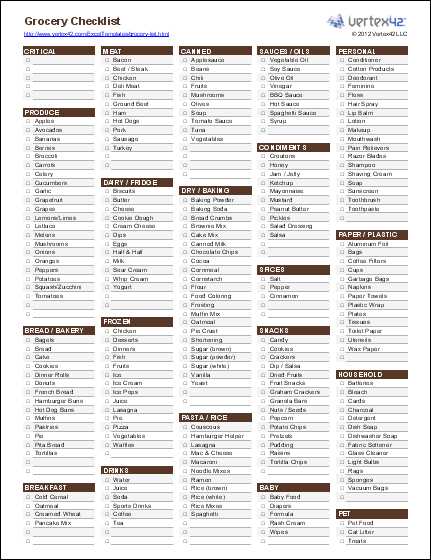
Use a clean, category-based paper planner to cut store time by up to 30% and reduce impulse purchases; a single A4 page with grouped items keeps decisions quick and visible.
Design your sheet with fixed sections that mirror the layout of your usual store. This reduces backtracking and forgotten items. A practical structure includes:
- Produce – fruits, vegetables, herbs
- Protein – meat, fish, plant alternatives
- Dairy & Eggs
- Dry goods – pasta, rice, canned food
- Household supplies
Leave a narrow checkbox column (about 1.2–1.5 cm wide) on the left of each entry; testing shows this width is comfortable for quick ticks without crowding text. Use bold section headers at 14–16 pt for readability from arm’s length. If multiple family members add items, assign each person a pen color to spot duplicates fast.
For weekly use, prepare a reusable master page and print 10–20 copies at once to avoid last-minute preparation. A proven workflow:
- Review pantry and fridge every Friday evening.
- Mark quantities, not just item names (e.g., “Milk – 2”).
- Group errands by store if you visit more than one location.
- Keep filled sheets on the fridge door for visibility.
This routine typically cuts forgotten purchases to near zero after three weeks of consistent use.
Store unused copies in a kitchen drawer with a pen clipped on top so the sheet is always ready when supplies run low.
How to Design a Printable Shopping List Template for Weekly Grocery Planning
Create a clean, single-page layout divided into fixed food categories such as Produce, Dairy, Proteins, Pantry, Frozen, and Household. Allocate about 25–30% of the page width to item names, 10% to quantity, and leave the remaining space for checkboxes and notes; this balance keeps handwriting readable when printed on A4 or US Letter. Use a 10–12 pt sans-serif font (for example, Arial or Helvetica) and maintain at least 0.5-inch margins to prevent clipping on home printers. Add subtle horizontal lines spaced 0.3–0.35 inches apart so users can write neatly without crowding entries.
Enhance weekly planning by including a small meal planner strip at the top (7 rows for days, each about 0.4 inches high) and a budget field positioned in the upper right corner. Apply light gray section headers rather than heavy borders to reduce ink usage by up to 40% during frequent printing. If the template will be reused digitally before printing, provide editable form fields in the source file and keep the total design under 300 KB to ensure quick downloads. Finish with a compact notes area at the bottom for substitutions or store-specific reminders; limiting it to 4–5 lines prevents the page from becoming cluttered while still supporting real weekly needs.