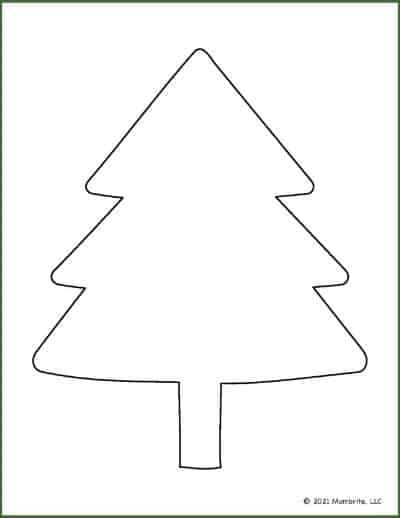
Download a clean geometric fir outline in A4 or US Letter size with bold 2–3 pt contour lines to ensure sharp cutting and easy tracing on cardstock. Choose a version with a clear central axis for symmetry and a base width of 12–15 cm for small crafts or 20–25 cm for wall décor. Provide both solid and dashed cutting guides to support scissors practice in early grades.
Select files in PDF format at 300 DPI to avoid pixelation during scaling. Offer three size ratios–1:1 (compact), 3:4 (standard wall piece), and 1:2 (tall, narrow silhouette)–so teachers can match desk space or bulletin boards. Add a faint grid (5 mm) on one variation to help students practice measuring and aligning decorative elements.
Include layered options: a plain outline for free decoration, a segmented version divided into horizontal tiers for color-blocking, and a numbered variant for sequencing tasks. Provide black-and-white masters to save ink, plus a light gray fill edition for younger learners who need clearer shape perception.
Recommend printing on 160–220 gsm paper for durability, especially if glue, glitter, or foil accents will be applied. For reusable classroom sets, laminate the sheets (80–125 micron pouches) and use dry-erase markers to add ornaments or math labels. Keep margins at least 10 mm to prevent edge trimming during standard printer calibration.
Offer complementary add-ons: small star toppers sized 3–5 cm, round ornament cutouts in 2–4 cm diameters, and rectangular “gift box” shapes for composition exercises. Provide a version with fold tabs at the base so the silhouette can stand upright on desks, turning a simple outline into a three-dimensional craft element.
Printable Triangle Christmas Tree Template for Crafts and Classroom Projects
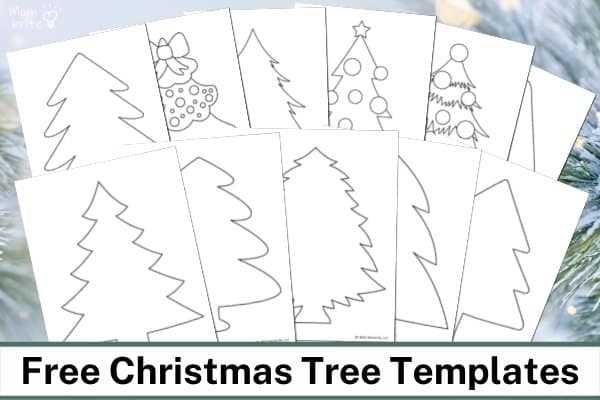
Choose a simple three-sided evergreen outline sized to fit A4 or US Letter paper and print it at 100% scale to maintain clean proportions for cutting. For preschool groups, use a bold contour line (2–3 pt stroke) and a height of 15–18 cm; for grades 1–3, increase height to 20–24 cm to allow space for math labels, spelling words, or pattern blocks inside the shape.
Use 160–200 gsm cardstock for stable results during glue-based activities and standard 80–100 gsm sheets for coloring tasks. If the design will be covered with paint, apply a light grey version of the outline to reduce visual distraction after drying. Provide pre-cut stacks for younger learners to save 5–7 minutes per session and reduce scissor errors.
Turn the geometric pine figure into a literacy tool by dividing it into horizontal bands and assigning one sight word per section. In math lessons, label each band with skip-counting sequences (2s, 5s, 10s) or fractions such as 1/2 and 1/3 to practice visual partitioning. For art integration, instruct students to fill each segment with a different texture: dots, cross-hatching, collage paper, or foil scraps.
Create layered wall displays by printing the outline in three graduated sizes (for example, 12 cm, 18 cm, and 24 cm tall). Mount the smallest shape on top using foam adhesive pads to add depth without complex cutting. Assign each size to a different classroom goal: personal resolutions, group rules, or seasonal vocabulary.
For time-managed craft stations, prepare kits containing one conifer silhouette, five 2×2 cm colored squares, a 10 cm strip of brown paper for the trunk, and a pre-cut star. Limit decoration time to 12 minutes and cleanup to 3 minutes; this structure keeps a 25-student class within a 30-minute block.
Store unused outlines in labeled envelopes sorted by size and paper weight. Reuse digital files by adjusting scale to 80%, 100%, or 120% depending on table space and project scope. Replace thin contour lines before reprinting to prevent fading after multiple photocopies.
How to Choose the Right Printable Triangle Christmas Tree Template Size and Format for Your Project
Select the pine-shaped outline size based on the final display area: use A4 or US Letter (8.5×11 in) for classroom crafts, A3 (11.7×16.5 in) for wall décor, and tiled multi-page layouts for posters wider than 24 inches. Measure the surface first and subtract at least 1 inch from each side to prevent trimming issues.
Match the height-to-base ratio of the conical silhouette to your purpose. A 1:1 ratio (equal height and base width) suits simple cut-and-paste activities, while a 3:2 ratio creates a taller festive fir look suitable for window displays. For layered garlands, choose three scaled versions at 100%, 75%, and 50% to maintain visual balance.
Choose vector PDF files for sharp edges at any scale; they allow resizing without pixelation and keep the angular sides crisp. Raster JPG or PNG files at 300 DPI work for small formats under 12 inches tall, but enlarging beyond 150% may blur the pointed apex and base line.
Consider paper weight before confirming dimensions. Standard 80–100 gsm sheets bend easily for folding crafts, while 160–200 gsm cardstock holds shape for freestanding cutouts. If adding glue, glitter, or layered ornaments, increase thickness to avoid warping.
Pick portrait orientation for single tall fir outlines and landscape orientation for wide banners composed of multiple conical shapes in a row. Check printer margin settings; most home devices leave 0.25–0.5 inch unprintable borders, which can crop the lower trunk area unless adjusted.
For young children, select simplified outlines with bold 3–5 mm stroke width to guide safe cutting. Detailed zigzag branch edges suit older students using precision scissors or craft knives. Provide versions with and without interior decoration lines depending on whether coloring or collage is planned.
Use black-and-white files for coloring projects and pre-colored green variants for quick assembly tasks. If ink usage matters, choose outlines with minimal fill areas; a fully shaded evergreen silhouette can consume up to 60% more toner than a line-only design.
Test print one sample at 100% scale before batch production, confirm measurements with a ruler, and verify that the pointed top and base align with your planned mounting surface. Adjust scaling in 5% increments rather than arbitrary resizing to maintain proportion accuracy.