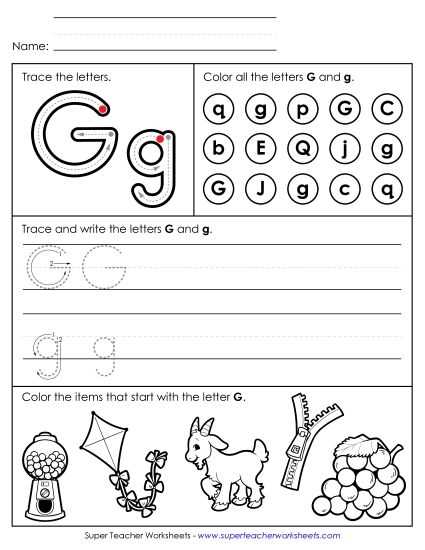
Choose high-contrast black-and-white worksheets with a large lowercase and uppercase “G” (at least 5–7 cm tall) for preschool learners who are just beginning to recognize shapes of the alphabet. Clear stroke direction arrows and numbered steps reduce confusion between similar forms such as “q” and “c.” For printing at home, set scaling to 100% and use A4 or US Letter paper with 90–120 gsm thickness to prevent ink bleed during tracing with markers.
Provide two distinct versions of the glyph: a simple sans-serif form for handwriting drills and a single-story variant for early phonics tasks. Many early readers struggle with the double-story lowercase form found in some fonts, so selecting a child-friendly typeface such as Comic Sans–style or basic manuscript fonts improves recognition speed. Include dotted outlines with 2–3 mm stroke width so children can trace accurately without visual clutter.
For phonemic awareness, integrate picture cues that clearly represent the hard /g/ sound–goat, grape, gift–placed directly beside the character to reinforce sound-symbol mapping. Limit each sheet to 4–6 images to avoid distraction. Add a short word list in large print (minimum 18–22 pt font) beneath the tracing area to connect writing practice with decoding skills.
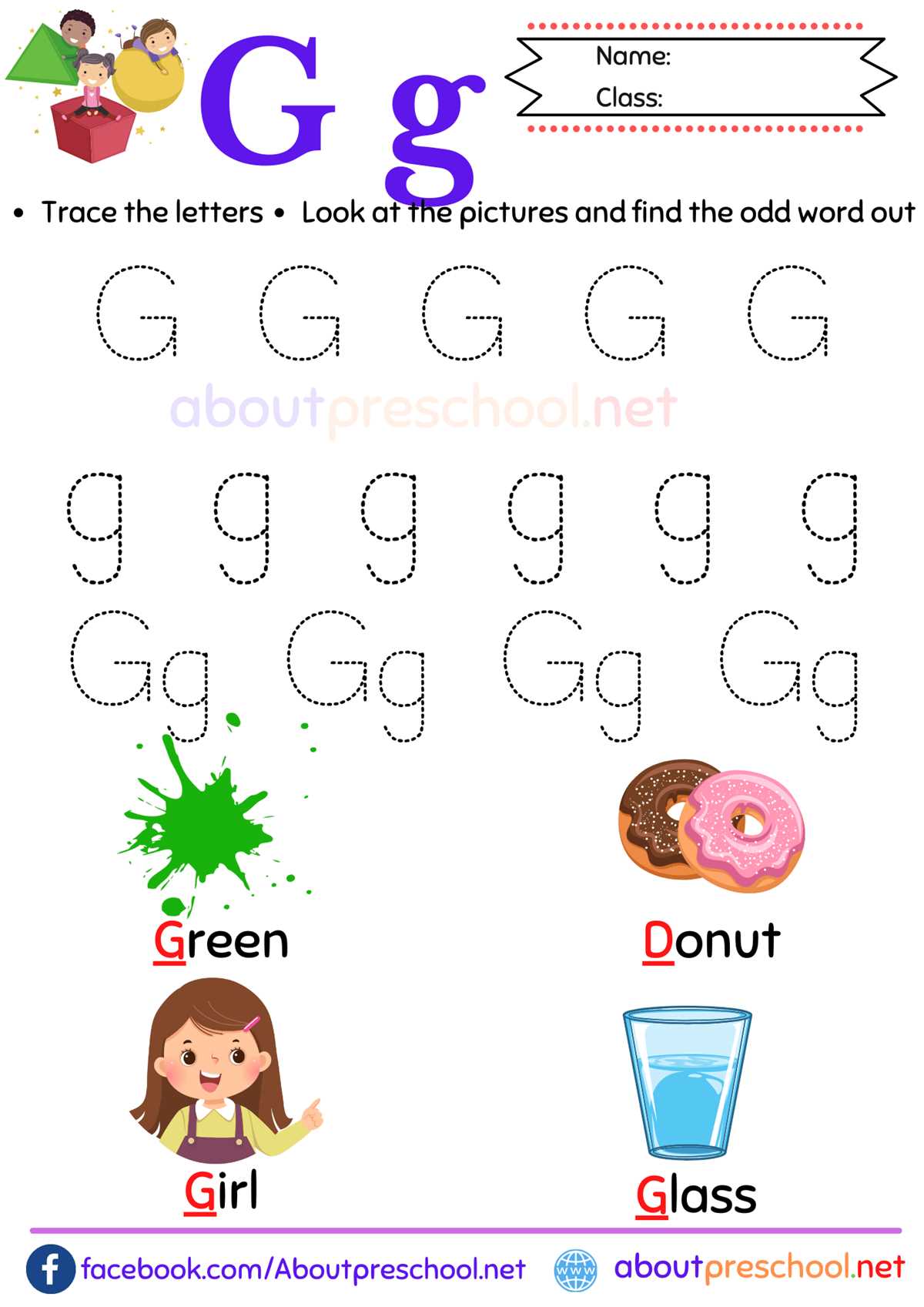
Use multi-level formats to match skill progression. Beginners benefit from full-page tracing lines with directional guides; intermediate learners need mid-sized outlines combined with three blank handwriting lines; advanced students should practice writing the symbol independently within ruled primary lines (with a 1:1:1 proportion for ascender, midline, and baseline). Consistent spacing of 1.2–1.5 cm between lines helps maintain proportion control.
In classroom settings, prepare both single-page drill sheets and cut-out craft templates shaped like the character for tactile reinforcement. Print craft versions on 160–200 gsm cardstock to withstand glue and collage materials. For reusable practice, laminate a bold outline page and pair it with dry-erase markers; this reduces paper usage and allows repeated motor training without reprinting.
Adjust layout depending on the teaching objective: portrait orientation suits vertical tracing exercises, while landscape orientation allows side-by-side comparison of uppercase and lowercase forms. Keep margins at least 1.5 cm to prevent trimming during printing. Store files in PDF format to preserve alignment and avoid font substitution issues across devices.
Combine tracing, coloring, and simple vocabulary tasks on separate sheets rather than crowding them together. Short, focused activities of 5–10 minutes per page maintain attention and support steady skill acquisition. Structured repetition across multiple formats–outline tracing, free writing, and word association–builds recognition accuracy and writing fluency.
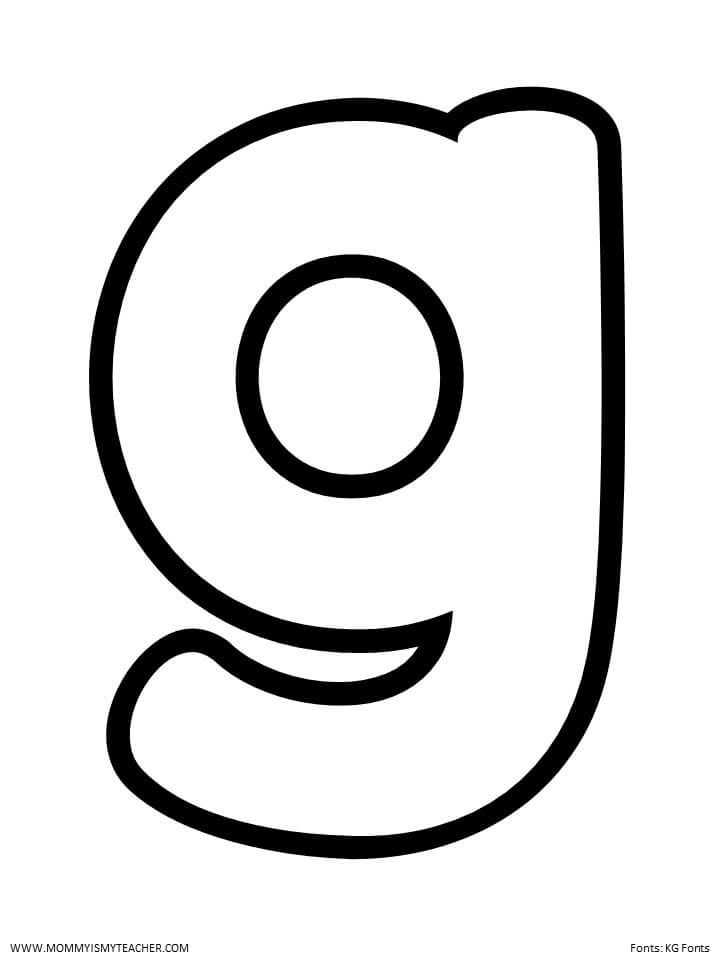
Prepare a small set of differentiated worksheets in advance: one with bold outlines for beginners, one with light gray guides for transition practice, and one blank handwriting sheet for mastery checks. Organized sets allow quick distribution during literacy blocks and targeted support for learners who confuse curved descenders or misplace the horizontal bar in uppercase “G.”
G Worksheets and Activity Pages
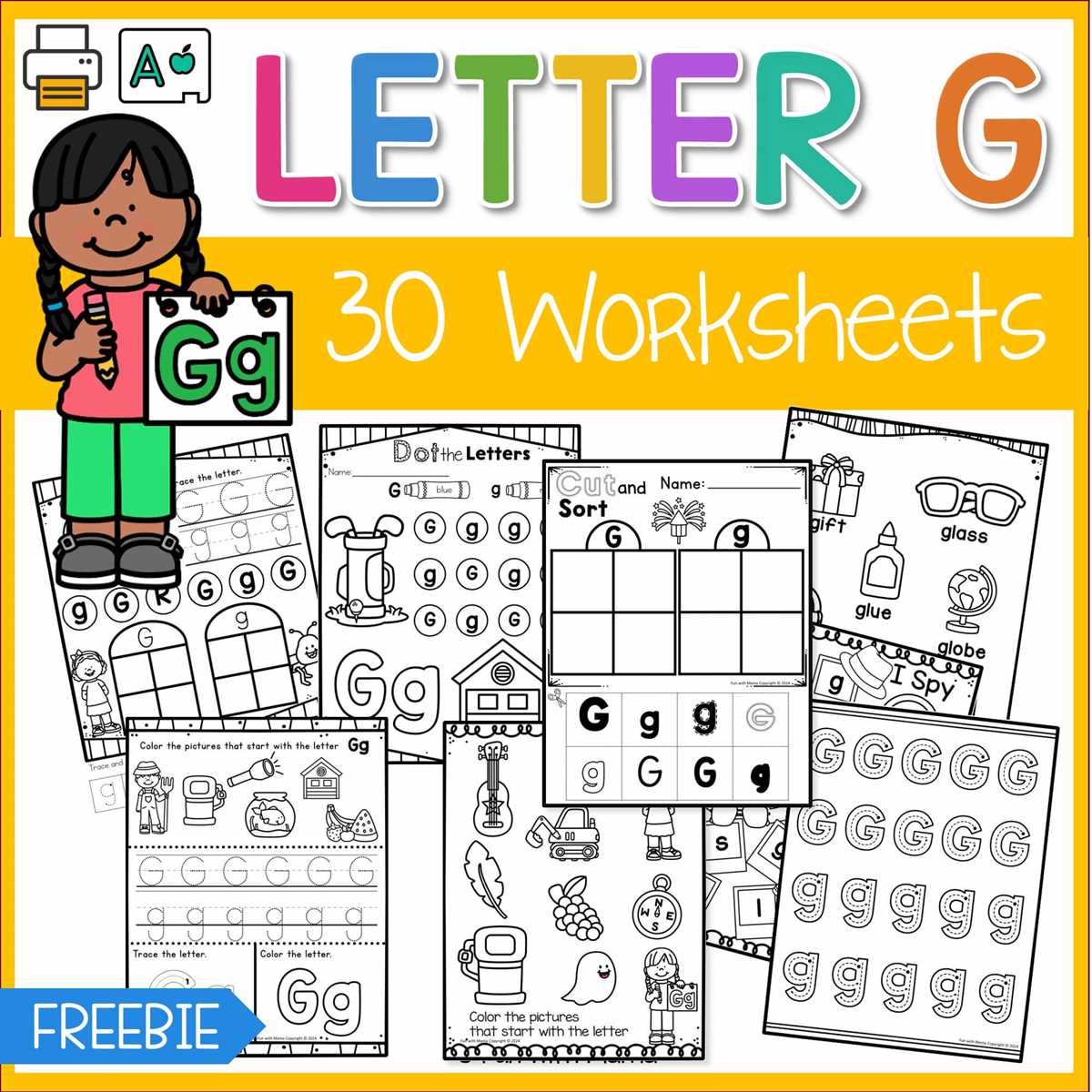
Begin with tracing sheets that feature uppercase and lowercase G on wide-ruled lines. These templates help learners develop consistent letter formation while maintaining proper spacing.
Incorporate coloring exercises where the character G appears inside simple images, such as grapes or a gorilla. Associating the glyph with familiar objects reinforces recognition and phonetic understanding.
Phonics-focused pages can pair the symbol with words starting with the corresponding sound. Matching games or fill-in-the-blank activities strengthen early reading skills while keeping practice engaging.
Cut-and-paste sheets allow children to arrange letter-shaped pieces into words. This tactile approach promotes fine motor coordination and visual discrimination simultaneously.
Dot-to-dot sheets featuring the shape of G offer a fun, interactive way to trace contours. Completing these connections improves hand-eye coordination and encourages attention to detail.
Mini flashcards for individual practice provide portability and repetition opportunities. Students can sort them into categories, spell simple words, or play recognition games independently or in small groups.
Maze activities that guide students along a path shaped like the character reinforce letter orientation. Integrating puzzles transforms rote practice into a stimulating challenge that supports memory retention.
Story prompts and worksheets that incorporate the character into short sentences or rhymes encourage writing practice. Children can illustrate their work, linking creative expression with literacy skills.