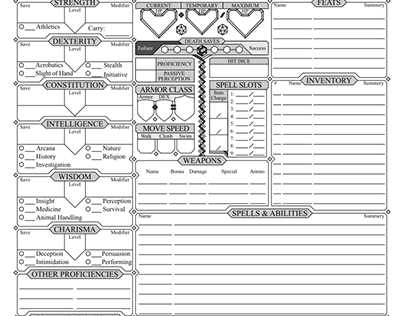
Choose a form with clear sections for ability scores, skills, and equipment to streamline session preparation. Layouts with separate blocks for spells and class features help track magical and martial abilities without confusion. Ensure the design includes a space for hit points and temporary modifiers to monitor health efficiently during encounters.
Prioritize sheets that offer dedicated columns for inventory, gold, and miscellaneous items. This allows players to manage resources at a glance and reduces table clutter. Forms that include areas for background, personality traits, and alignment provide a quick reference for roleplaying decisions.
Consider size and format when printing. Standard A4 or letter-size pages allow for legibility while leaving room for handwritten notes. Some versions feature compact layouts that fold into a booklet, ideal for on-the-go campaigns or crowded gaming tables.
Forms that integrate initiative trackers or combat notes sections can speed up encounter management. Using pre-drawn grids for spell slots and daily abilities ensures that players and Dungeon Masters maintain accurate records without constant recalculation.
Choose a design with clearly labeled headers and ample writing space. Boxes for proficiencies and class abilities help players identify strengths and weaknesses quickly, supporting tactical decision-making during combat and exploration.
Include areas for character progression, such as level milestones and experience points. Tracking advancement alongside equipment upgrades keeps the sheet functional across multiple sessions and long campaigns.
Forms that offer optional reference tables for conditions, combat actions, and common rules reduce the need to consult rulebooks constantly. Visual cues and icons improve readability and help new players familiarize themselves with mechanics more easily.
Ensure the design balances structured sections with freeform areas for notes. This flexibility allows personalization of backstory details, quest logs, and session-specific reminders, creating a practical tool that supports both gameplay and storytelling.
HTML Outline for a Role-Playing Statistics Form
Begin by defining clear sections for player identity, including name, race, class, and alignment, using structured HTML tables or divs for easy data entry.
Include an area for numerical attributes such as strength, dexterity, constitution, intelligence, wisdom, and charisma, ensuring each stat has labeled input fields or placeholders.
Design a segment for skill proficiencies and saving throws, allowing checkboxes or small input boxes next to each skill to mark trained abilities efficiently.
Allocate space for equipment and inventory listings with columns for item name, quantity, and notes, enabling quick reference during sessions.
Provide a section for hit points, armor class, speed, and other combat metrics, using distinct boxes or rows for clarity and readability in print form.
Add a narrative area for special abilities, spells, or background details, formatted as multi-line text areas to accommodate extensive descriptions.
Finalize the layout with footers for session notes, experience points, and additional remarks, ensuring the template remains compact yet complete for tabletop use.
Essential Sections to Include on a Blank DnD 5e Character Sheet
Include a detailed identity block with fields for name, race, class, background, alignment, and experience points. This area helps track fundamental traits and progression milestones, providing immediate reference for both players and dungeon masters.
Ability scores and modifiers should occupy a prominent section, alongside saving throws and proficiency bonuses. Organize this grid to allow quick calculations for attacks, skill checks, and spellcasting, ensuring smooth gameplay without frequent rulebook consultation.
Combat and equipment areas are critical, featuring hit points, armor class, initiative, speed, weapons, and inventory slots. Add spell slots and known spells for magic users, plus sections for features, traits, and notes to capture unique abilities and campaign-specific details efficiently.