Create a clear evacuation gear checklist on paper and keep it inside your emergency backpack. This simple step reduces packing mistakes and saves time during a fast departure. A well-structured sheet should cover water, food, medical supplies, documents, and basic tools needed for at least 72 hours away from home.
Focus first on quantities. Plan one gallon of water per person per day, plus high-calorie food that requires no cooking. Include a compact first-aid kit, flashlight with spare batteries, portable radio, multi-tool, and weather-appropriate clothing. Writing these items down in a structured format helps you verify weight and avoid overpacking.
Update the checklist every six months. Replace expired food, rotate medications, and adjust gear for seasonal conditions such as winter cold or summer heat. Keeping a printed reference inside your grab-and-go pack allows any family member to confirm readiness within minutes, without relying on a phone or internet access.
Printable Bug Out Bag List
Place a hard-copy gear checklist inside your emergency pack and review it before every season change. A physical sheet allows fast verification without relying on battery power or mobile coverage. Use clear categories such as water, food, medical supplies, documents, lighting, and tools so nothing is skipped during a hurried departure.
Set measurable quantities for each category. Plan at least one gallon of drinking water per person per day for three days, plus compact rations totaling 2,000–2,500 calories daily. Include a headlamp or flashlight with spare batteries, a basic trauma kit, hygiene items, and weather-appropriate clothing packed in waterproof pouches. Writing exact amounts prevents guesswork and keeps total weight within a manageable range of 15–25% of body weight.
Design the paper sheet with checkboxes and a date field. This allows quick visual confirmation and makes it easier for any household member to verify readiness. Laminate the page or store it in a zip pouch to protect it from moisture and wear during long storage periods.
Review and update supplies every six months. Rotate food before expiration, replace batteries annually, and adjust clothing for seasonal temperature swings. If medications are included, check refill dates monthly. Consistent updates keep the grab-and-go setup ready for real use rather than becoming outdated storage.
Store one copy of the checklist inside the pack and another with household records. This redundancy helps during repacking after training drills or partial use. A clearly structured paper reference reduces packing errors and supports faster departure during time-sensitive situations.
What to Include in a Printable Bug Out Bag Checklist for 72 Hour Survival
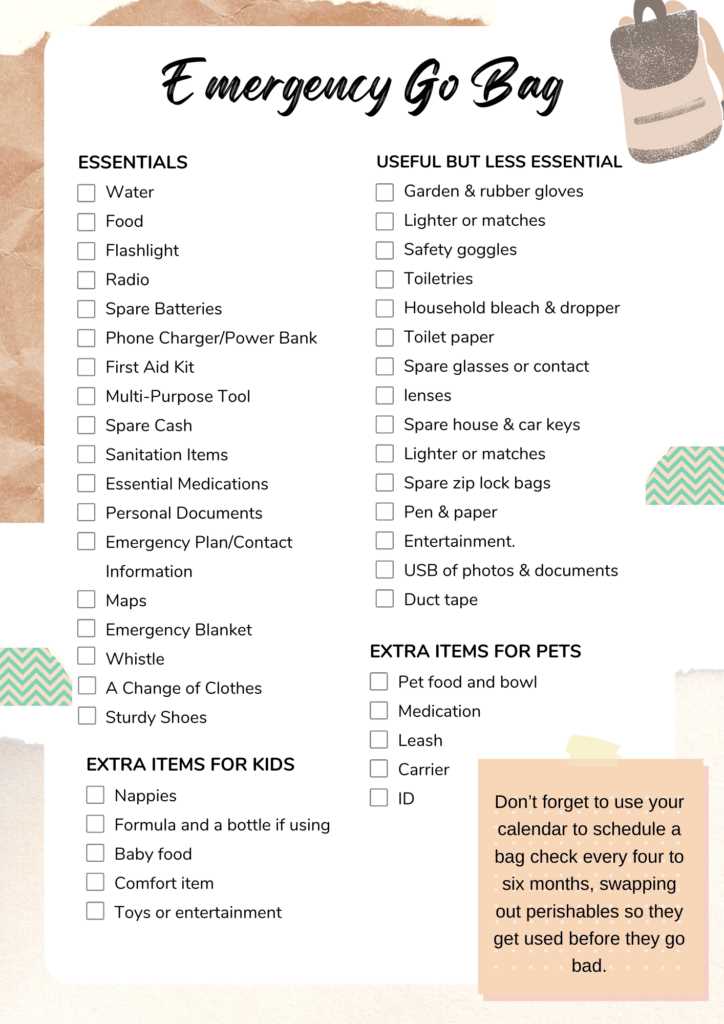
Pack at least three gallons of drinking water per person and verify the amount on your paper checklist. For a 72-hour window, the minimum target is one gallon per day. Add a compact water filter or purification tablets as backup in case stored supplies run low. Mark both primary and backup water sources on the sheet.
Include shelf-stable food totaling 6,000–7,500 calories per adult for three days. Choose high-density options such as energy bars, freeze-dried meals, nut butter packets, and electrolyte drink mixes. Record portion counts next to each item so restocking is quick and weight stays controlled.
Add a medical module with adhesive bandages, gauze, antiseptic wipes, pain relievers, blister treatment, and any personal prescriptions. A small trauma item such as a compression bandage or tourniquet should be packed in an easy-reach pocket. Note expiration dates directly on the paper reference to simplify routine checks.
Prepare lighting and power gear: one headlamp or flashlight per person, spare batteries in original packaging, and a small power bank with charging cable. Write battery sizes clearly to avoid confusion during replacement cycles. Many readiness failures happen due to dead power sources, so scheduled testing every six months should be noted on the sheet.
Include clothing matched to local weather. Pack moisture-wicking base layers, extra socks, a compact rain shell, gloves, and a knit cap. Compress items in waterproof sacks and record quantities so seasonal swaps are quick. In colder regions, add an emergency thermal blanket or lightweight sleeping cover rated for local night temperatures.
Finish the kit with documents and multipurpose tools. Store copies of identification, insurance papers, and emergency contacts in a sealed pouch. Add a multitool, lighter, duct tape roll, and 25–50 feet of paracord. Checking these items against a clearly structured paper reference keeps the 72-hour setup ready for fast deployment.