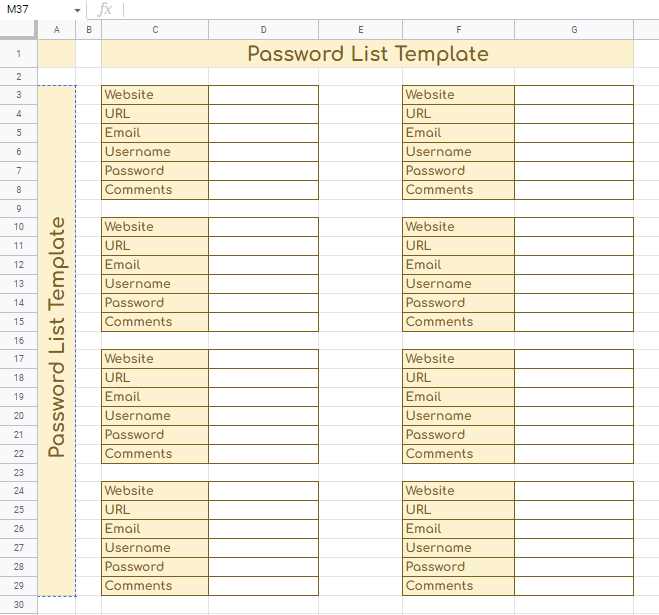
Keeping track of various login credentials can quickly become overwhelming. One of the easiest and most secure ways to manage your information is by creating a simple log sheet that allows you to record your usernames and passwords for all your online accounts in one organized location. This can save time, reduce the risk of forgetting important details, and provide peace of mind knowing your login credentials are stored in a secure and accessible format.
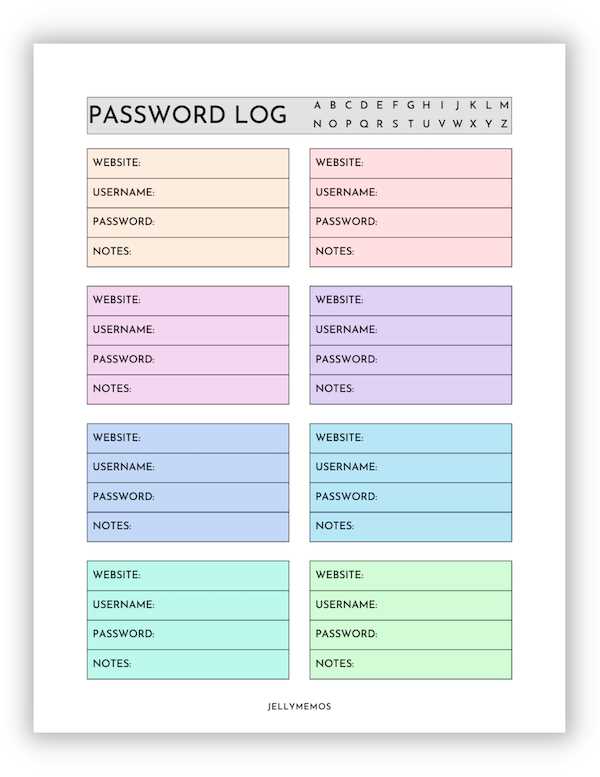
Start by organizing the document in a way that suits your needs. Include sections for the website, username, and password. Make sure to leave some space for notes, such as security questions or two-factor authentication codes, if applicable. Depending on your preferences, you can arrange the details alphabetically, by category, or any method that makes the most sense for your habits.
For added security, ensure that the sheet is stored in a safe place, such as a locked drawer or a password-protected document. Avoid saving this information digitally unless it’s encrypted. Consider printing the document out for easy access, but always ensure that it is securely stored to prevent unauthorized access. Regularly updating the document and deleting old or unused logins will also keep the information current and relevant.
Password Management Sheets
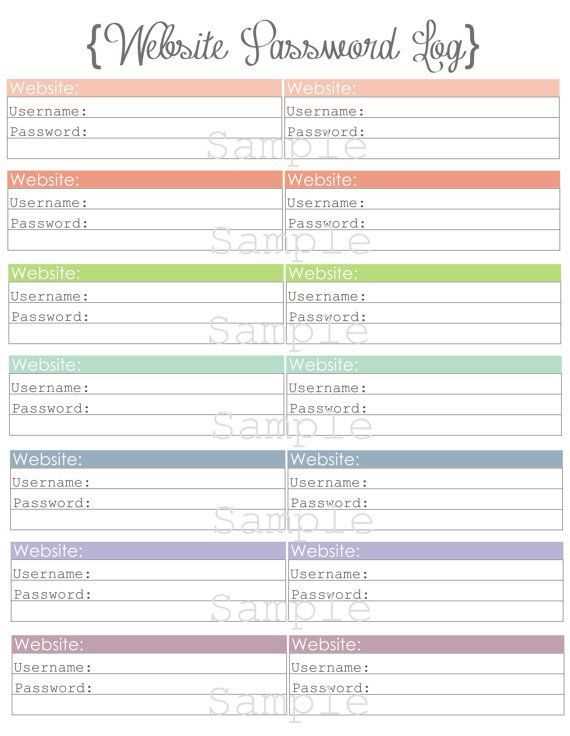
For effective organization, use a dedicated log to store your account access details. Create columns for the website name, username, security question answers, and any associated two-factor codes. This approach allows you to have everything in one place, minimizing the risk of forgetting login details. Keep the sheet up-to-date by removing outdated entries and adding new accounts as needed.
If you opt for a physical document, ensure that it is kept in a secure location, such as a locked drawer. For digital formats, choose encrypted files or password-protected documents. Cloud storage options with robust security measures can also be a good choice, but ensure that your master password is strong and unique.
Regularly reviewing and updating your log is a key practice. Whenever you create new accounts or change existing credentials, immediately add them to your log. This will prevent the frustration of searching for forgotten login details or losing access to accounts due to outdated information.
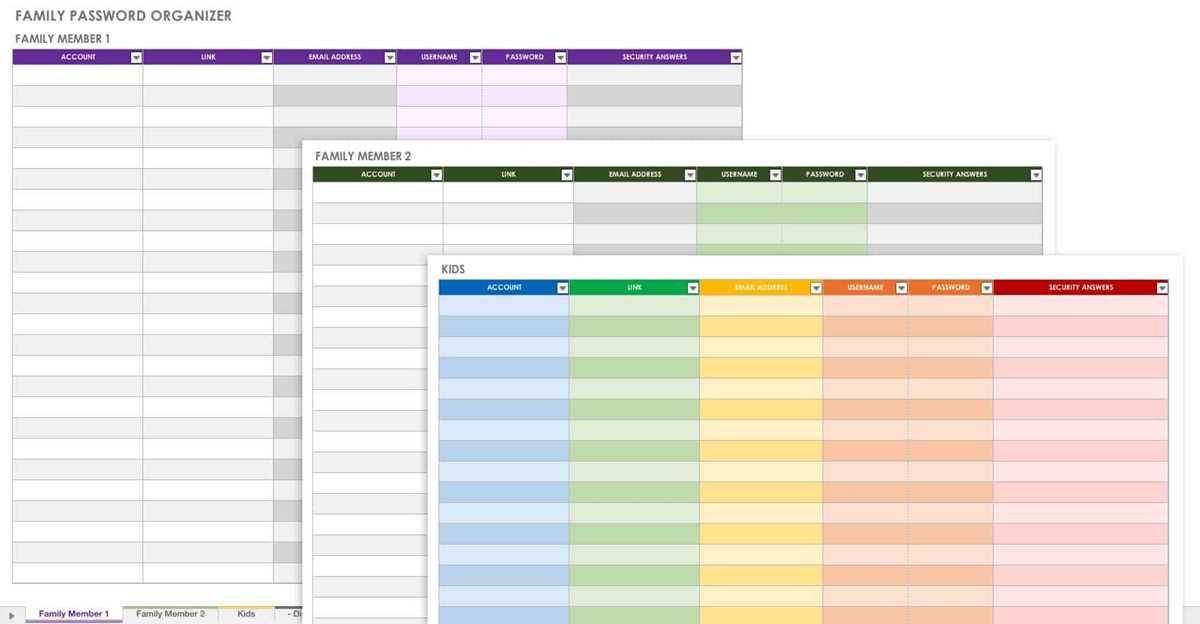
Consider dividing your log into categories to help further organize your information. For instance, you could group your entries by personal accounts, work-related sites, or subscription services. This structure makes it easier to navigate the log and ensures quicker access when needed.
How to Create and Customize Password Sheets
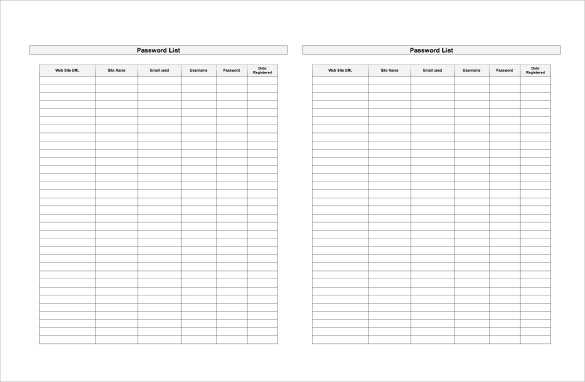
Begin by selecting the format that best suits your needs–whether physical or digital. For digital files, spreadsheets are an excellent option as they allow you to easily add, edit, and organize entries. If you prefer physical records, consider a table layout with distinct sections for website names, usernames, and other important details like recovery methods or two-factor authentication settings.
Next, determine the specific fields you want to include. Apart from the basic login information, think about adding security questions, the date of the last update, or the type of encryption used for sensitive accounts. A section for notes can also be helpful for any special instructions or additional details.
To ensure easy navigation, group your entries logically. For example, you might create separate sections for social media accounts, banking, work-related logins, and entertainment subscriptions. This will allow you to quickly find the information you need, reducing the time spent scrolling through a lengthy list.
If you’re working with a digital file, consider customizing the layout further by adding conditional formatting or color codes. For example, highlight entries that require updates or mark inactive accounts with a different color. This simple visual cue can help you stay organized without having to read through each line.
For additional security, use password-protected files or encrypted apps to store your document digitally. If you’re creating a physical log, ensure it’s stored in a safe place, such as a locked drawer or a fireproof safe. Do not leave the record in a vulnerable spot that could be easily accessed by others.
Finally, remember to review and update your log regularly. Whenever you create a new account or change an existing one, immediately update your log with the new details. This will help prevent the frustration of forgotten logins and maintain the security of your information over time.