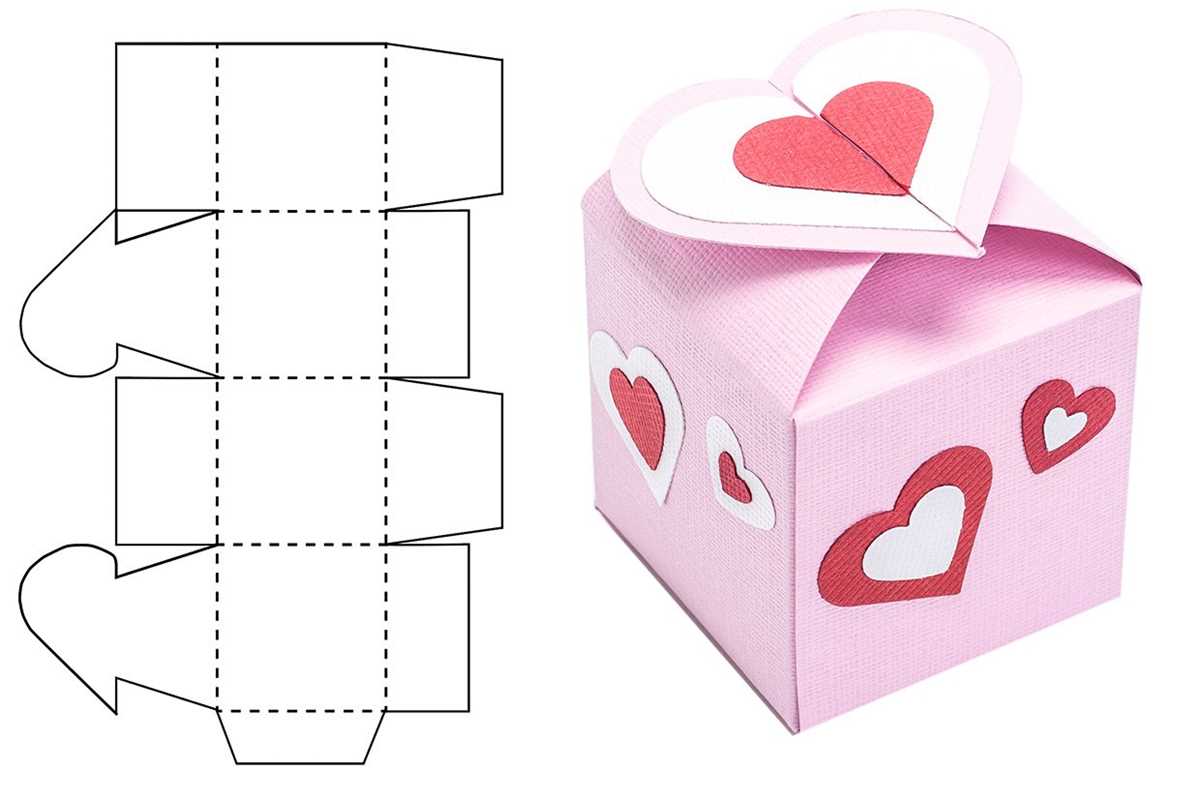
Download a high-resolution gift box layout in PDF at 300 DPI and print it at 100% scale to maintain accurate fold lines and edge alignment. Choose files formatted for A4 or US Letter with clearly marked cut guides and dashed score lines spaced at least 5 mm from the edges.
Select thicker paper between 160–220 gsm for sturdy packaging that holds small items such as jewelry, candies, or handmade soaps. Use a scoring tool or blunt knife along the fold marks before bending to achieve sharp corners and prevent cracking along printed lines.
Check the finished dimensions listed in the file description, for example 8 × 8 × 8 cm or 10 × 6 × 4 cm, to match the size of the item placed inside. Disable automatic scaling in printer settings and confirm margins are set to zero or minimum supported values to avoid misaligned tabs.
Gift Box Layout for Home Printing

Choose a box layout in PDF format with clearly marked cut lines, glue tabs of at least 10 mm, and dashed fold guides to ensure precise assembly. Set printer scaling to 100% and confirm the final dimensions, such as 9 × 9 × 9 cm, match the size of the item placed inside.
Use 180–220 gsm cardstock for rigid packaging that holds candles, cosmetics, or small accessories without bending. Score each fold with a ruler and blunt tool before bending to keep edges straight and corners sharp. Apply glue only on designated tabs and press for 20–30 seconds to secure joints without shifting alignment.
How to Choose the Right Gift Box Template Size for Your Item
Measure the item with a ruler and add 5–15 mm to each dimension to allow space for padding and easy closure. For rigid objects such as candles or jars, include extra height for the lid flap and adhesive tabs.
- Small jewelry or rings: box size around 5 × 5 × 3 cm
- Soap bars or compact cosmetics: 8 × 6 × 3 cm
- Mugs or candles in glass: 10 × 10 × 12 cm with reinforced base
- Scarves or soft textiles: rectangular layout 20 × 15 × 5 cm
Check the finished internal dimensions listed in the layout description rather than the flat sheet size. If the object has irregular edges, measure the widest and tallest points and test with a plain paper mockup before using thick cardstock to avoid material waste.