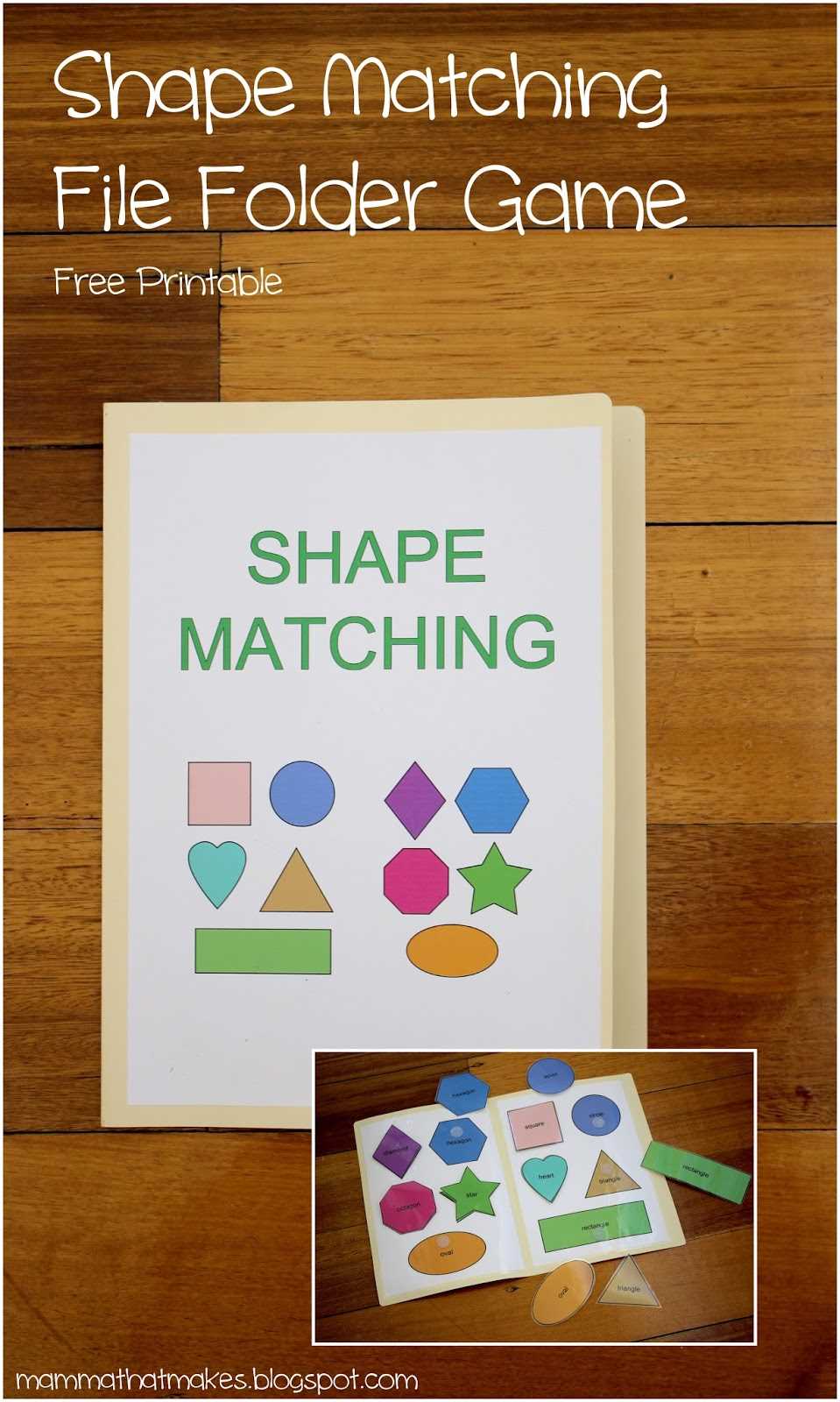
If you want to help children improve their recognition skills, start by creating activities that involve pairing different forms. These exercises can significantly enhance their cognitive abilities and motor coordination.
One of the best ways to do this is by using fun worksheets that provide a variety of figures for children to compare. You can use basic outlines like circles, squares, triangles, and other familiar objects, making it simple for kids to identify patterns and match them.
When designing these resources, make sure the complexity matches the child’s developmental stage. For younger children, use larger, bold images with plenty of space for them to focus. As they advance, introduce more intricate shapes and add challenges like color or size differences to keep them engaged.
Printable exercises are easy to access online and can be tailored to fit the age and learning level of the child. Many sites offer free downloadable templates that can be printed in various formats, from simple handouts to full-color worksheets.
By using these activities, children not only learn how to identify figures, but they also build their ability to think logically and problem-solve. As an added benefit, these tasks can be a fun way to break from regular lessons while still providing valuable learning moments.
Shape Recognition Activities for Kids
Start with simple activities that help children distinguish between different forms. For younger kids, choose basic figures such as circles, squares, and triangles. A good idea is to create a worksheet where they connect matching objects, such as pairing a circle with a similar circular object like a clock or a ball.
Introduce more complexity as the child’s skills progress. For example, try using irregular polygons or combining several forms into one activity, challenging the child to recognize multiple figures at once. Activities that mix different sizes and colors can keep the child engaged while offering a meaningful challenge.
Consider using a hands-on approach with physical cutouts. Children can manipulate the pieces, helping them better visualize how shapes fit together. Providing cutouts that need to be matched by color, type, or size adds an interactive element that enhances learning.
Use color-coded worksheets to differentiate between shapes or categories. For instance, you might use blue for circles, red for squares, and yellow for triangles. This visual cue helps children quickly grasp distinctions and makes it easier for them to make connections between objects.
For more advanced learners, combine matching exercises with pattern recognition. Add sequences of shapes and ask children to identify what comes next or to complete a pattern. These types of challenges promote critical thinking while reinforcing shape recognition.
If you want to extend learning beyond just recognition, introduce sorting activities. Have the child separate objects by category: round shapes, angular shapes, or even shapes with specific properties like equal sides or curved edges. Sorting activities teach categorization skills and encourage logical thinking.
- Basic recognition for younger children with clear, simple shapes
- Increasing complexity with irregular polygons and multiple forms
- Hands-on cutouts for physical interaction
- Color-coded tasks for quick visual differentiation
- Pattern and sequence challenges for advanced learners
- Sorting exercises to strengthen categorization skills
How to Create Custom Shape Recognition Sheets for Kids
Begin by selecting a set of basic designs. Start with simple geometric forms like circles, squares, triangles, and rectangles. These should be large enough for young children to clearly identify and compare.
Next, decide on the format for the activity. You can use a simple table layout where each row features two or three figures that need to be paired. Ensure there is enough space between the objects so children can easily draw lines or mark the correct pairings.
If you want to make the activity more engaging, consider adding color. Assign different colors to each form type, such as blue for circles and red for squares. This will not only help with recognition but also aid in visual categorization.
Introduce variations by mixing different sizes of each figure. This will encourage children to focus on the shape itself rather than relying solely on size. You can also rotate some shapes to make the task a bit more challenging.
Incorporate real-world examples by including illustrations of common objects that resemble the basic figures. For instance, you could add a wheel to represent a circle or a book to symbolize a rectangle. This makes the activity feel more relevant and fun for kids.
For more advanced tasks, include a sequence of shapes that children need to complete. You can design an activity where a specific pattern is broken, and children are asked to identify which form should come next.
To customize for various age levels, create separate sets with increasing difficulty. For younger children, keep the task simple with only two or three objects to match. As they progress, introduce more figures and require them to make connections between more complex patterns.
- Use basic designs like circles, squares, and triangles
- Incorporate color to enhance recognition and categorization
- Mix different sizes and rotations for added complexity
- Include real-world examples for more context
- Introduce patterns and sequences for advanced learners
- Create varying difficulty levels based on age