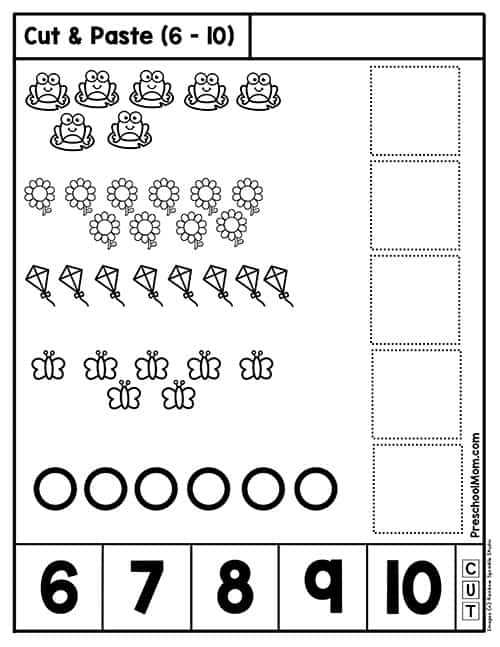
Start by designing engaging exercises that help children grasp basic number concepts. Use large, colorful images of objects and animals that they can count. Simple tasks like connecting groups of three apples or five stars will keep them focused and entertained.
Incorporating visual elements into these tasks is an excellent way to aid understanding. Instead of just numbers, combine pictures and diagrams that make learning feel more like play. This combination keeps the child’s attention and encourages them to enjoy the process of recognizing quantities.
Make sure to introduce variety. While some activities should focus on counting from one to ten, others can challenge children to recognize numbers in a different order or ask them to group items based on quantity. By rotating these different approaches, you ensure that kids are constantly learning in new ways.
Handmade worksheets are a simple yet effective way to create interactive exercises at home. You can find free resources online or customize them to suit the child’s learning pace. Print a new page each day to keep the content fresh and challenging.
These tasks not only support early math skills but also contribute to the development of fine motor skills. By practicing writing numbers, tracing dots, or drawing lines to match objects with their corresponding values, children get the hands-on practice they need to reinforce their learning.
Engaging Number Activities for Young Learners
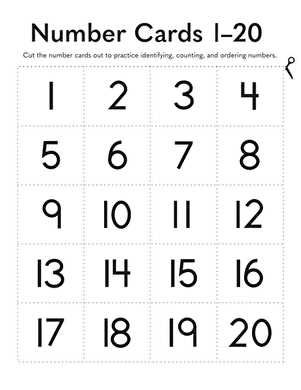
Design activities where children match groups of objects with corresponding numbers. For instance, use illustrations of fruits like apples or oranges and ask children to draw lines connecting the correct quantity to each image. This visual exercise helps solidify their understanding of numerical values and promotes active engagement.
Introduce games that involve simple addition or subtraction, using hands-on materials like buttons or blocks. Ask children to count out a specific number of objects, then add or remove one or two to show how numbers increase or decrease. This helps develop basic math skills while keeping them entertained. Try varying the complexity by increasing or decreasing the numbers as children become more comfortable with the concept.
How to Create Simple Number Worksheets for Beginners
Begin with clear and simple exercises that focus on identifying numbers. Use basic, bold numerals like 1, 2, and 3. Have children trace these numbers or circle the corresponding quantity of objects. This helps them recognize and write numbers while reinforcing the idea of quantity.
Next, design tasks where children match a number to a group of items. For example, provide pictures of three apples, two balls, and four stars, and ask kids to draw a line connecting each group to the correct number. This reinforces their understanding of numbers in relation to visual objects.
Keep the layout straightforward. Arrange objects in rows or columns to maintain a clean and organized worksheet. Avoid too many distractions and keep the design simple to ensure children focus on the task at hand without feeling overwhelmed.
For variety, introduce activities where kids count items and then color them. This adds a creative element to the task, making the learning experience more engaging. For example, they can count five flowers and color them, reinforcing both numerical recognition and fine motor skills.
Lastly, consider using themes children enjoy, such as animals, vehicles, or nature. Incorporating familiar and fun elements will keep them motivated. Choose simple, recognizable images that align with their interests to make the exercises more enjoyable and relevant to their learning experience.