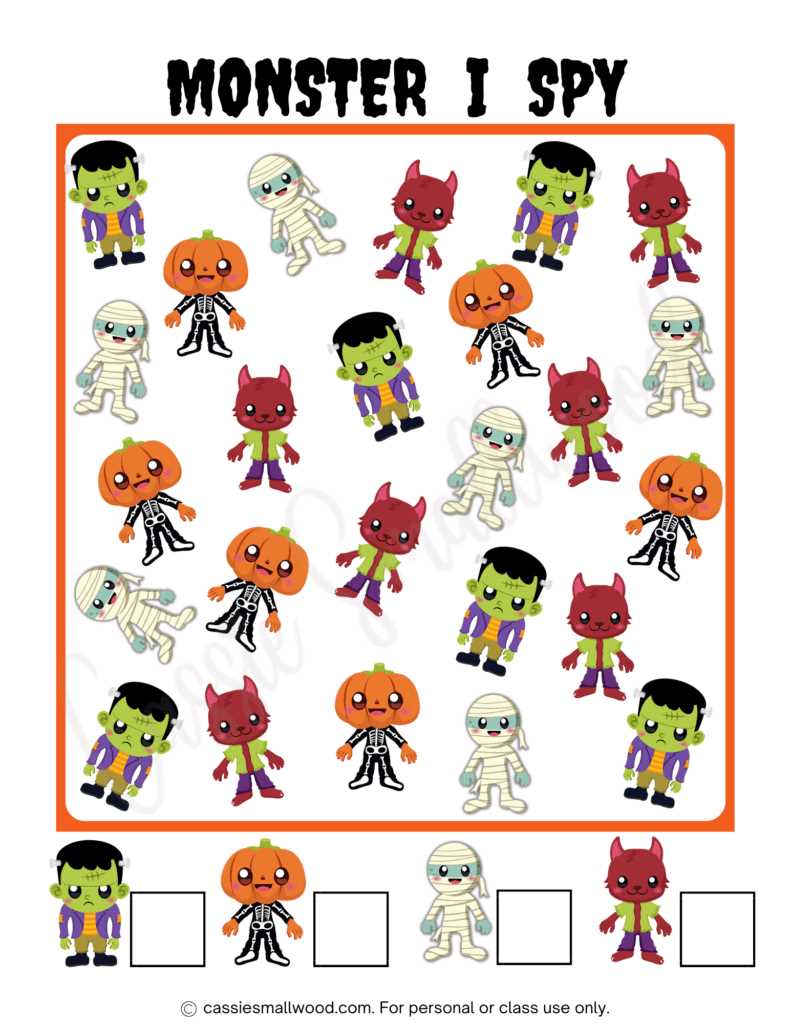
Download a high-resolution hidden object activity sheet formatted for A4 or US Letter and set your printer to “actual size” to keep counting boxes aligned. Choose files at 300 DPI to prevent blurred icons such as pumpkins, bats, and candy buckets after printing.
Select a themed seek-and-find game page that matches the child’s age. For ages 4–6, limit the grid to 15–20 large illustrations with clear outlines and provide a visual checklist instead of written words. For ages 7–9, increase the number of objects to 30–40 and add numeric answer boxes to practice counting accuracy.
Use standard 100–120 gsm paper for single-use party activities and 160 gsm cardstock for repeated classroom rotations. Laminating the sheet allows children to circle answers with dry-erase markers, reducing paper waste during group sessions.
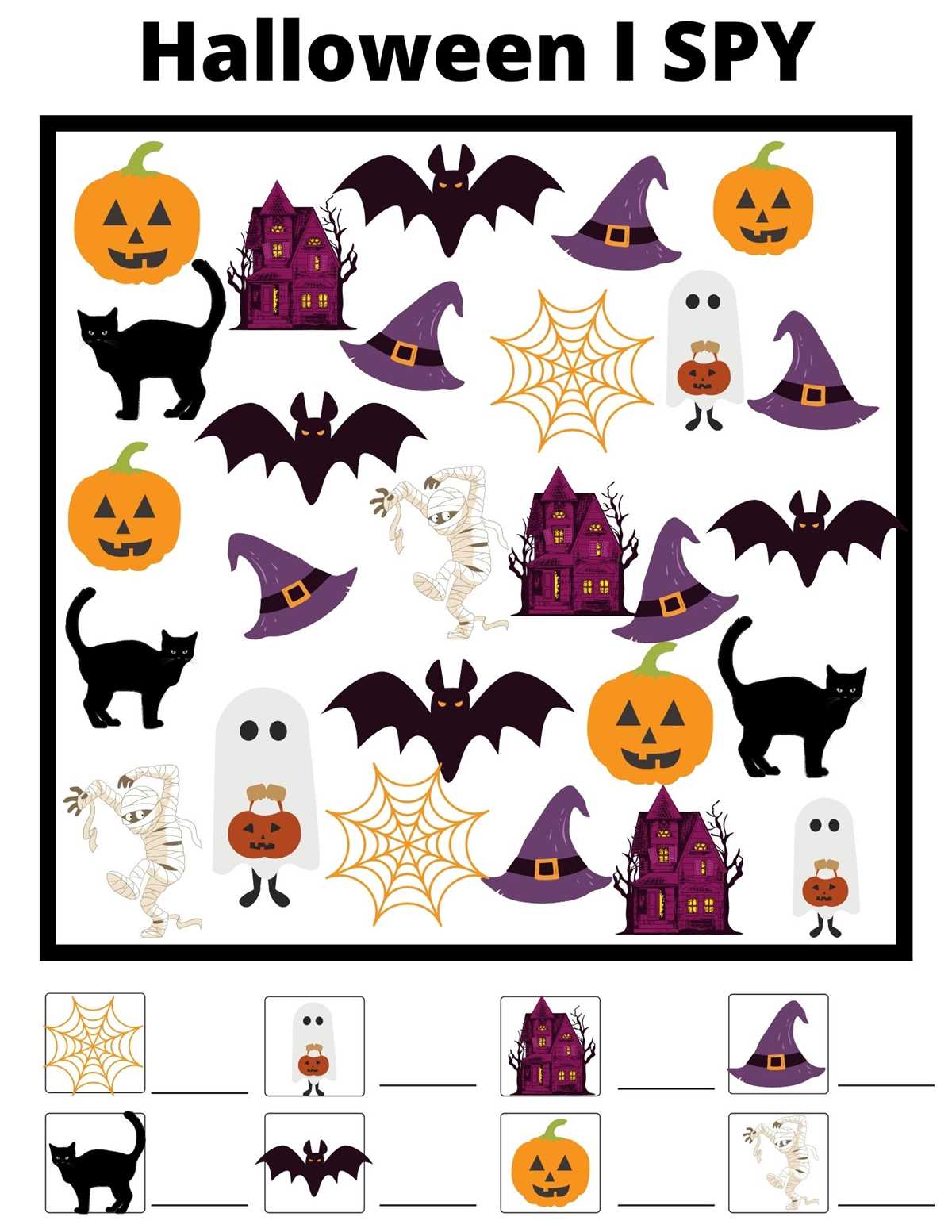
Incorporate structured tasks by setting a timer for 5–10 minutes and asking students to record totals independently before comparing results. Pair the search game with simple addition problems, such as combining the number of ghosts and witches found, to extend the activity beyond visual scanning.
Halloween I Spy Printable Guide for Kids Activities
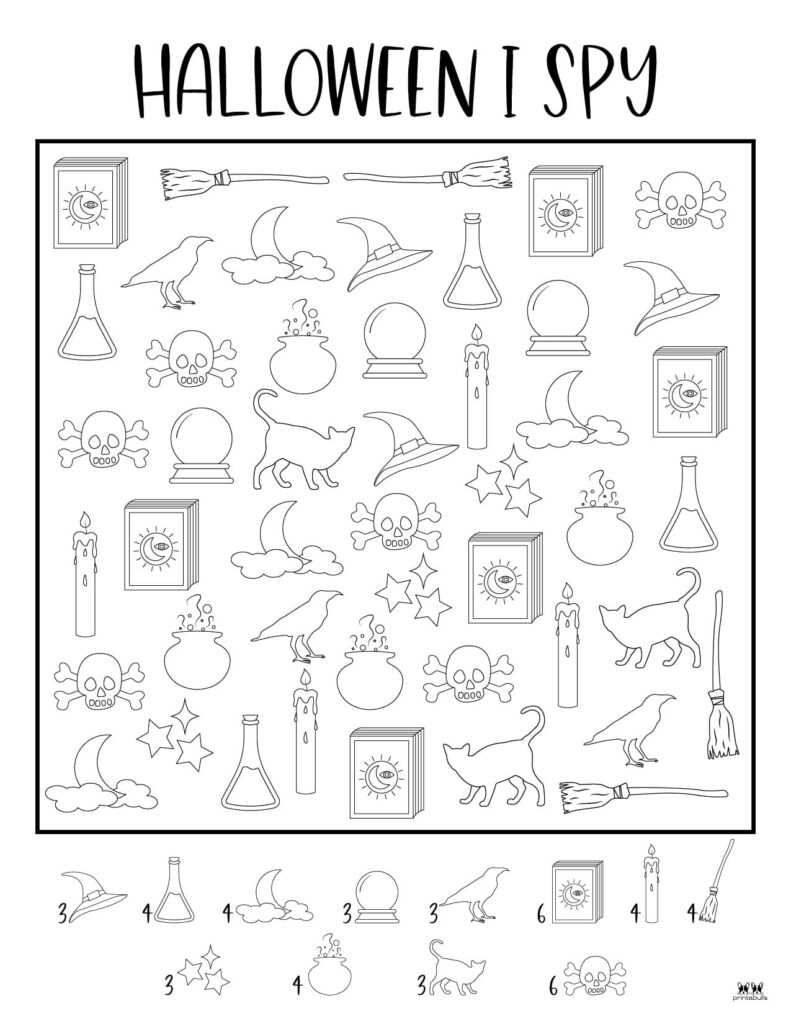
Choose a themed hidden object worksheet with 25–35 illustrations for mixed-age groups and set a fixed time limit of 7 minutes to keep children focused. Use versions that include both picture prompts and number boxes so students record totals rather than simply circling items.
Adjust difficulty by modifying visual density. For younger children, select pages with large icons spaced at least 1 cm apart and no overlapping graphics. For older students, use crowded layouts with rotated images, partial overlaps, and mirrored duplicates to increase attention demands. Print one answer key per five participants to speed up result checking during classroom sessions.
Extend the activity beyond visual search by adding structured follow-up tasks. Ask children to calculate the combined number of pumpkins and black cats, sort found objects into categories such as animals or decorations, or write a short sentence using three discovered items. Store laminated copies in labeled folders and reuse them with dry-erase markers to reduce paper consumption during seasonal events or themed learning days.
How to Choose the Right Halloween I Spy Printable for Preschool and Elementary Ages
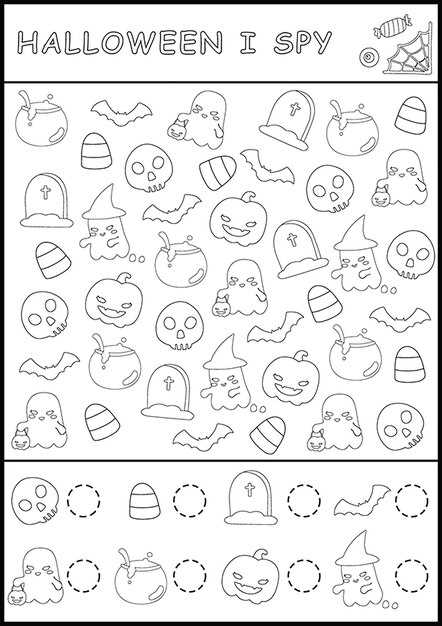
Select a themed seek-and-find worksheet based on object count, illustration size, and visual density rather than decorative style. For preschool groups, limit the page to 15–20 large images with clear spacing and bold outlines; for elementary students, increase complexity to 30–40 smaller items with overlapping elements.
- Ages 3–5: single-page layout, picture-based answer key, no text instructions longer than five words
- Ages 6–8: numbered answer boxes, mixed object sizes, simple written prompts
- Ages 9–10: crowded grids, rotated graphics, duplicate items placed in different orientations
Check technical specifications before downloading. Use files at 300 DPI for sharp details and choose PDF format to maintain scaling accuracy. Avoid compressed images under 1 MB for full-page prints, as small icons such as bats or candy pieces may blur. Print one test copy and confirm margins align correctly on A4 or US Letter paper.
- Match the object theme to the planned activity length, keeping sessions within 10 minutes for younger children and up to 20 minutes for older students
- Prepare one answer sheet per small group to speed up checking
- Consider laminating reusable copies for dry-erase markers during classroom rotations