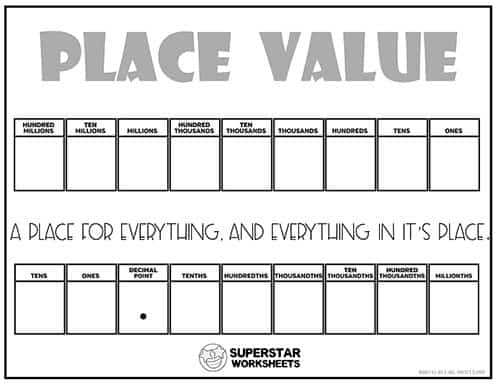
Start by using a well-organized grid that divides digits into their corresponding groups based on place order. For a clearer structure, ensure the first column represents ones, the second tens, the third hundreds, and so on. This organization helps students better comprehend large numbers by breaking them into more manageable parts.
To enhance learning, choose high-quality materials for printing. A clean, easy-to-read format makes it simpler for students to match each digit with its correct position. Consider using a large, bold font to improve readability, especially for younger learners or beginners.
For added functionality, color code the sections. Use different colors for each group of digits to create a visual distinction between units, tens, hundreds, etc. This method helps reinforce the concept and makes it easier for students to identify and differentiate between the various positions in a number.
Integrating this tool into lessons can be done in several ways. Use it for hands-on activities, such as writing numbers in their proper sections or practicing the decomposition of numbers. This interactive approach provides immediate feedback and reinforces the understanding of numerical structures.
Place Value Chart Guide for Effective Math Practice
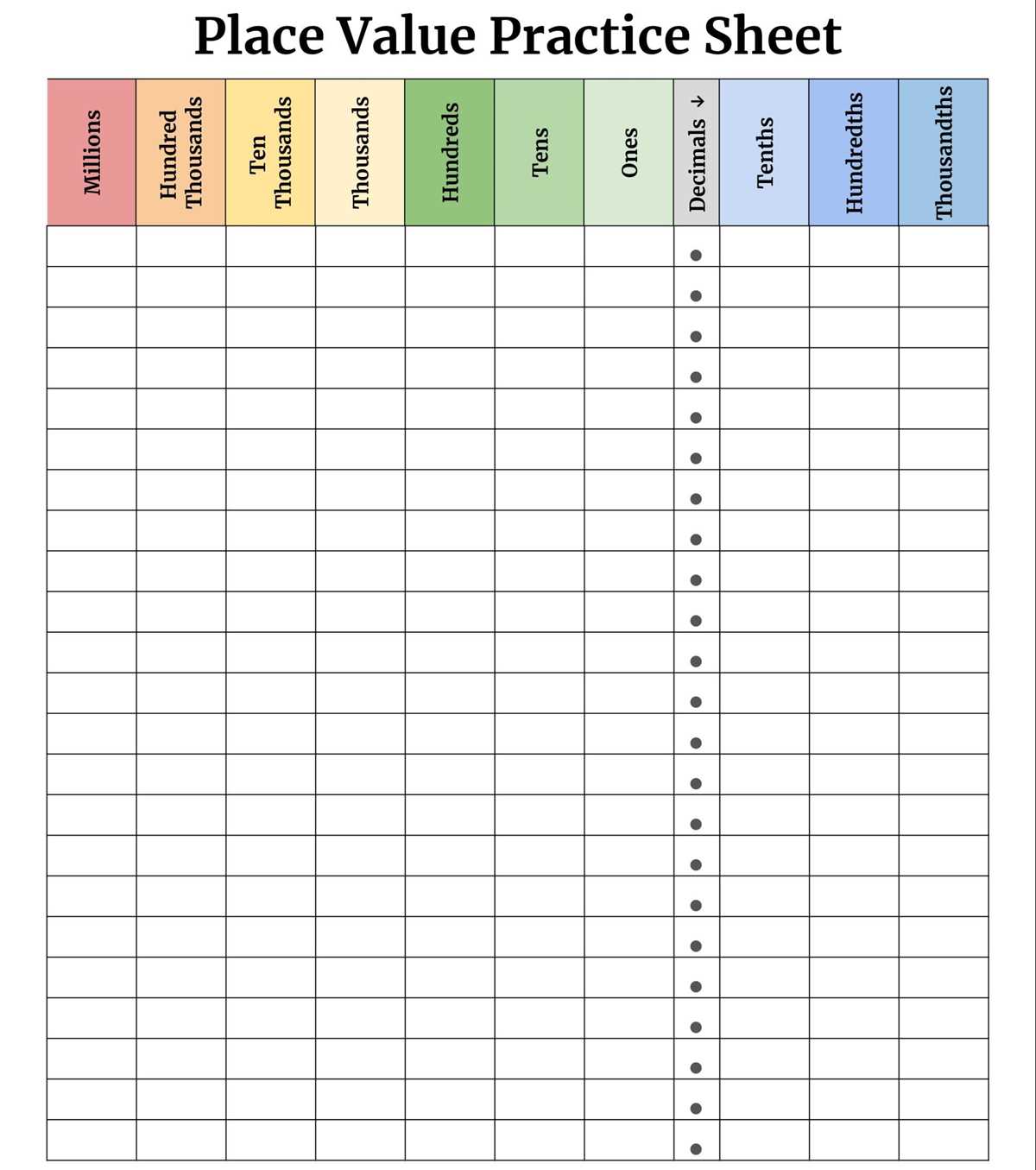
Start by ensuring that the grid structure aligns with the learning objectives. Use columns to separate each group of digits (ones, tens, hundreds, etc.) to clearly represent the decimal system. This helps students visually understand how numbers grow or shrink as they move across these positions.
Choose a design that is simple but functional. Avoid clutter and unnecessary decoration that might confuse learners. A clean and straightforward layout will help keep the focus on the numbers themselves, ensuring the tool serves its purpose without distractions.
Make sure to use a format that can easily be customized to fit different student needs. Some learners may benefit from a version with larger spaces between the sections, while others may need a version with more detailed labels for each group. Customizing the template can address varying skill levels.
For younger students or beginners, use a more visual approach. You can add pictures or symbols in each section to represent the digits, which helps to reinforce the connection between the numbers and their place in the system. This is particularly effective in the early stages of learning.
When using the tool, have students practice writing numbers in the correct positions. For example, give them a number like 346 and ask them to place it in the correct column. This simple exercise reinforces understanding of the number structure and allows for immediate practice.
Incorporate exercises that involve decomposing larger numbers into their respective parts. Ask students to break down numbers like 3,572 into 3,000 + 500 + 70 + 2. This reinforces the understanding of how each digit represents a different place in the number.
Use the grid as a tool for comparison as well. Have students compare numbers like 2,350 and 2,400 by asking which has the greater value. This helps students identify which digits are most important and how they impact the size of the number.
Finally, make sure to review and reinforce the concept regularly. Consistent use of the tool in various exercises helps students internalize the structure of numbers, building a solid foundation for future math lessons.
How to Choose the Right Tool for Different Ages
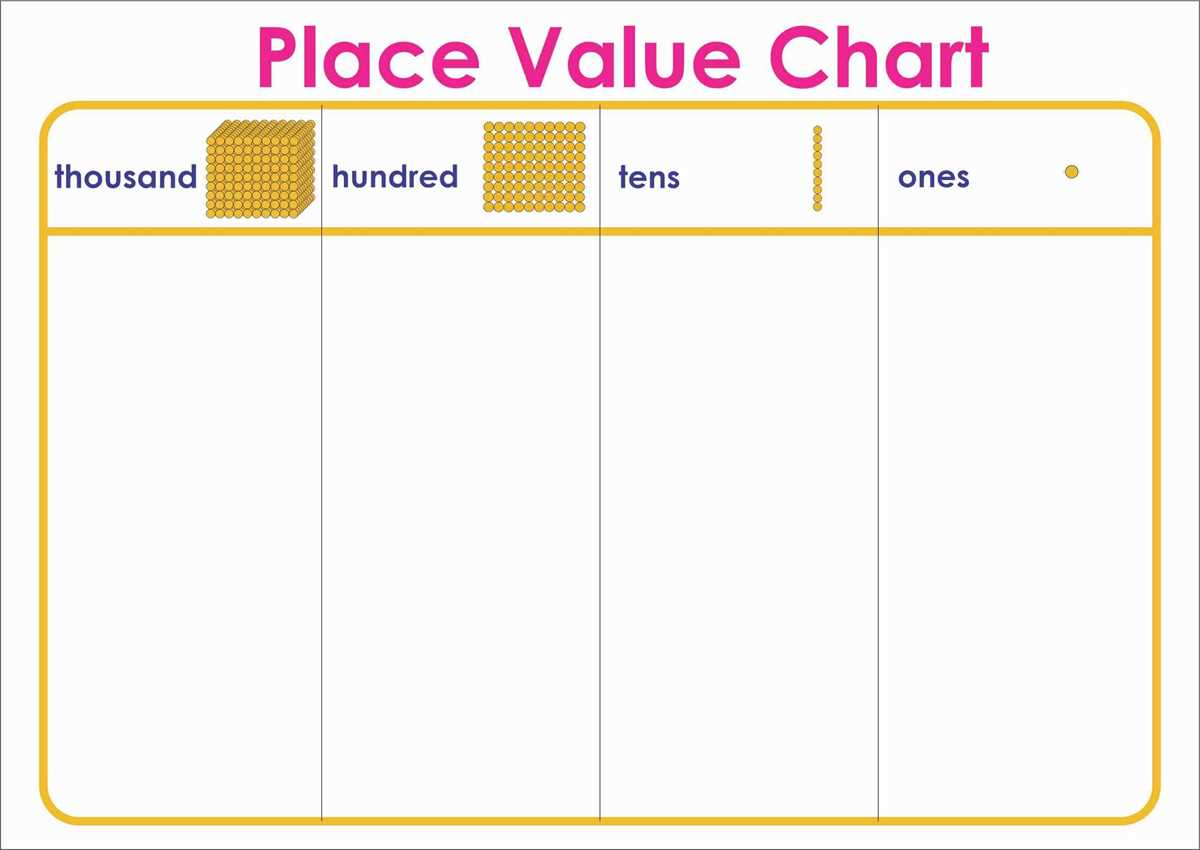
For younger children just starting to learn numbers, choose a version with large, clear spaces to help them focus on individual digits. Keep the design simple with minimal text or decoration, as this allows them to focus solely on the numbers and their positions.
For elementary students, consider adding more complexity. You can introduce columns for tens, hundreds, and thousands, along with smaller text for labeling. This helps students visualize the decimal system and learn to handle larger numbers as they progress.
Middle school learners can benefit from more detailed formats that include fractions or decimals. A grid with additional rows or columns for these concepts can help them understand how numbers are broken down into smaller parts, especially when working with more advanced mathematical problems.
Older students may need a more sophisticated version that includes not only whole numbers but also scientific notation or expanded notation. This tool can assist in exploring how numbers can be represented in different ways, making it more versatile as their skills advance.
Another consideration is customization. Some learners might benefit from a version that uses color coding or symbols to help identify different sections of the number. This can aid in reinforcing concepts, especially for students who are visual learners or those who need extra support.
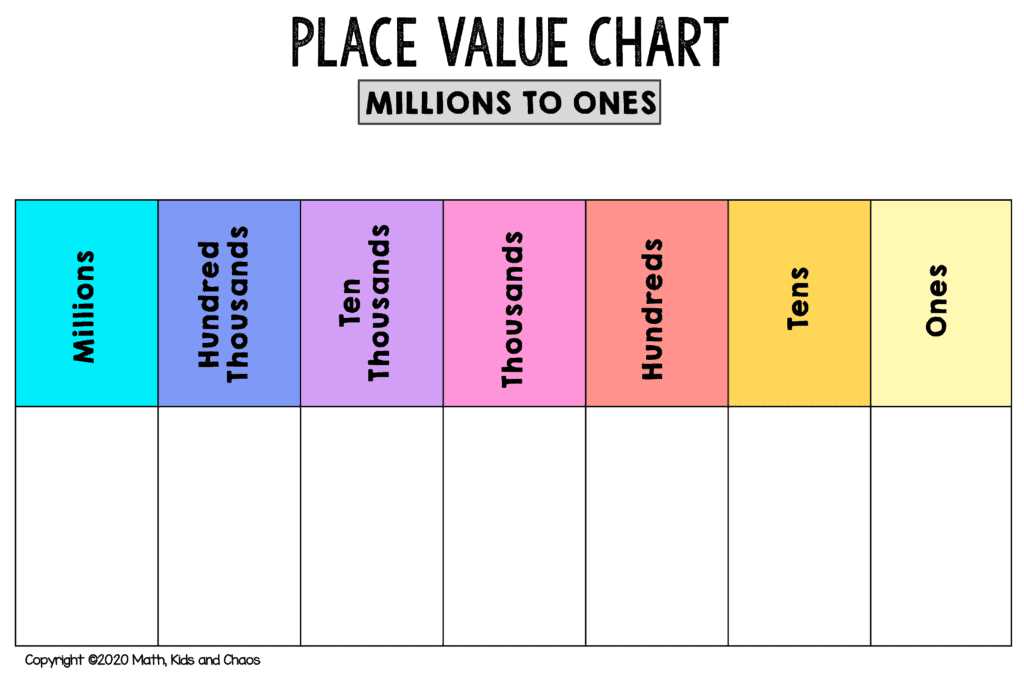
Lastly, choose a format that aligns with the specific learning goals of the student. For example, if the focus is on understanding number order, a simple tool will suffice. If you are teaching about number decomposition or comparisons, a more detailed grid with extra space for writing may be more effective.