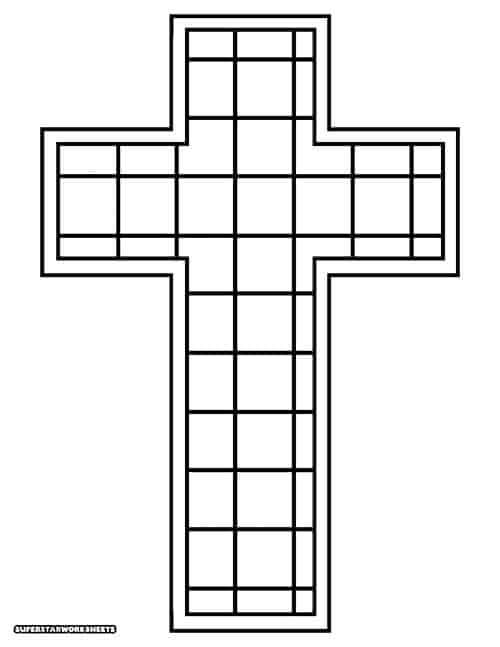
Select detailed faith-themed outline sheets with clean vector lines and a resolution of at least 300 DPI – this ensures crisp results on standard A4 or US Letter paper. Files in PDF or SVG format preserve sharp edges during scaling, while simple JPG images often blur when enlarged. For home use, set your printer to “high quality” mode and use paper weight between 120–160 gsm to prevent marker bleed-through.
Look for age-appropriate complexity. Young children respond better to bold contours and open spaces that allow broad crayon strokes, while older kids and adults prefer intricate geometric or ornamental designs inspired by stained glass motifs. Educational settings benefit from themed sets that combine symbolic imagery with short captions or scripture references, helping reinforce memory through visual engagement.
Organization matters for repeat use. Store your outline templates in categorized folders such as holiday themes, classroom activities, or quiet-time crafts. Laminating frequently used sheets creates reusable tracing surfaces when paired with dry-erase markers. For group settings, prepare multiple difficulty levels so each participant can work at a comfortable pace without frustration.
When downloading resources, prioritize collections that specify print dimensions, line thickness, and licensing terms. This avoids scaling errors and ensures the artwork remains clear whether used for Sunday school handouts, homeschool projects, or personal relaxation sessions.
Cross Printable Coloring Pages: Practical Guide for Selection and Use
Select outline sheets with vector-quality lines and a minimum resolution of 300 DPI to keep edges sharp after printing. Match the file dimensions exactly to your paper size–US Letter (8.5×11 in) or A4 (210×297 mm)–and disable “fit to page” in printer settings to prevent distortion. For preschool use, choose simple faith-themed symbols with line spacing above 5 mm; for older users, pick intricate ornament patterns with spacing closer to 1–2 mm for finer work.
Use heavier paper based on the tools planned for the activity. Wax crayons work acceptably on 80–90 gsm sheets, while felt-tip pens perform better on 120 gsm or thicker stock to reduce bleed-through. If watercolor pencils or light brush work are planned, move to 160–200 gsm matte paper. Inkjet printers sometimes create slightly fuzzy borders on dense black lines; switching to grayscale output at 85–90% density often produces cleaner results and reduces ink consumption.
Maintain a structured file library to save time during preparation. Group artwork by complexity level, theme (for example: Easter symbols, decorative motifs, minimalist designs), and recommended media. Rename each file with practical tags such as “large-areas_crayons” or “fine-detail_gel-pens.” For classroom reuse, print master copies on thick stock and store them in labeled folders; this avoids repeated file searches and keeps distribution organized.
Always run a single test print before producing multiple copies. Check that margins are at least 10 mm, confirm line clarity from arm’s length, and verify that dark areas are not oversaturated. If lines appear too heavy, reduce printer density by about 5% and recheck. This quick verification step prevents wasted paper and ensures the activity runs smoothly in both home and group settings.
Where to Find High-Quality Free Cross Printable Coloring Pages for Different Age Groups
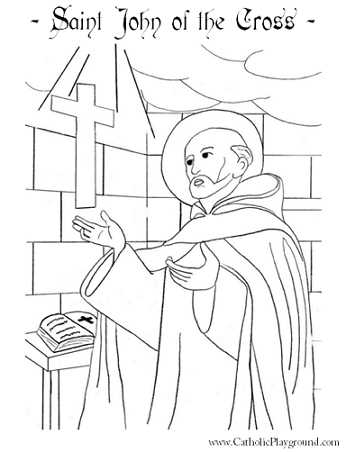
The fastest way to get high-resolution faith-themed art sheets is through trusted educational and craft platforms such as :contentReference[oaicite:0]{index=0} and :contentReference[oaicite:1]{index=1}, where files are offered in clean PDF format and sorted by complexity. These sources typically provide crisp line work that stays sharp after home printing, which matters for younger children who struggle with fuzzy outlines.
For preschool and kindergarten learners, choose large-outline crucifix illustrations with minimal interior detail. On :contentReference[oaicite:2]{index=2}, look for designs labeled for ages 3–6; they usually feature thick borders (around 3–5 pt line weight) and simple shapes that support early motor control. Avoid highly detailed religious artwork at this stage because small enclosed spaces can frustrate beginners.
Elementary students benefit from medium-detail religious line art that introduces patterns without overcrowding the image. Collections on :contentReference[oaicite:3]{index=3} allow filtering by grade level, which helps parents match skill level quickly. Aim for drawings with moderate internal sections–roughly 15–40 fillable areas–so children practice staying within lines while still finishing the picture in one sitting.
For teens and adults, seek intricate sacred motifs on platforms like :contentReference[oaicite:4]{index=4}. High-quality options here often include ornamental Celtic or stained-glass-style designs that work well with markers or gel pens. Check that the file resolution is at least 300 DPI; anything lower tends to produce jagged edges when printed at full letter size.
Another reliable approach is using museum and church education sections. Some cathedral education departments publish downloadable faith artwork for classroom use, frequently in vector-based PDF form. Vector files scale cleanly and allow you to resize from A4 down to half-sheet without losing line clarity, which is useful when preparing activity packets.
Before downloading, preview the line density and background cleanliness. The best free sheets have pure white backgrounds, consistent stroke thickness, and no watermark across the drawing area. If the file size is under 200 KB for a full-page design, quality is often too low. A quick zoom to 200% on your screen will reveal whether the lines remain smooth enough for a satisfying shading experience.
Organize your collection by age band and difficulty so you can rotate fresh designs without repeated searching. Keeping separate folders–simple, intermediate, and detailed–makes it easier to select the right faith-based artwork for Sunday school, home quiet time, or advanced creative sessions.