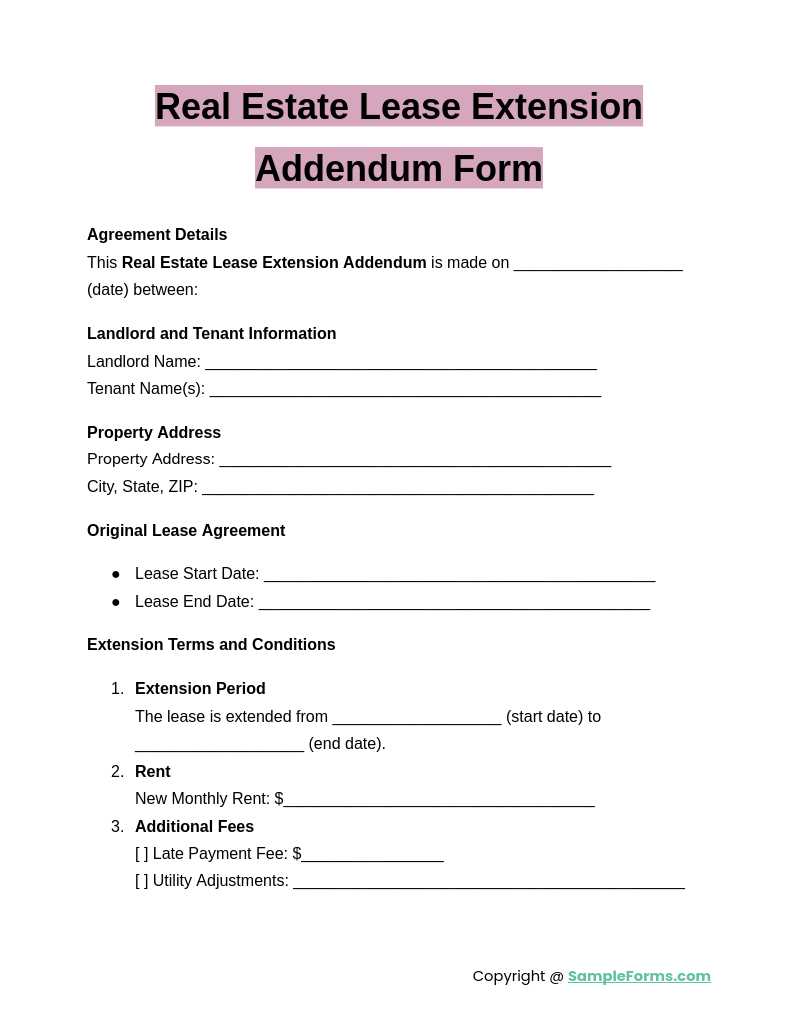
Use a ready-made tenancy continuation form that clearly states the updated term, revised rent amount, and exact start and end dates of the renewed occupancy period. Specify the property address, names of all occupants, and reference number of the original rental contract to prevent disputes. A well-drafted document should include a clause confirming that all other provisions of the initial rental contract remain unchanged, except those expressly modified.
Insert precise payment details, including the new monthly rate, due date, accepted payment methods, and any late fees expressed as a fixed sum or percentage. If the security deposit remains the same, state that it continues under the same conditions; if it changes, record the new amount and the deadline for payment. Add a section covering utilities and maintenance responsibilities so there is no ambiguity about who pays for water, electricity, waste collection, or minor repairs during the prolonged occupancy term.
Include signature lines for each party, the date of signing, and, where required by local regulations, space for a witness or notarization. Check regional housing laws to confirm notice periods and maximum duration limits for tenancy renewals. Store the signed document in both digital and paper form, and provide each party with a copy to ensure clear proof of the updated rental arrangement.
How to Prepare a Free Printable Lease Extension Agreement
Use the original rental contract as the base document and draft a concise addendum that clearly states the new occupancy period, updated rent amount, and revised terms. Reference the initial contract by its signing date and the full legal names of the parties to avoid ambiguity. Insert a clause confirming that all unchanged provisions remain in force.
Include precise identification details of the property and participants. List the full address with unit number, the landlord’s legal name, and the tenant’s legal name exactly as written in the prior contract. Add government-issued ID numbers only if permitted by local law. This section should eliminate any doubt about who and what the document applies to.
Define the new rental term with exact calendar dates. Avoid vague phrases. For example, state: “The tenancy term is prolonged from 1 June 2026 through 31 May 2027.” If the continuation converts a fixed term into a month-to-month tenancy, specify the notice period required for termination, such as 30 or 60 days, depending on jurisdiction.
Set out updated financial terms in a structured list:
- New monthly rent amount and due date.
- Accepted payment methods (bank transfer, check, online portal).
- Late fee structure with exact amounts or percentages.
- Security deposit status, confirming whether it remains unchanged or is adjusted.
Address modifications to existing clauses only where necessary. If rent increases, specify the exact figure and the date it takes effect. If pets are newly permitted, outline breed or weight limits and additional deposit requirements. Any deleted provision should be referenced by section number from the original contract.
Add statutory disclosures required by local housing regulations. Some regions mandate lead-based paint disclosures for buildings constructed before 1978, energy performance certificates, or updated habitability notices. Verify current municipal or national housing codes before finalizing the text to ensure compliance.
Insert signature blocks with printed names, signatures, and dates for each party. If the property is owned by a company, include the authorized representative’s title. Provide space for witnesses or notarization if local practice demands it. Digital signatures may be used where legally recognized, but confirm their validity under applicable law.
Review formatting and clarity before distribution. Use consistent numbering, bold section headings, and standard margins for readability. Save the document as a PDF to prevent alteration, and retain copies for both parties. Archive the signed version alongside the original rental contract to maintain a complete tenancy record.
Which Clauses Must Be Updated When Extending a Residential Lease Term
Update the term clause first by inserting the new start and end dates and stating whether the tenancy continues under identical conditions or with revised provisions. Specify the exact calendar date and time when the renewed occupancy period begins and ends. If the tenancy converts to a month-to-month format after the new term, state the notice period required for termination by either party.
Revise the rent clause by confirming the new monthly amount, the effective date of the increase, and the acceptable payment methods. If the rent changes, indicate the percentage increase and confirm compliance with local rent control caps where applicable. Include updated late fee thresholds, grace periods, and returned payment charges to avoid ambiguity.
Adjust the security deposit section only if local regulations permit modifications. Clarify whether the existing deposit remains unchanged, is supplemented to match a higher rent, or is partially refunded. Record the exact deposit balance currently held and restate the conditions under which deductions may occur, referencing inspection timelines and itemized statements.
Review maintenance and repair obligations to reflect any changes in responsibility. If landscaping, appliance servicing, or utility maintenance shifts between landlord and occupant, rewrite those paragraphs with itemized duties. Include updated procedures for submitting repair requests and revised response timeframes.
Amend utilities and services provisions if billing arrangements have changed. Identify which utilities are included in the rent and which are individually metered. If new services such as internet or waste collection are added, define payment responsibility and billing cycles clearly.
Reconfirm rules on occupancy limits and authorized residents. List the full legal names of approved occupants and update guest stay limits if necessary. If pets are newly permitted or restricted, modify the pet policy to include breed, weight limits, deposits, or monthly pet charges.
Update insurance and liability clauses by specifying whether renters’ insurance is mandatory and the minimum coverage amount required. Insert revised indemnification language if risk allocation changes, and confirm whether proof of coverage must be provided annually.
Revise notice provisions and governing law references to match current statutes. Insert updated addresses and email contacts for delivering formal notices, and restate the required number of days for nonpayment or breach notifications. Confirm that all unchanged terms of the original rental contract remain in force except as modified in the renewal document.