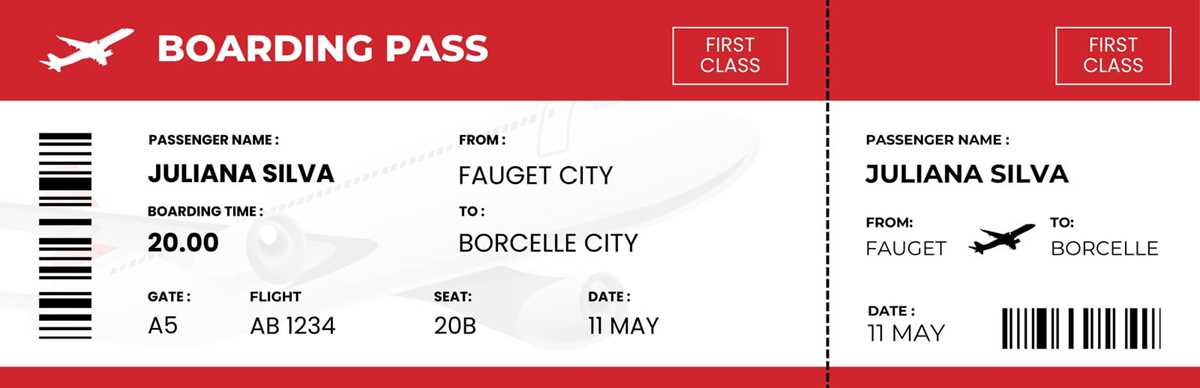
To create a convincing travel document, you need to focus on the details. The more realistic your design, the more effective the result will be. Start with a high-quality template that mimics the structure and layout of a genuine document. This will help ensure that the design appears authentic and can be easily passed off in playful situations.
Utilize professional design software like Adobe Illustrator or InDesign for maximum control over elements like fonts, borders, and logos. Avoid using generic fonts that look too obvious. Choose typefaces that resemble those used in real documents, such as Helvetica or Arial, and adjust the spacing to match what you would find on an actual boarding pass or confirmation printout.
Once your design is ready, focus on the print quality. Use a high-resolution printer to ensure that the text and images come out crisp. Opt for a paper type that feels like the material used for real travel documents, which is typically sturdy and matte. This will add another layer of realism to your creation, making it much harder to spot as a novelty item.
Creating a Realistic Travel Document for Fun
For a convincing result, start by using design tools like Adobe Illustrator or Photoshop. These programs allow you to manipulate text, logos, and patterns with precision, creating a more authentic look. Focus on getting the layout, fonts, and visual elements as close as possible to those used in real travel confirmations.
Pay attention to small but significant details. Include flight information like a realistic flight number, departure and arrival times, and a fictional airline logo. You can also add a barcode or QR code to give the design a professional touch. These small elements can make a big difference in how convincing the result will be.
Choosing the right paper and print quality is crucial. A high-quality inkjet or laser printer will ensure crisp, clean lines and text. Select a textured paper that feels similar to the ones used for travel confirmations, typically a sturdy matte or semi-gloss finish, to increase the realism of your design.
Once the document is printed, consider using it for pranks or creative projects. Whether it’s for a party or just to surprise a friend, having a realistic travel confirmation can add a fun element to any situation. Just remember, these designs are meant for lighthearted purposes and should not be used for fraudulent activities.
Step-by-Step Guide to Designing a Fake Airline Ticket
Begin by choosing a design tool such as Adobe Illustrator or Photoshop. These programs allow precise control over text and layout, making it easier to mimic the design of a genuine boarding pass. Start with a blank canvas and set the dimensions to match the typical size of a travel confirmation, usually around 6×2.5 inches.
Next, add the key details: departure and arrival cities, flight number, date, and time. Choose fonts that resemble those used on real tickets, such as Arial or Helvetica. Adjust the text alignment and spacing to match real documents. Incorporating a barcode or QR code will enhance the authenticity of the design.
Now, focus on adding visual elements. Insert a logo or header that mimics a real airline. Include small design features like seat assignments or gate numbers to make the confirmation look realistic. Pay attention to color schemes; light blues and grays are commonly used in travel confirmations.
Once the design is complete, double-check for accuracy in terms of fonts, spacing, and overall layout. Print it using a high-quality printer and sturdy paper, such as matte or semi-gloss, to replicate the feel of a real confirmation. After printing, your document will look almost indistinguishable from a genuine travel confirmation.