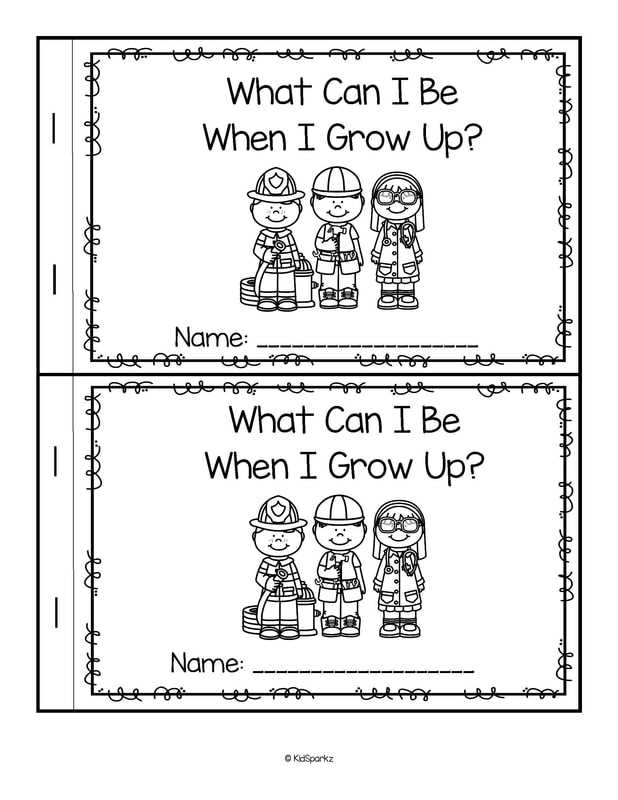
Use occupation-themed activity pages that include matching tasks, coloring sections, and simple tracing lines to introduce children ages 4–8 to local service roles. Select sets with clear illustrations of firefighters, nurses, police officers, teachers, and mail carriers, paired with large-print labels to support early reading development.
Choose downloadable classroom materials formatted for A4 or US Letter paper with black-and-white outlines to reduce ink use. Matching exercises build vocabulary recognition, while cut-and-paste sorting tasks improve fine motor coordination. Include short sentence prompts such as “A firefighter drives a ___” to connect role identification with writing practice.
Organize occupation study pages by skill level. For preschool learners, focus on coloring and picture-to-tool matching. For early elementary grades, add fill-in-the-blank sentences and simple comprehension questions. Rotate themes weekly and combine reading, writing, and discussion activities to reinforce understanding of everyday service professions.
Community Helpers Worksheets Free Printables
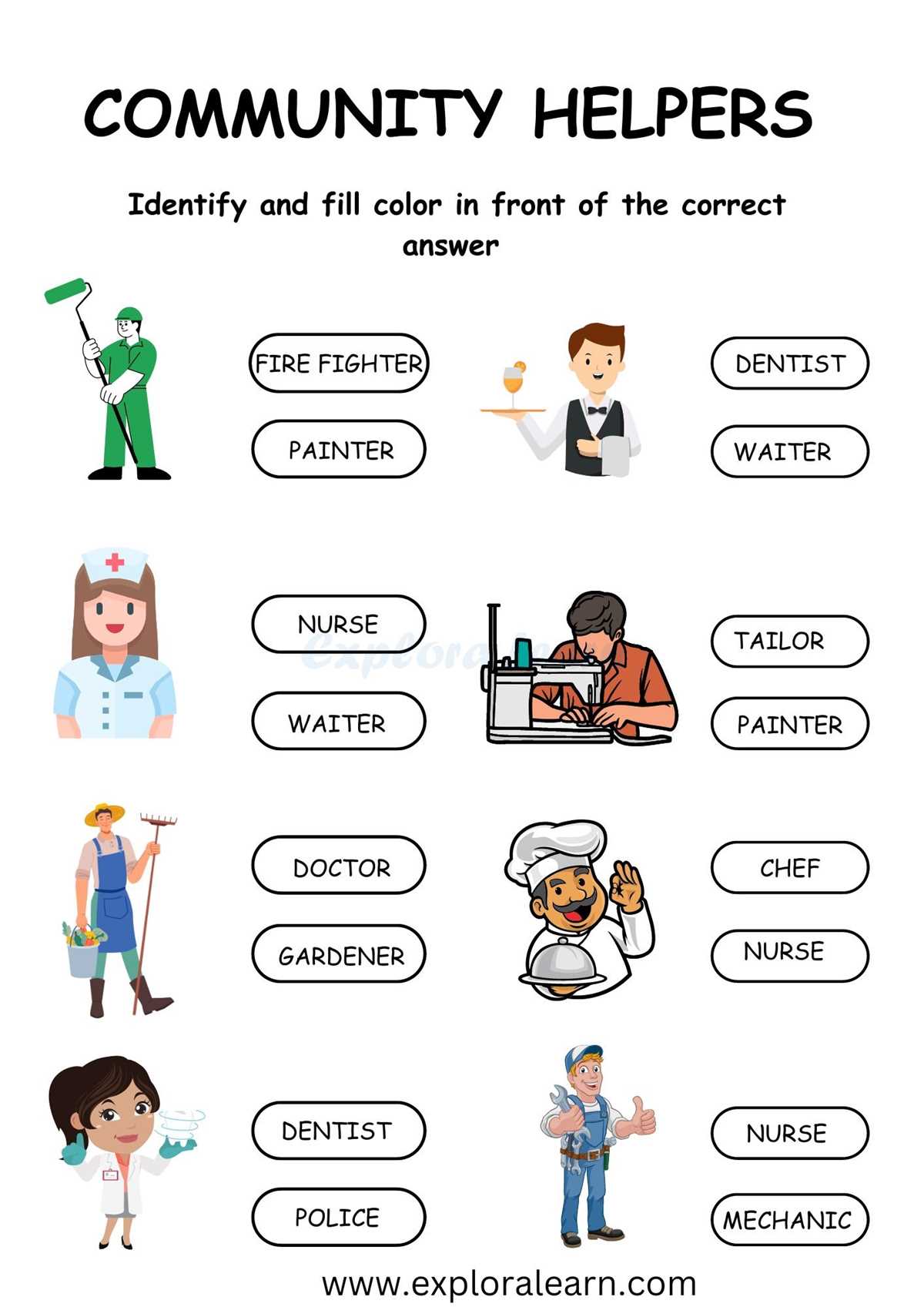
Use occupation-themed learning pages with clear images and large text labels to introduce children ages 4–8 to local service roles. Select sets that combine coloring, matching, tracing, and short writing prompts on one page to reinforce recognition and vocabulary.
Organize activity packets by age group. Preschool learners benefit from picture-to-tool matching and simple line tracing, while early elementary students can complete fill-in-the-blank sentences and short role descriptions.
- Color the worker and circle the correct tools
- Match each profession to its workplace
- Trace job titles in uppercase and lowercase
- Write one sentence describing daily duties
Limit each page to one or two professions to prevent overload. Use bold outlines and uncluttered backgrounds so children focus on key details such as uniforms, vehicles, and equipment.
Print on standard A4 or US Letter paper in black and white to reduce ink usage. Choose 12–14 pt font for labels and leave wide margins for cutting tasks.
Add sorting activities where students group roles by indoor and outdoor work settings or by tools used. This builds classification skills alongside vocabulary development.
Incorporate short discussion prompts below each illustration. Ask students to explain how a nurse helps patients or how a firefighter responds to emergencies to connect reading with speaking practice.
Rotate occupation study materials weekly and display completed pages on a classroom board to reinforce recognition of public service roles and encourage peer discussion.
Types of Community Helper Activities for Preschool and Early Grades
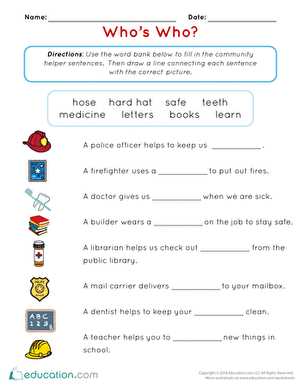
Use picture-to-role matching tasks to introduce children ages 4–7 to public service professions. Provide clear illustrations of a firefighter, doctor, police officer, teacher, and mail carrier, paired with simple tool images such as a hose, stethoscope, badge, book, or mailbag. Limit each page to four pairs to maintain focus.
Add coloring pages with labeled uniforms to reinforce visual recognition. Include large-print job titles beneath each illustration so learners connect the written term with the image while practicing letter identification.
Incorporate cut-and-sort activities where students group occupations by workplace, such as hospital, school, fire station, or post office. Provide dotted cutting lines and clearly marked sorting boxes to support fine motor development.
Use simple tracing sheets that feature uppercase and lowercase job titles. Repeat each title three times per line to strengthen handwriting control and spelling familiarity.
Introduce short sentence completion tasks for early elementary grades. Prompts like “A firefighter uses a ____ to put out fires” combine vocabulary recall with writing practice and comprehension.
Include discussion prompts below each activity page, asking learners to describe how each role supports local residents. Pair written tasks with short oral responses to connect reading, writing, and speaking skills in one structured lesson.