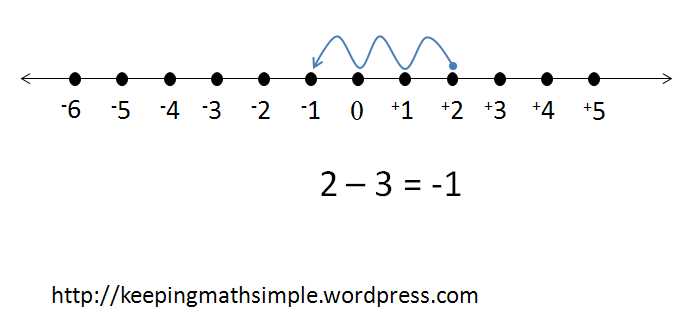
Choose a horizontal integer scale ranging from −20 to +20 with evenly spaced tick marks at 1-unit intervals to support arithmetic practice in grades 3–6. This span covers most classroom tasks involving addition, subtraction, and value comparison without overcrowding the page.
Use bold labeling at zero and every fifth unit to improve visual orientation. Mark −5, −10, +5, and +10 with slightly larger font size so students can locate reference points quickly during exercises.
Select landscape orientation on A4 or US Letter paper to provide at least 25 cm of usable width. This layout ensures that each unit interval measures about 0.8–1 cm, giving enough room for finger tracking and pencil jumps during calculations.
For desk reference, reduce the range to −10 through +10 and laminate the sheet for repeated dry-erase practice. For wall display, enlarge the file to A3 format and increase tick spacing to 2 cm per unit to maintain readability from 2–3 meters away.
Negative and Positive Number Line Printable
Use an integer scale from −15 to +15 with 1-unit intervals to support addition and subtraction drills in upper elementary grades. Keep zero centered horizontally to provide balanced visual reference for values below and above it.
Set tick spacing between 0.8 and 1 cm per unit on A4 or US Letter paper. This measurement allows clear marking of jumps with pencil without crowding adjacent values.
Apply bold formatting to key reference points:
- Zero in larger font size
- Multiples of five slightly thicker tick marks
- Arrowheads at both ends to indicate continuation
For desk use, limit the range to −10 through +10 and laminate the sheet. Students can draw movement arcs with dry-erase markers to model operations such as −3 + 7 or 8 − 12.
For wall display, expand the range to −20 through +20 and increase interval spacing to 2 cm per unit. This proportion keeps digits readable from the back of a standard classroom measuring 6–8 meters in depth.
Organize practice tasks directly on the scale:
- Circle the greater integer in pairs such as −4 and 2
- Plot given values like −9 or +6
- Show subtraction as leftward jumps
Choose high-contrast black ink on white paper to maintain clarity. Avoid light gray markings, as faint ticks reduce readability under classroom lighting.
Test one copy before bulk printing. Place a ruler along the scale to confirm equal spacing and verify that no automatic resizing altered proportions during the print process.
How to Choose the Right Scale and Range for Integer Practice
Select a span that matches the skill level: use −10 to +10 for beginners working on basic addition and subtraction, and extend to −20 to +20 once students handle multi-step operations without counting errors.
Keep unit intervals consistent at 1-unit increments. Avoid mixing 1 and 2-unit spacing on the same scale, as uneven gaps distort visual estimation and lead to mistakes during comparison tasks.
Adjust physical spacing based on paper size. On A4 or US Letter in landscape orientation, allocate at least 25 cm of horizontal space; this allows each unit to measure close to 1 cm, giving enough room for marking jumps and plotting values clearly.
Center zero exactly in the middle of the axis when working with symmetrical ranges such as −15 through +15. Balanced placement improves orientation and helps students recognize direction when moving left for subtraction or right for addition.
Highlight reference points at multiples of five using slightly thicker tick marks. These anchors reduce counting time and support faster mental calculation during timed drills.
Test the chosen span with sample problems before distributing copies. If tasks rarely exceed ±8, reduce the range to avoid unused space; if exercises include larger integers, expand the axis so plotted values do not crowd the edges.