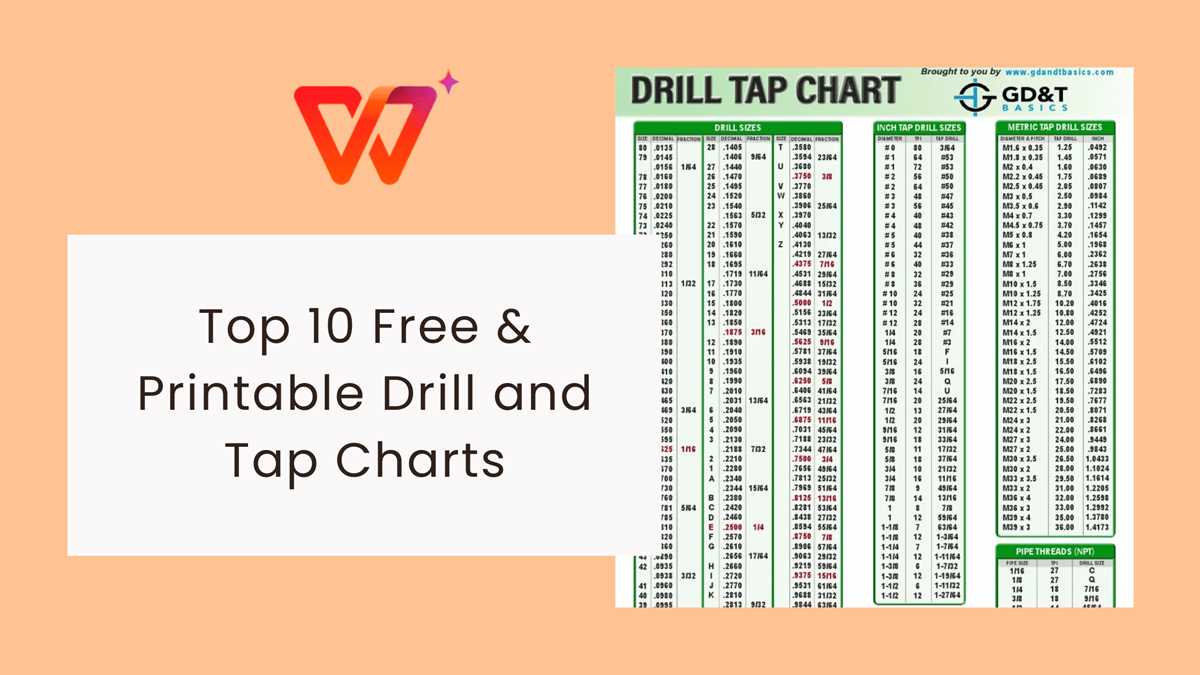
Select the hole diameter strictly according to thread standard and pitch; for example, an M6 × 1.0 requires a 5.0 mm bore, while a 1/4-20 UNC calls for a #7 (0.201 in / 5.10 mm) bit. A clear size reference sheet placed near the press or milling machine reduces guesswork and prevents undersized or oversized openings that weaken internal threads.
Metric combinations follow a simple subtraction rule: nominal diameter minus pitch equals the recommended bore size. M8 × 1.25 uses 6.75 mm (commonly rounded to 6.8 mm), M10 × 1.5 uses 8.5 mm, and M12 × 1.75 requires 10.2 mm. Listing both coarse and fine pitch variants side by side avoids confusion, especially where M10 × 1.25 and M10 × 1.5 are stored in the same drawer.
Unified inch series require attention to threads per inch. For 3/8-16 UNC use 5/16 in (0.3125 in / 7.94 mm); for 3/8-24 UNF use letter Q (0.332 in / 8.43 mm). A well-structured reference table should display fractional, number, and letter bit equivalents together with decimal inch and millimeter conversions to eliminate calculation errors at the machine.
Include tolerance notes for different materials. Aluminum and plastics can accept a slightly tighter bore to improve engagement, while stainless steel benefits from the exact recommended diameter to reduce torque and tool wear. Mark high-strength alloys with a caution symbol and add lubricant guidance directly on the sheet.
Organize the data by standard–Metric ISO, UNC, UNF–and sort by nominal diameter in ascending order. Use bold formatting for common workshop sizes such as M5, M6, M8, 1/4-20, and 5/16-18 so they are visible from a distance. A laminated reference placed at eye level near tooling storage ensures quick verification before cutting internal threads.
Printable Tap Drill Chart for Accurate Thread Size Selection
Select the hole diameter using a reference table that matches thread designation, pitch, and class of fit before machining any part. For example, an M8 × 1.25 thread requires a 6.8 mm hole, while a 1/4-20 UNC thread calls for a #7 (0.201 in) bit. For fine threads such as M10 × 1.0, reduce the hole size to 9.0 mm to maintain proper flank engagement. A clear size matrix placed near the machine reduces guesswork and prevents oversize bores that weaken thread strength.
Use percentage of thread engagement to fine-tune bore diameter for specific materials. In aluminum alloys, target 60–65% engagement to lower torque and avoid galling; in carbon steel, 70–75% provides stronger internal threads. Calculate the bore size with the formula: major diameter − pitch for metric fasteners as a baseline, then adjust by 0.05–0.10 mm depending on hardness. For unified threads, subtract 1 divided by threads per inch from the nominal diameter to estimate the pilot hole.
Organize the reference sheet by grouping coarse and fine series separately and listing both metric and imperial standards on the same page. Include columns for nominal diameter, pitch or TPI, recommended hole size in millimeters and inches, and decimal equivalents for numbered bits. Adding tolerance classes such as 6H for metric or 2B for unified threads helps machinists choose the correct allowance without consulting multiple manuals.
Print the size guide at full scale with high-contrast text and laminate it for shop use to prevent oil damage. Verify all values against ISO 68-1 and ASME B1.1 data before distribution, and update the sheet whenever new fastener standards are introduced into production.
How to Read a Printable Tap Drill Chart for Metric and Imperial Thread Sizes
Locate the nominal thread size in the left column and immediately match it with the pitch or threads-per-inch value shown рядом; this pair defines which hole diameter is required before cutting internal threads. For metric fasteners, read entries such as M6 × 1.0, where 6 mm is the major diameter and 1.0 mm is the pitch. The corresponding hole size is typically listed in millimeters, for example 5.0 mm for M6 × 1.0. For unified inch series like 1/4″-20 UNC, identify 20 TPI and then read across to find the recommended hole, commonly 13/64″.
Distinguish clearly between coarse and fine series. Metric coarse threads use larger pitch values (M8 × 1.25), while fine versions reduce pitch (M8 × 1.0), which changes the required bore diameter from 6.8 mm to 7.0 mm. In imperial systems, compare 3/8″-16 UNC and 3/8″-24 UNF; the first typically calls for a 5/16″ hole, while the fine variant requires 21/64″. Always verify the thread series column before selecting tooling, since identical major diameters do not imply identical pilot sizes.
Use the percentage-of-thread column, if provided, to adjust fit. Many reference tables assume approximately 75% thread engagement. If the table lists multiple hole diameters for the same fastener, the larger value yields lower engagement and reduced cutting torque, which helps in tougher alloys such as stainless steel. For aluminum, a slightly smaller bore may be acceptable to increase holding strength, provided material thickness supports it.
Convert units carefully when switching between metric and inch systems. A 5.0 mm bore equals 0.1969″, which aligns closely with a #9 bit (0.1960″). If the reference shows a decimal inch value instead of a fractional one, confirm availability of tooling in your workshop. Avoid rounding blindly; small deviations of 0.1 mm can affect thread depth and assembly torque.
Check tolerance class or fit designation where listed. Metric entries may specify 6H for internal threads, while unified standards might reference 2B. These codes indicate allowable dimensional variation and should match the mating fastener specification. Mismatched classes can lead to tight assembly or insufficient clamping force.
Before machining, confirm material thickness and blind-hole depth against the recommended bore size and thread length. Ensure the selected hole diameter aligns with the intended thread standard, pitch, and fit class, and cross-check the numeric value twice to prevent scrap parts or damaged tooling.