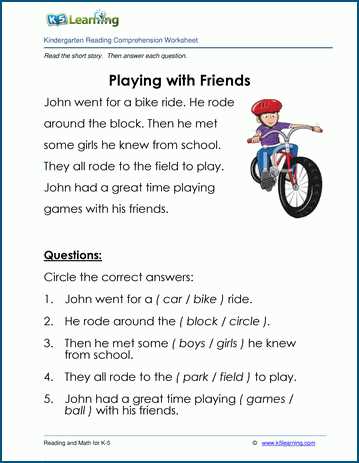
Start by incorporating activities that focus on letter recognition, phonemic awareness, and basic sentence formation. Using engaging exercises will help children improve their skills in a fun and interactive way. Activities like matching letters to pictures or completing simple sentences allow children to develop confidence as they progress.
To enhance the learning experience, consider printing out engaging tasks that can be worked on both at home and in the classroom. These can include activities that reinforce the connection between sounds and letters, as well as those that help with word formation and basic comprehension. Use bright, colorful designs to capture the child’s attention and make learning enjoyable.
Another useful tip is to provide a variety of challenges at different difficulty levels. For example, begin with simple tasks such as identifying initial sounds, and gradually increase complexity to include activities that require the child to blend sounds and form short words. This progression ensures a well-rounded approach to early literacy.
Engaging Activities for Young Learners
Start by using exercises that focus on matching letters with objects. For example, you can print templates where children match the letter “A” with an apple, or “B” with a ball. This helps build letter recognition while associating letters with familiar images.
Next, move on to simple word-building tasks. Provide children with a list of letters and ask them to form basic words. A good starting point is two-letter combinations like “at,” “it,” and “in.” This encourages blending and helps develop an understanding of how sounds combine to form words.
Consider incorporating fun activities such as tracing letters and words. This will improve fine motor skills while reinforcing letter shapes and word structures. You can use templates that allow children to trace over dotted lines or letters written in bold fonts.
For more advanced learners, include simple sentence completion exercises. Create templates with sentences like “The cat is __” and provide a list of possible words, such as “sleeping,” “running,” or “eating.” This activity improves vocabulary and comprehension by giving children context for the words they learn.
Don’t forget to include exercises that focus on recognizing sight words. These are high-frequency words that children often encounter but cannot always decode phonetically. Create activities where they can circle or color in sight words they find in a story or sentence.
- Use bright colors and fun fonts to capture attention.
- Progress from simple tasks to more complex ones as the child’s skills grow.
- Incorporate interactive activities that encourage hands-on learning, like cut-and-paste exercises.
How to Choose the Best Reading Worksheets for Young Learners
Start by selecting tasks that focus on building the fundamental skills of sound-letter recognition. Choose activities that incorporate matching sounds with letters and visuals that children can easily associate with, such as pictures of animals, objects, or everyday items. This will help make the learning process more relatable and engaging for them.
Next, ensure that the difficulty level of the activities matches the learner’s current stage. Begin with simple tasks like identifying letters or short words, and gradually increase complexity by adding tasks that require blending sounds and forming words. Progressively introduce more challenging exercises as their skills improve, such as completing simple sentences or identifying sight words. This approach ensures that they are constantly challenged without feeling overwhelmed.