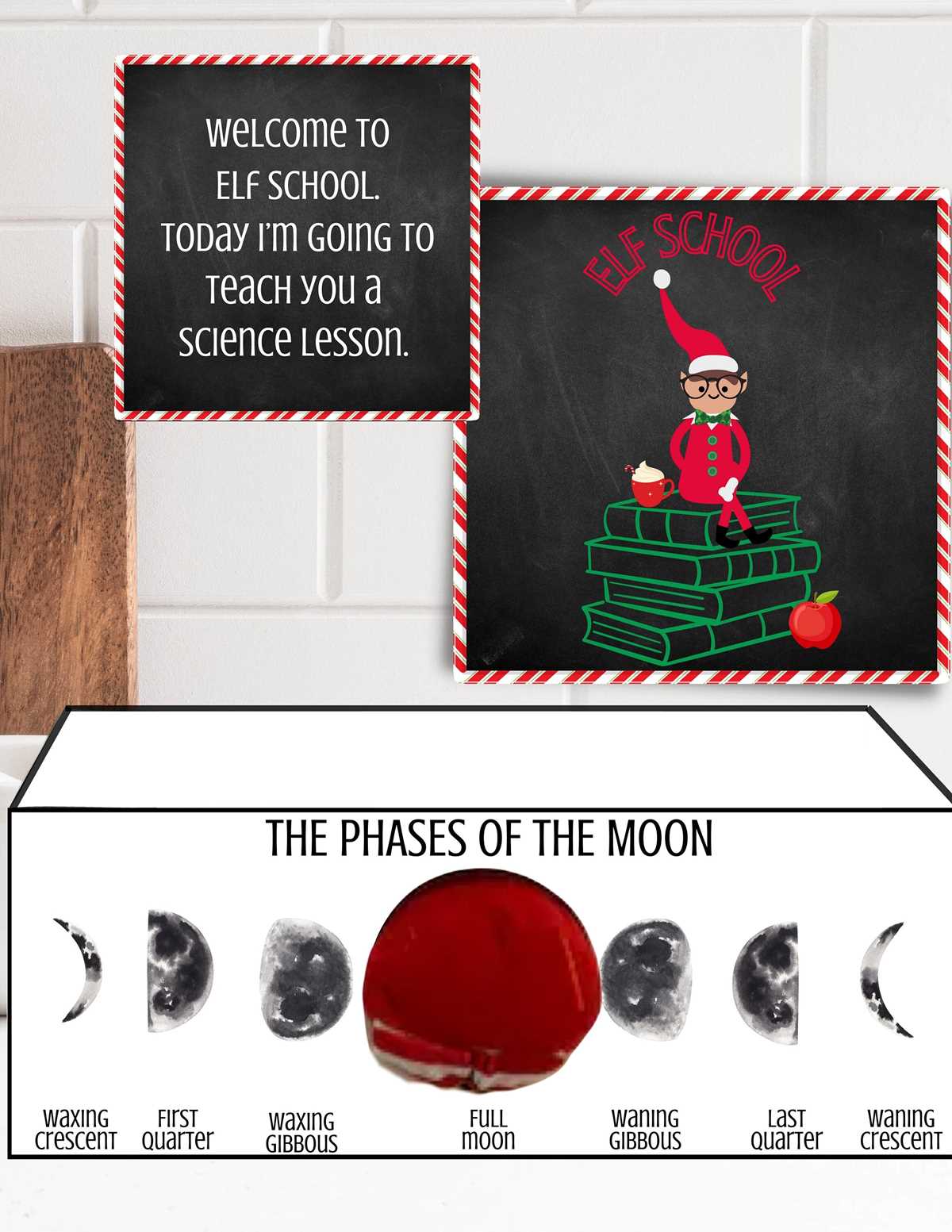
Use a full-page PDF with labeled crescent, half, gibbous, and full stages for grades 2–5. Limit each sheet to 8–12 illustrations to keep focus on recognition and correct sequencing within 15–20 minutes.
Print on standard A4 or US Letter paper and leave 0.5-inch margins for binding or hole-punching. Black-and-white diagrams allow students to color or shade phases with pencils, reinforcing shape differences and terminology.
Include a small seasonal figurine illustration interacting with each stage. Position it consistently in the corner or near the label to make connections between observation and fun storytelling elements.
Provide a separate answer key highlighting each phase clearly. Use bold outlines for crescent and gibbous stages so students can cross-check shading accuracy while maintaining grid clarity.
Distribute one copy per student and prepare an extra set for group activities. Encourage learners to write brief descriptions under each stage, linking appearance to position relative to sunlight and horizon.
Introduce the sheet as a short 10-minute activity followed by discussion. Ask students to sequence stages from new to full and explain differences in visibility, shape, and timing of illumination.
Archive the file with a descriptive name including grade and theme, such as Grade3_LunarCycle_Figurine.pdf, to quickly locate it for future lessons or seasonal projects.
Phases of the Moon Elf on the Shelf Activity
Use a grid-based PDF featuring labeled illumination stages for grades 2–5. Include 8–12 distinct phases and limit each sheet to one seasonal figurine interacting with the cycle for clarity and engagement.
Print on A4 or US Letter paper with 0.5-inch margins. Black-and-white illustrations reduce ink use and allow students to color or shade phases accurately while maintaining clear visibility of outlines.
Include a separate answer page highlighting each stage. Bold outlines for crescent and gibbous shapes help students cross-check shading and sequencing without confusion.
Organize activities as follows:
- Individual completion: 10–15 minutes to locate and label each stage.
- Peer review: 5 minutes to compare markings and discuss differences.
- Group discussion: 5 minutes to describe progression and sequence.
Encourage students to write short notes under each stage, describing appearance, position relative to sunlight, and duration of visibility. This reinforces both terminology and observational skills.
Provide two versions for differentiation:
- Forward-only stage progression for younger learners.
- Forward and reverse positions for advanced students to increase challenge.
Archive the activity with a descriptive filename including grade and theme, such as Grade4_LunarCycle_Figurine.pdf, to simplify retrieval and seasonal reuse for future lessons.
How to Print and Prepare the Lunar Activity Sheet for Students
Use standard A4 or US Letter paper and set margins to 0.5 inches to prevent trimming during printing. Select black-and-white mode to reduce ink usage while keeping outlines of phases sharp and clear.
Check that all diagrams are centered and fully visible on the page. Include a separate answer sheet with bold outlines for crescents and gibbous shapes to allow students to self-check their shading and sequencing without confusion.
Prepare multiple copies–one per student plus a few extras for group activities. Encourage students to label each stage and add brief descriptions beneath illustrations to reinforce recognition and understanding of illumination patterns and sequence.