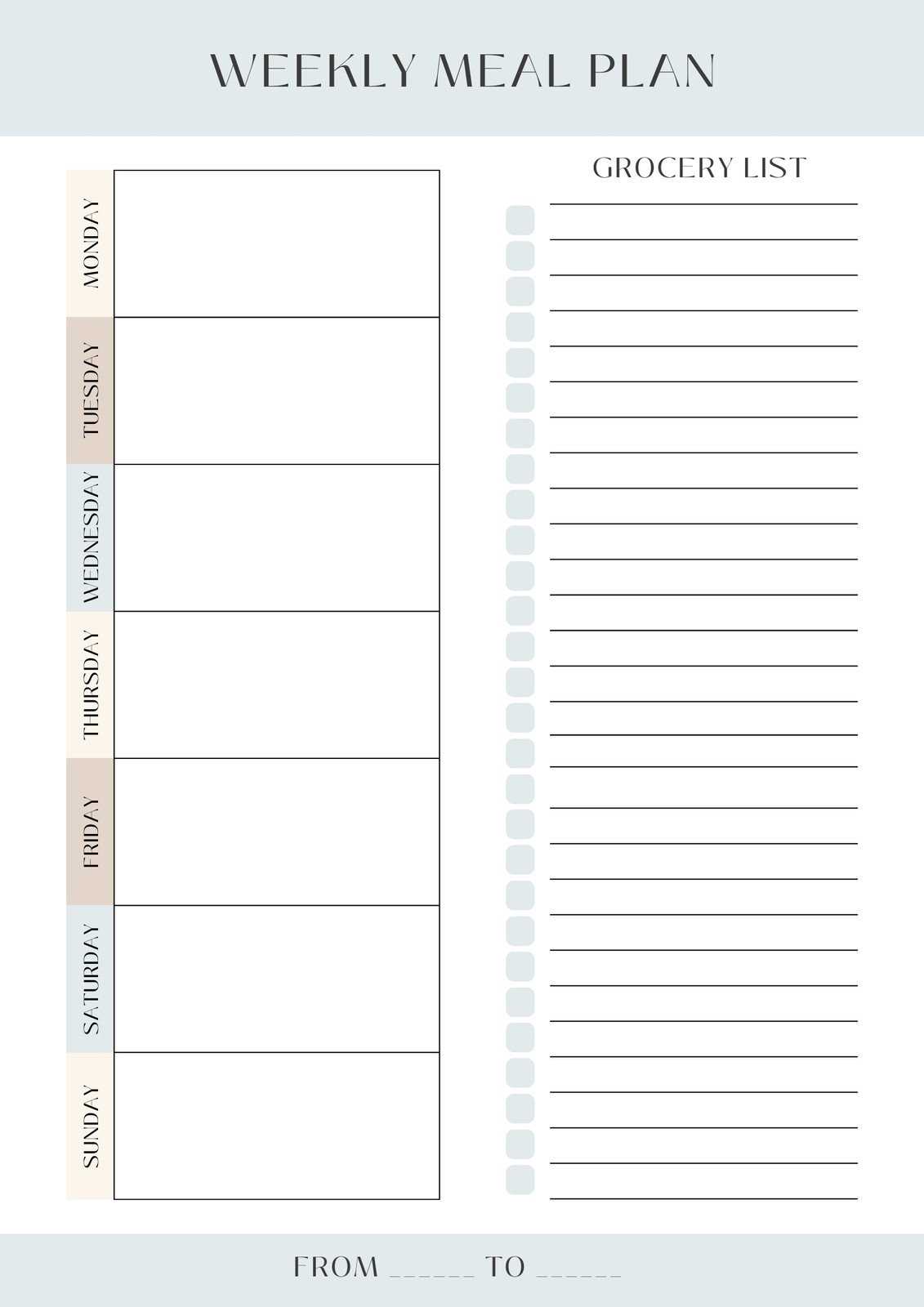
Start by downloading a simple template to map out your week’s meals. This allows you to plan exactly what you will cook each day, ensuring that you have all the ingredients you need on hand. Printing the template in a convenient format helps you track your progress easily and stay on top of your cooking goals.
Once you have the layout, categorize your meals by type–breakfast, lunch, dinner, and snacks. This way, you can visualize your week at a glance and avoid last-minute decisions. Each section can be tailored to your dietary needs, making it easier to stick to a balanced and varied menu throughout the week.
Incorporating a grocery list alongside your meal schedule helps streamline your shopping trips. As you plan your dishes, note down the ingredients required, ensuring that you don’t forget anything. This method cuts down on unnecessary store visits and reduces food waste by purchasing only what’s needed.
Using a Cooking Schedule Template
Begin by selecting a template that breaks down each day of the week into breakfast, lunch, dinner, and snacks. This format will help you stay organized and prevent last-minute decisions about what to cook or eat. Having everything planned ensures you’re prepared for the week ahead.
To make your routine easier, group similar dishes together. For example, if you plan to make salads, soups, or pasta dishes, place these under one category. This helps you streamline your shopping list, as you can buy all ingredients for similar meals in one go.
Incorporate a section for tracking grocery items. As you plan each day’s meals, list all the ingredients needed. This will help you stay focused while shopping, reducing unnecessary purchases and making sure you have everything ready when it’s time to cook.
Personalize the schedule based on your dietary goals. If you’re following a particular eating plan, such as low-carb or plant-based, adjust the menu to reflect these choices. This ensures that every meal fits within your nutritional needs, helping you stick to your health goals.
Once your week is planned, think about preparing some ingredients in bulk. For example, cook rice, quinoa, or roasted vegetables in larger quantities and store them for the rest of the week. This saves time and makes it easier to assemble meals on busy days.
Including options for snacks throughout the day is a great way to stay on track. Plan easy-to-make snacks like fruit, nuts, or smoothies that complement your main meals. Having these ready will help curb hunger and keep you from reaching for unhealthy options.
Use the template as a tool for future weeks. After each week, review what worked well and what didn’t. Adjust your menu and shopping list accordingly, experimenting with new recipes to keep things fresh and enjoyable. This practice will eventually become second nature, making meal planning a breeze.
How to Set Up a Weekly Cooking Schedule
Start by allocating time for each day of the week. Divide the schedule into four sections: breakfast, lunch, dinner, and snacks. This gives you a clear overview of what to prepare and ensures you’re organized from the start.
Plan meals that can be easily made in bulk. For instance, roasted vegetables, grains like quinoa or rice, and cooked proteins such as chicken or beans can be prepared in larger quantities and used throughout the week. This reduces daily cooking time and keeps meals fresh.
Once you have your meals decided, create a shopping list based on the ingredients required for each dish. Organize the list by category–produce, protein, grains, etc. This makes it easier to shop and ensures you don’t forget anything important.
Designate specific cooking days during the week. For example, you can allocate Sunday to cook for the upcoming week, focusing on batch cooking and portioning meals. Once prepared, store them in clear containers, labeling each with the day it should be eaten to keep things organized.
- Prepare fresh fruits and snacks ahead of time to grab when you’re in a rush.
- Label containers with dates for easy tracking of meal freshness.
Review your weekly cooking schedule regularly. Track what meals you enjoy most, which ones need adjustments, and which ones were easiest to prepare. With each week, refine your list to make the process even smoother and faster.