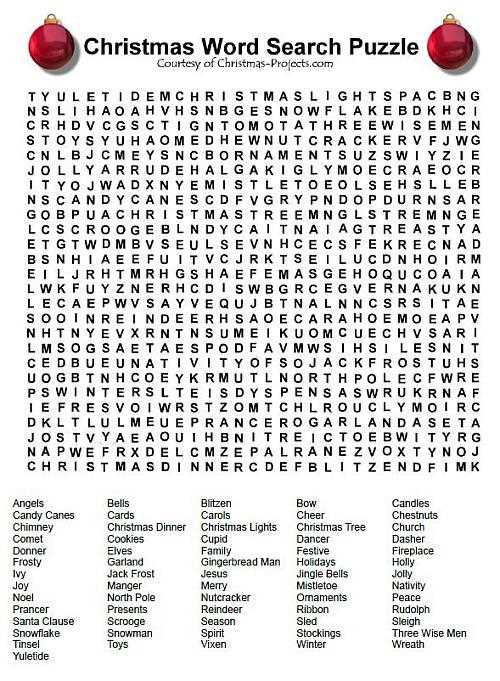
Choose themed letter grids with a 12×12 or 15×15 layout and a curated list of 15–25 seasonal terms to match the age group. For early readers (ages 5–7), limit entries to 4–6 letters such as snow, elf, star, and keep all terms placed horizontally or vertically. For older children (8–12), include diagonal and backward placement, expand the grid to 18×18, and increase the list to 30 items like mistletoe, reindeer, and gingerbread.
Adjust difficulty by controlling letter density and overlap frequency. A beginner sheet should avoid excessive shared letters and use a clear sans-serif font at 14–16 pt size for readability when printed on US Letter paper (8.5×11 inches). For advanced puzzles, raise overlap to at least 40% of total entries and mix uppercase with lowercase characters to sharpen visual discrimination skills.
Design each worksheet with a clearly separated term bank placed below the grid in two or three columns to reduce visual clutter. Add a small answer key on a second page with highlighted solutions rather than strikethrough lines to simplify checking during classroom activities or family gatherings. For group settings, prepare multiple versions with identical term lists but varied placement patterns to discourage copying while maintaining the same challenge level.
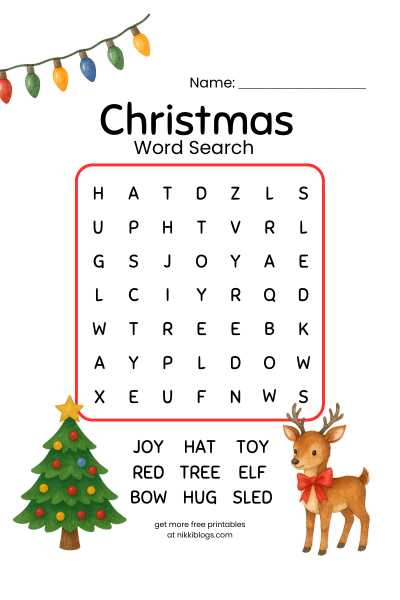
Use thematic categories–winter foods, decorations, traditions, characters–to create focused sets for parties or lesson plans. A pack of 5–7 distinct letter challenges, each requiring 10–20 minutes to complete, keeps participants engaged without fatigue. Print on 24 lb paper for durability, and consider grayscale backgrounds under 10% opacity to save ink while maintaining a festive look.
Christmas Word Search Printables for Kids Classrooms and Holiday Parties
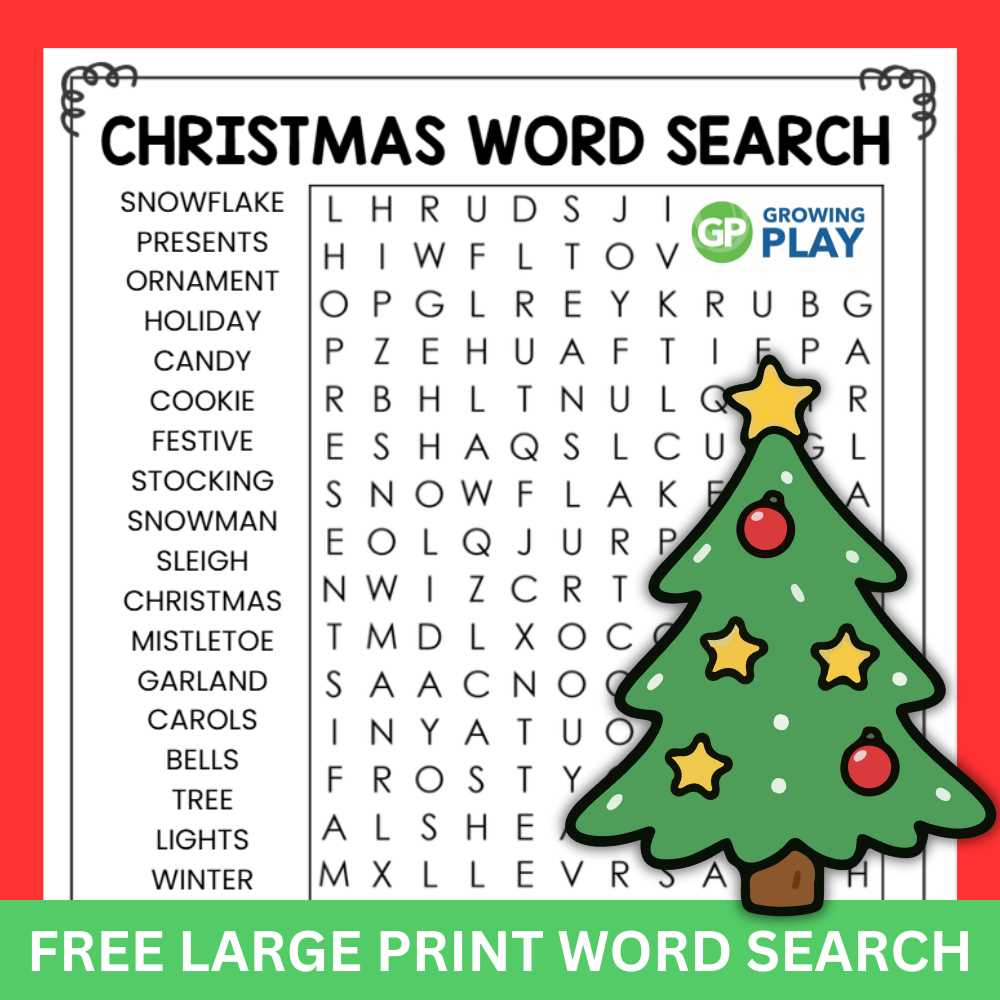
Choose themed letter grids with 10–15 hidden holiday terms for grades K–2 and 18–25 terms for grades 3–5 to match reading level and attention span. Keep the puzzle area within 6×6 to 10×10 letters for younger learners and expand to 12×12 or 15×15 for older students. Use clear sans-serif fonts at 18–24 pt for primary classrooms and provide a separate answer key for instructors to speed up checking during busy December schedules.
For classroom rotation centers, prepare three difficulty tiers labeled by color rather than age. The green set may include horizontal and vertical terms only; the red set can add diagonal and backward placements. Limit obscure vocabulary; select seasonal items such as ornaments, sleigh, reindeer, cocoa, mittens, carols, and snowflake. Cap completion time at 10 minutes for warm-ups or 20 minutes for literacy blocks, and track average finish times to refine grid density.
At holiday parties, format each letter hunt on half-page sheets to reduce paper use and allow quick distribution. Print 30–40 copies per group of 25 children to cover mistakes and late arrivals. Add a simple scoring rule–1 point per term, bonus 5 points for finishing under 8 minutes–to maintain structure without prizes that disrupt class management. Provide pencils with erasers rather than markers to keep sheets reusable for younger siblings.
Differentiate for mixed-ability groups by offering a picture-supported vocabulary list on the margin for early readers, while advanced students receive only a numeric count of hidden items. For bilingual classrooms, include dual-language term banks aligned line by line to reinforce vocabulary acquisition during seasonal activities.
Use black-and-white designs with bold borders to keep printing costs under control; a 500-sheet ream typically supports four classes for the entire month if each activity is limited to one page. Avoid heavy background graphics that consume toner and reduce legibility under fluorescent classroom lighting.
Incorporate cross-curricular links by selecting terms tied to math (calendar dates, winter measurements), social studies (global winter traditions), and music (choir, melody, bell). After completion, assign a five-sentence writing prompt using at least three discovered terms to extend the literacy objective beyond the grid itself.
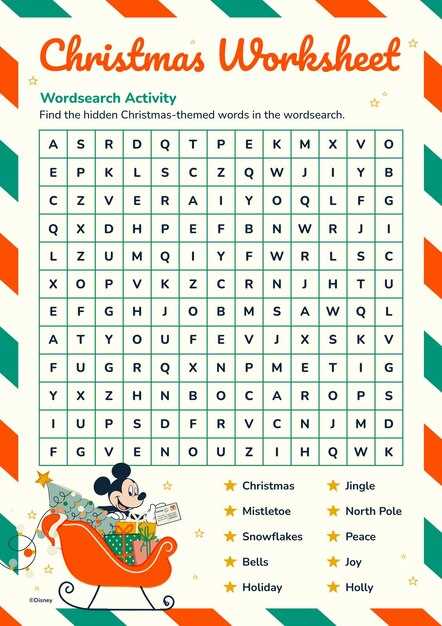
Store master copies in labeled folders by difficulty and year to streamline reuse next season. Keep editable templates in standard US Letter format with 0.5-inch margins so they align with typical school copiers, and review spacing annually to prevent letter crowding that slows scanning speed for developing readers.
How to Choose Christmas Word Search Printables by Age Level Vocabulary Size and Grid Difficulty
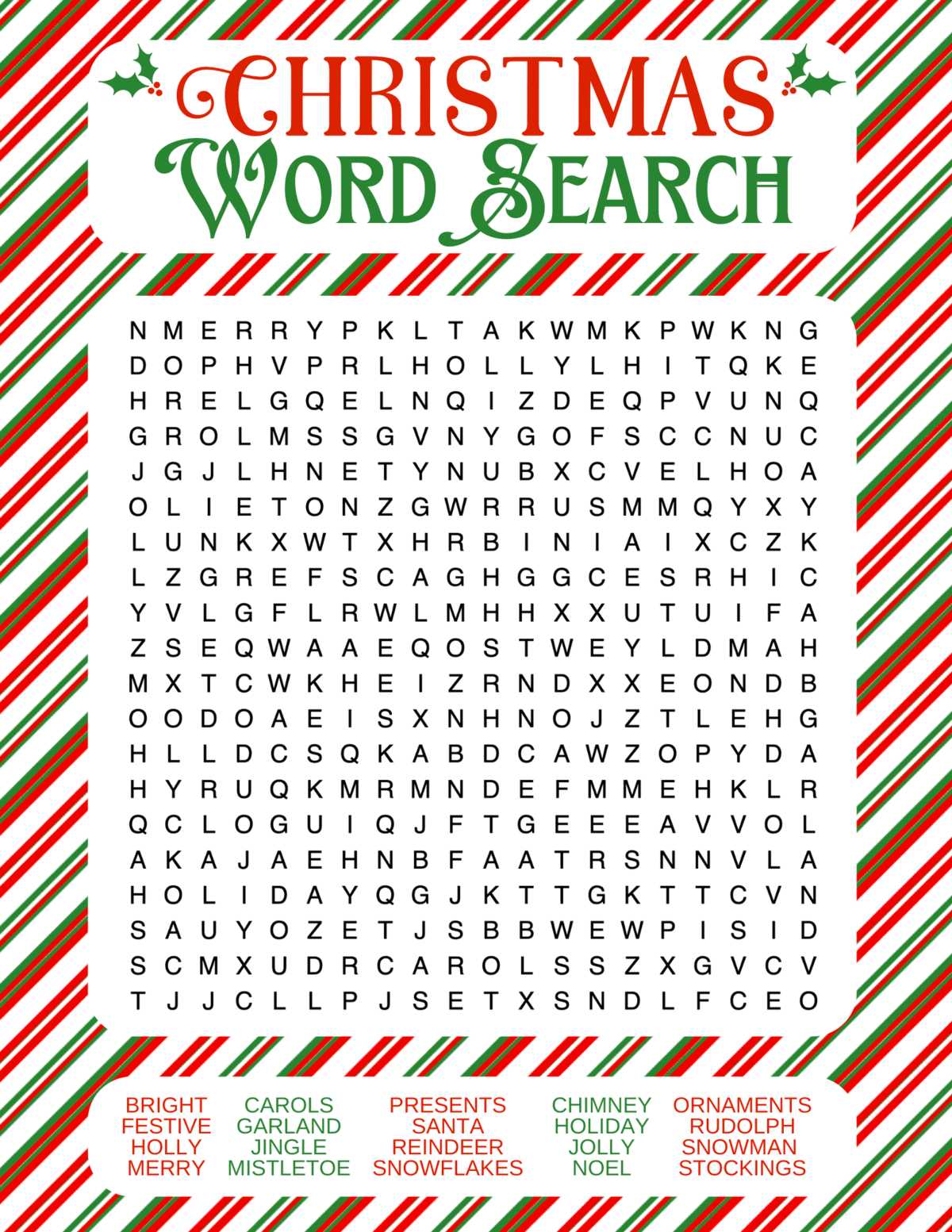
Select letter-grid puzzles by matching reading ability to grid size and term length: ages 4–6 handle 6×6 or 8×8 layouts with 5–8 short seasonal terms (3–5 letters, placed only horizontally and vertically), while ages 7–9 manage 10×10 or 12×12 layouts with 10–15 entries up to 8 letters and occasional backward placement.
For ages 10–12, use 12×12 to 15×15 matrices containing 18–25 themed entries, including diagonal and reverse directions, and vocabulary up to 10–12 letters such as “celebration,” “reindeer,” or “ornament.” Teen groups can work with 16×16 or larger formats that mix forward, backward, and diagonal orientations, overlapping terms, and similar-looking letter clusters to increase scanning complexity. Limit total target terms to maintain completion time within 10–20 minutes for classroom use and 20–30 minutes for home activities. Balance cognitive load by adjusting three variables together: grid density (ratio of filled cells to blank or random letters), average term length, and directional variety. Avoid oversized matrices with short, simple vocabulary, which create visual clutter without raising linguistic challenge; instead, expand vocabulary range alongside grid growth to keep difficulty proportional.