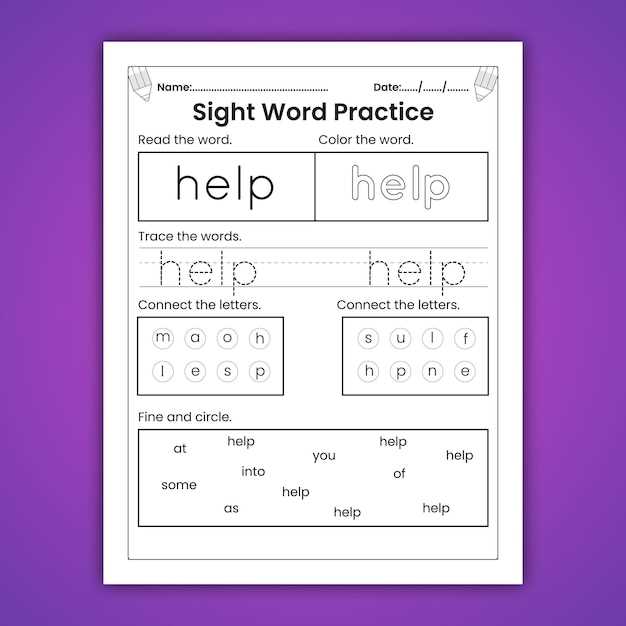
Use short daily drills with high-frequency vocabulary sheets to help young learners recognize common terms automatically. Five to seven minutes per session is enough to build quick recall if the material focuses on repetition, tracing, and simple matching. Choose pages that group 4–6 target terms at a time; research in early literacy shows children retain new visual language faster when exposure is limited but repeated across several days.
Well-designed activity pages should combine large clear fonts, visual cues, and interactive tasks such as circling, coloring, or cut-and-paste sorting. Avoid cluttered layouts–preschool learners process information better when each page highlights one small skill. For example, pairing a familiar term with a simple picture increases recognition accuracy by up to 30% during first exposures.
Consistency matters more than volume. Rotate themed practice pages weekly and revisit previously learned terms every third or fourth session. Teachers and parents report stronger retention when review sheets appear at spaced intervals rather than in large one-time batches. Select resources that can be quickly reproduced at home or in class, and track progress by marking mastered vocabulary after three consecutive correct readings.
High-Frequency Vocabulary Activity Sheets for Early Readers
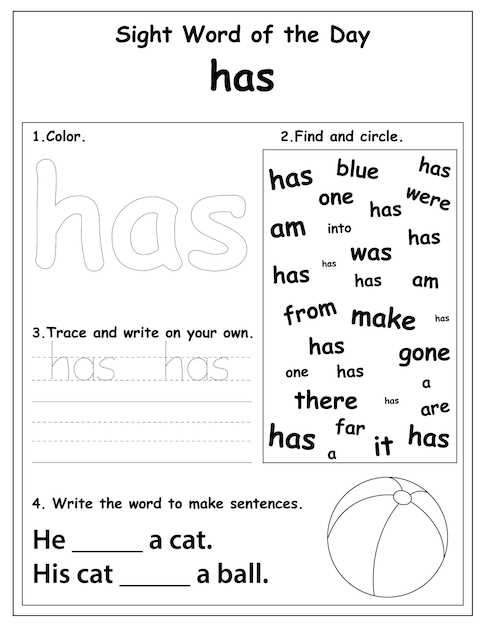
Use large-font recognition pages that focus on 5–7 high-frequency terms per sheet to speed up early reading progress. Choose materials that include tracing lines, simple sentence practice, and matching tasks so young learners repeatedly see each target term in context.
Well-designed activity pages should follow a clear progression: begin with bold visual exposure, continue with guided tracing, then move toward independent reading and short fill-in exercises. Aim at sets that group terms by difficulty level (for example: beginner lists of 20–30 items, then intermediate groups of 40–60) and include playful elements such as coloring cues or cut-and-paste tasks. Print on thick paper to allow marker use without bleed-through, and rotate new sheets every 2–3 days to maintain attention while reinforcing memory through spaced repetition.
How to Choose Age-Appropriate Sight Word Worksheets for Kindergarten Learners
Select practice pages that match a child’s reading stage rather than their calendar age. If a learner still recognizes fewer than 10 high-frequency terms, choose sheets with large fonts, clear spacing, and no more than 3–5 target items per page. Children who already identify 25–40 common terms can handle denser layouts and short phrase tasks.
Check visual load before downloading or printing. Five-year-olds process information better when the page contains strong contrast, wide margins, and simple graphics. Avoid crowded designs with multiple fonts or decorative backgrounds; these slow recognition speed and increase distraction. A clean black-on-white format typically produces faster recall during early reading drills.
Pay attention to task type. Early learners benefit from recognition activities rather than heavy writing demands. Suitable formats include:
- circle the target term
- match text to picture
- color-code repeated items
- trace dotted letter forms
Full sentence writing or paragraph copying suits only children who already form letters confidently.
Sequence matters. Choose materials that introduce new high-frequency items gradually–no more than 2–3 unfamiliar entries per session. When too many new items appear at once, retention drops sharply. A good progression repeats previously learned vocabulary at least three times across different pages.
Evaluate phonetic simplicity. At the early stage, prioritize short patterns such as “I,” “am,” “to,” and “we.” Avoid pages packed with irregular spellings until the child shows stable recognition of basic forms. Mixing highly irregular items too early often leads to guessing rather than true recall.
Consider motor skill readiness. Many five-year-olds still develop pencil control, so thick tracing lines and large writing boxes work better than narrow ruled spaces. If a child presses too hard, struggles to stay within lines, or tires quickly, switch to circle-and-match formats instead of handwriting-heavy tasks.
Use quick performance checks every week. After completing a set of practice pages, present 10 previously taught terms on flashcards. If the child reads at least 8 correctly within 3 seconds each, move to the next difficulty level. If accuracy falls below 70%, repeat similar practice materials rather than increasing complexity.
Finally, rotate themes to maintain attention without raising difficulty. Young learners respond better to pages featuring animals, food, vehicles, or seasonal scenes. The vocabulary target stays constant while the context changes, which strengthens memory and keeps practice sessions productive without overwhelming the child.