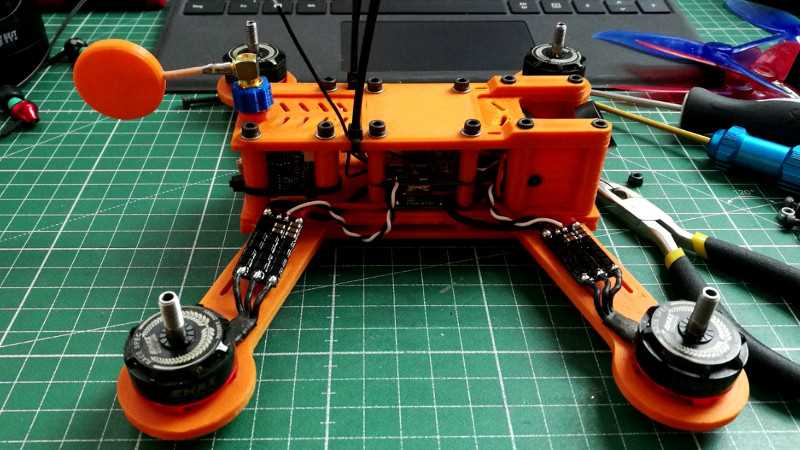
If you’re planning to build a lightweight and durable structure for your RC aircraft, selecting the right materials is the first step. PLA and ABS are popular choices for home printing, with PLA being easier to work with and offering good strength-to-weight ratio. ABS, on the other hand, provides better resistance to heat, making it more suitable for high-performance builds. Choose the material based on your needs: PLA for beginner-friendly projects, and ABS for durability in extreme conditions.
Next, focus on the design. Ensure that the geometry of the parts is optimized for both strength and aerodynamics. A good starting point is using hexagonal or honeycomb patterns to reinforce key areas while reducing weight. Be mindful of the dimensions to avoid excess bulk, but make sure to keep enough material around the joints and attachment points to prevent cracking during flight.
After printing, carefully inspect each piece for potential weak spots or imperfections. For enhanced structural integrity, consider reinforcing critical sections with fiberglass or carbon fiber strips. These materials are lightweight yet incredibly strong, ideal for high-impact protection without adding significant weight. This process is essential if you’re aiming for a project that can handle rough conditions or high speeds.
Designing a Strong and Lightweight Structure for RC Models
Choosing the right material is key to building a strong yet lightweight structure. PLA is commonly used because it’s easy to print and provides a solid build, but if you’re looking for something more durable, ABS or Nylon are better options. These materials offer higher impact resistance, which is important for models exposed to frequent crashes or heavy use.
Pay attention to the geometry of the parts you design. For a high-strength yet light model, a honeycomb or triangular lattice structure is often the best choice. These designs minimize material use while maximizing rigidity. Keep in mind that the more open space within your structure, the less weight your model will carry.
Incorporating reinforced attachment points is vital. Many 3D designs feature hollow sections where arms or motors are attached. These areas should be reinforced with extra material or specific design features such as fillets and ribs to distribute stress more effectively. Using inserts made of metal or carbon fiber can also improve the attachment strength.
Cooling and warping issues are a common challenge during printing. To prevent warping, ensure that the temperature in your print environment is consistent. If using ABS, an enclosed printer or heated bed can help reduce the risk of warping. For PLA, printing in a draft-free area can be enough to avoid such issues.
After printing, carefully inspect each part for imperfections. Small cracks or weak spots can develop, especially around joints or stress points. Sanding down these areas and applying a thin layer of epoxy resin or another strengthening material can help improve the strength and smoothness of the surface.
Once all parts are printed, assembling them correctly is just as important as the design. Use screws or bolts where appropriate, but avoid over-tightening as this can weaken the structure. Also, adding vibration dampeners or rubber mounts at key points can reduce the strain on the printed material during operation.
Finally, testing your model is essential to ensure it performs well in real-world conditions. Conducting flight tests with incremental adjustments allows you to identify weak points or areas for improvement. Make sure to evaluate how the structure responds to forces during flight and adjust the design as necessary for better performance.
Choosing the Right Materials for a 3D Printed Structure
For high-strength applications, Nylon and Carbon Fiber-reinforced filaments are recommended. Nylon is durable, flexible, and resistant to wear, which makes it suitable for frames exposed to stress and impacts. Carbon Fiber filaments, though more expensive, offer exceptional stiffness and strength-to-weight ratio, ideal for racing or high-performance models.
If your model needs a lightweight build with less emphasis on durability, PLA is a good option. PLA is easy to print, provides good surface finish, and is less prone to warping. However, it is more brittle than ABS or Nylon, so it may not hold up well under heavy stress or extreme conditions.
ABS is another strong contender for creating durable parts. It has better impact resistance than PLA and can withstand higher temperatures, which makes it useful for outdoor use. ABS also bonds well to itself, reducing the likelihood of delamination during printing.
For added strength in specific areas, hybrid filaments such as PETG can be considered. PETG combines the strength and flexibility of ABS with the ease of printing of PLA. It is impact-resistant, UV-stable, and has good thermal resistance, making it a solid middle-ground choice for many builds.
When selecting a filament, take into account the operating environment of your model. For indoor use, lighter materials like PLA or PETG may suffice. For outdoor and high-stress scenarios, stronger materials like Nylon or Carbon Fiber-reinforced filaments are preferable.
Lastly, consider the availability and cost of the filament. While materials like Carbon Fiber filaments provide superior performance, they can be more expensive and harder to find. If you’re building on a budget or working with limited resources, PLA or ABS may be more accessible without sacrificing too much performance.