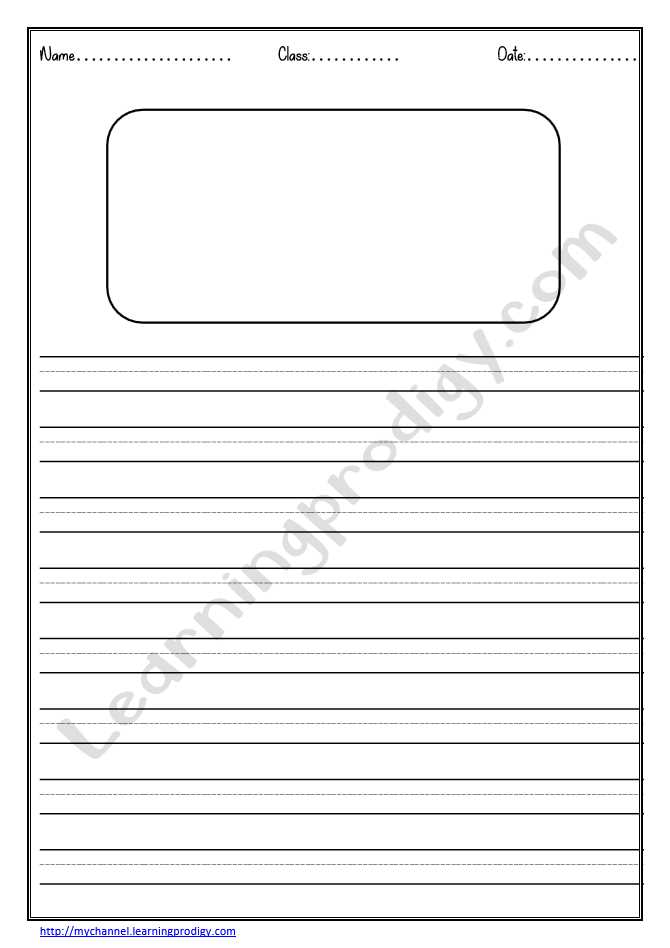
Choose wide-spaced writing sheets with line height between 12–16 mm; this range supports small hands that still struggle with precise motor control. At ages 4–6, children benefit from bold baselines and a clear mid-guide, which help them position letters consistently rather than letting characters float or sink.
Quality matters: select layouts using high contrast (dark gray or black guides on a white background) and keep each row uncluttered. Too many decorative elements reduce focus and slow skill growth. Limit each page to 6–8 writing rows so young learners do not feel overwhelmed during short practice sessions.
Use thematic versions–alphabet tracing, simple word copying, or blank handwriting rows–to match weekly learning goals. Educators often report better results when practice lasts 5–10 minutes daily instead of longer, irregular sessions. Consistent repetition with properly spaced guides builds letter size control, improves pencil pressure, and prepares children for standard classroom handwriting tasks.
Lined Paper Printable for Kindergarten: Practical Guide for Parents and Teachers
Choose worksheets with a clear three-zone layout (top, middle, bottom) and a line height of 16–18 mm to match the motor skills of early writers. Sheets with a dotted midline help children control letter size and reduce common mistakes such as oversized capitals. Use heavier margins on the left side (at least 20 mm) so young learners have a visual starting point for each row.
Adjust spacing according to the child’s stage. Beginners benefit from wide-ruled guides with strong color contrast (dark baseline, lighter midline). After consistent letter formation appears, switch to narrower rows around 12–14 mm to build precision. Avoid decorative backgrounds; plain white with soft guidelines keeps attention on handwriting mechanics rather than visuals.
Print batches in grayscale at 100% scale and test one sheet before mass use. Many home printers shrink content automatically, which can distort proportions and frustrate beginners. Store finished pages in labeled folders by skill level (tracing, copying, free writing) so adults can quickly select the right practice material during short sessions of 7–10 minutes.
Combine structured handwriting sheets with quick verbal cues: “touch the top line,” “stay on the base,” and “leave finger space between words.” Consistent wording paired with properly spaced writing guides speeds habit formation and reduces the need for constant correction.
How to Choose the Right Line Spacing and Format for Kindergarten Writing Practice
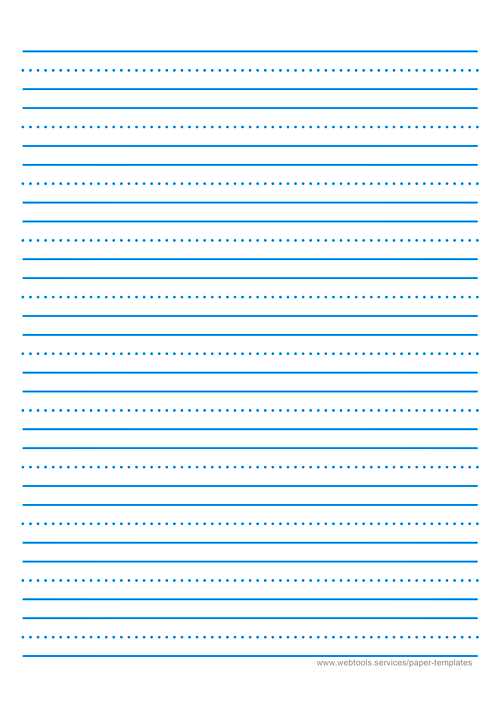
Choose line spacing between 1.25–1.5 inches (3.2–3.8 cm) for beginners aged 4–6; this width gives enough room for large letter formation without forcing cramped strokes. If a child already controls pencil movement, reduce spacing to about 1 inch (2.5 cm) to encourage proportion accuracy. Three-guide systems (top line, midline, baseline) work better than simple double rules because they visually teach letter height. Use bold baselines (at least 1.5 pt thickness) and lighter midlines (0.75 pt) so the writing target is visually clear. Avoid decorative backgrounds and keep margins at least 0.5 inch wide to prevent crowding near edges.
Match the layout to the child’s skill level and the task type:
- Pre-writing stage (age 3–4): wide spacing (1.5–2 inches) with dotted center guides and large left margin boxes for name practice.
- Early letter practice (age 4–5): three-guide structure, spacing about 1.25–1.5 inches, landscape orientation to allow longer stroke movement.
- Word building (age 5–6): narrower spacing near 1 inch, portrait orientation, optional dashed midline to support lowercase sizing.
- Advanced beginners: include a blank top row as a model line and add subtle vertical separators every 0.75–1 inch to help with letter spacing.
Keep contrast high (black or dark gray rules on white background) and maintain at least 6–8 writing rows per sheet so practice sessions stay focused without visual overload.