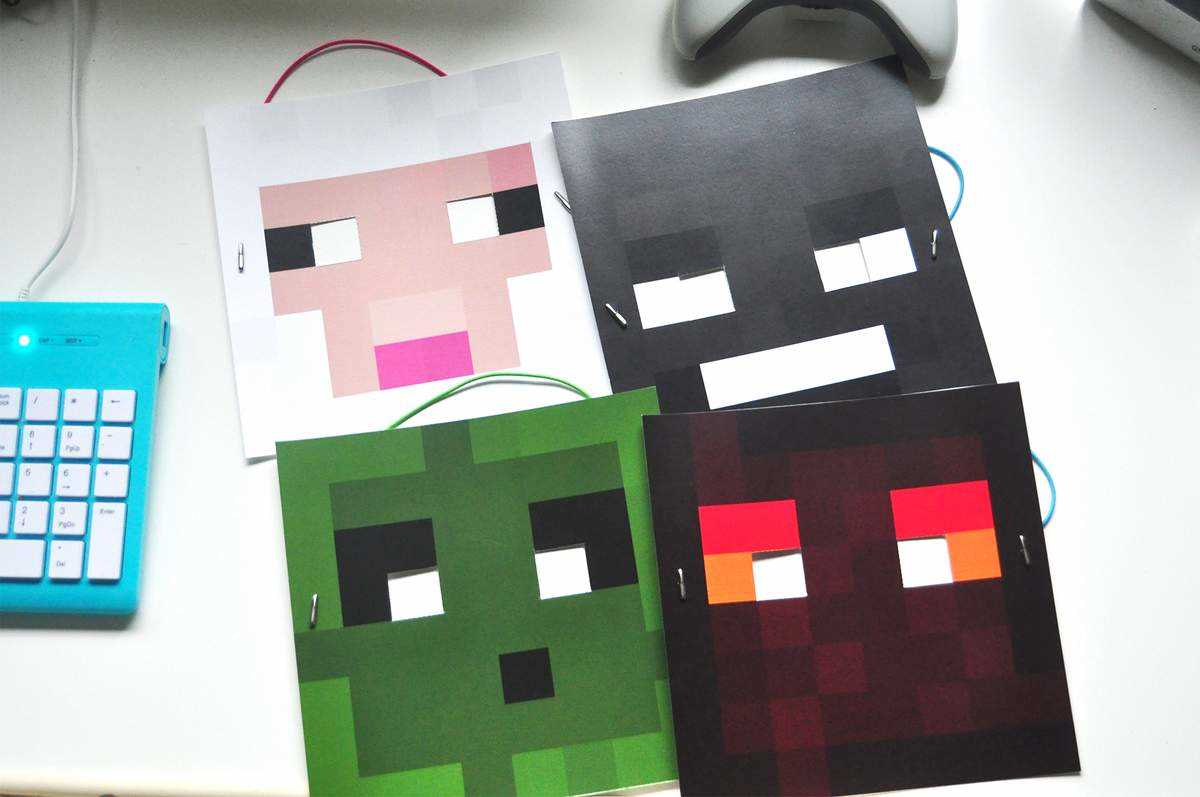
Choose high-resolution character face sheets and print them on thick matte paper to get clean edges and sturdy wearability right away. Designs based on the cube-themed sandbox hit work best when printed at 100% scale on A4 or Letter format. For children’s parties, pick simplified square-faced heroes or creatures; for cosplay, select detailed versions with visible pixel shading. This small decision noticeably affects the final look and durability.
Quality scissors and a precision knife produce sharper corners than standard school tools. Score fold lines lightly before bending so the paper keeps its geometric form instead of warping. If the template includes side flaps, apply double-sided tape rather than liquid glue to avoid wrinkles. Many hobbyists also reinforce the inner forehead area with a thin strip of cardboard, which helps the headpiece keep its shape during long wear.
Color accuracy matters more than many expect. Use printer settings set to “photo” or “high quality,” and disable automatic color correction if the design already includes calibrated tones. When preparing multiple copies for events, arrange several faces on one sheet to reduce paper waste. With the right materials and careful cutting, these pixel-inspired disguises look sharp enough for themed birthdays, school events, or casual fan gatherings.
Block-Game Character Face Templates
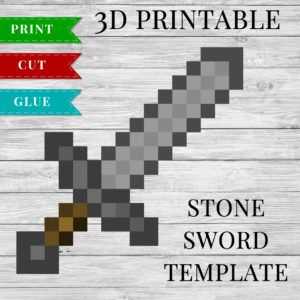
Choose high-resolution character face templates (minimum 300 DPI) and print them on thick paper between 160–220 g/m² to keep the shape rigid during wear. Thin office sheets bend quickly and distort the square design, especially around the eye cutouts.
Scale the file so the face width measures about 18–20 cm for children and 21–23 cm for teens or adults; this range aligns well with typical head proportions. Before printing multiple copies, run one test page and hold it against the wearer’s face to confirm the eye holes line up. If they sit too high, reduce vertical scaling by 3–5% rather than resizing uniformly.
Use a sharp craft knife for the inner openings and scissors only for the outer contour. Cutting the eye and mouth areas first prevents the sheet from creasing. For added durability, glue the front onto thin cardboard (for example, cereal box stock around 0.4 mm thick) and press under books for ten minutes to keep the surface flat.
Attach the headband with 8–10 mm wide elastic cord. Punch holes at least 12 mm from the edge to avoid tearing, and reinforce each hole with a small square of clear tape on the back side. If the accessory will be worn during active play, double-knot the elastic and secure it with a drop of school glue.
For variety, prepare several character designs–green creature, armored hero, or pixel skeleton–and store the files in a single folder labeled by finished width. This speeds up reprints for parties or classroom events and keeps sizing consistent across the set.
Where to Find High-Resolution Minecraft Mask Templates for Free Download
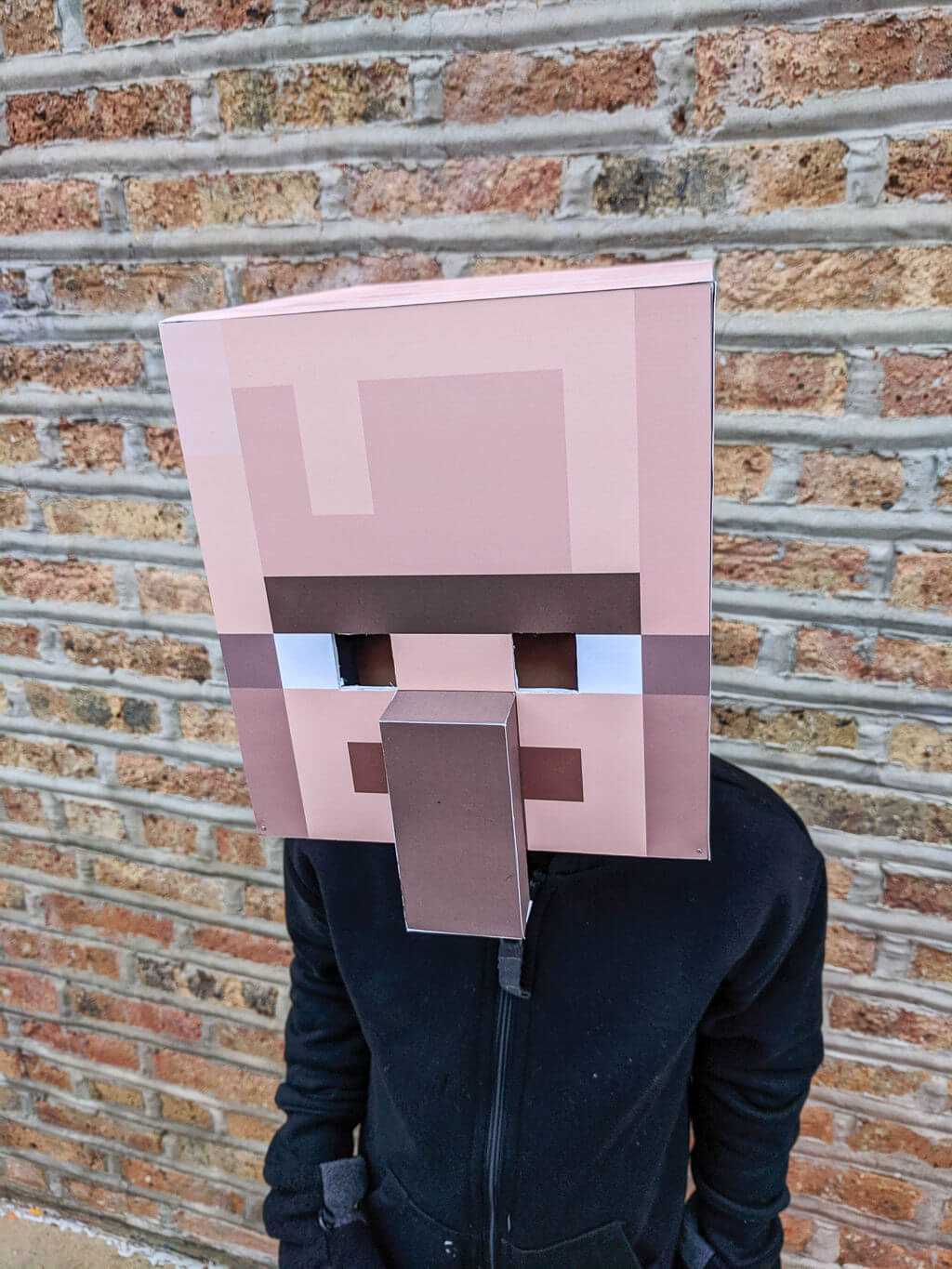
Check :contentReference[oaicite:0]{index=0} first: search for “HD block character face template” and filter by large images. Many designers upload 300 DPI files there, often in PNG or PDF format, which keeps edges sharp after printing. Prioritize pins that link to external downloads rather than compressed previews inside the platform.
Another reliable source is :contentReference[oaicite:1]{index=1}, specifically the free listings section. Use the price filter set to “Free” and include keywords like “papercraft head” or “cube character helmet.” Sellers frequently offer complimentary samples in high resolution to promote their paid packs, and these samples are usually cleanly formatted on A4 and US Letter sheets.
For fan-created assets with consistent quality, browse :contentReference[oaicite:2]{index=2}. Navigate to the skins or community submissions area and search for papercraft builds. Many contributors upload unfolded head patterns exported at 1024×1024 or higher, which produces crisp results. Check the comments section on each post; users often share improved files or corrected versions.
Educational resource sites also host surprisingly sharp character head cutouts. Teachers and homeschool bloggers frequently publish classroom-ready PDFs with thick outline guides and alignment marks. Use search operators like filetype:pdf cube character head template in your search engine to surface these materials quickly. Files produced for classroom use are usually optimized for standard printers and avoid pixelation.
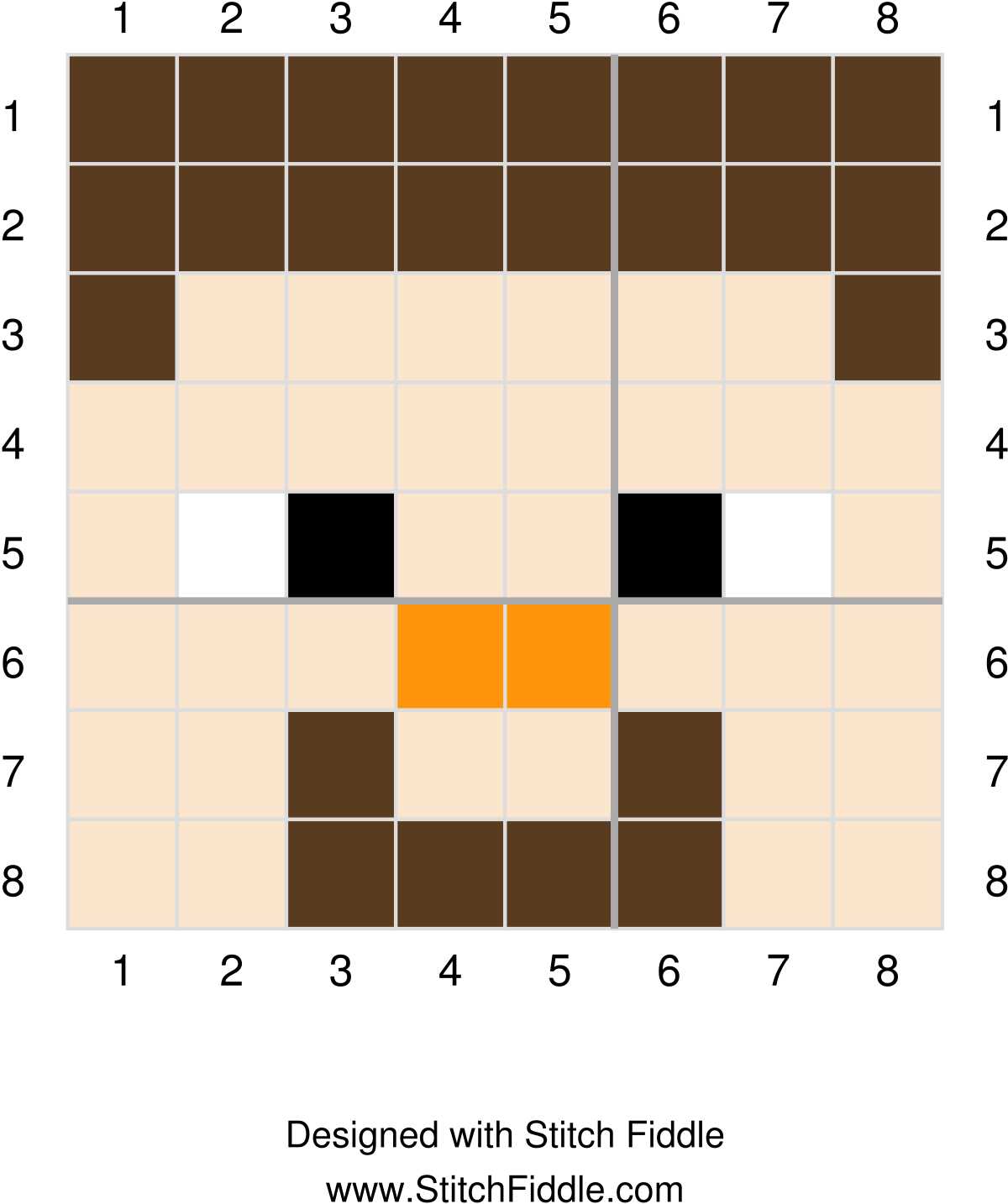
When evaluating any download, inspect the actual pixel dimensions before saving. A good rule: the unfolded head sheet should be at least 2000 pixels wide. Anything smaller tends to blur after scaling. Prefer vector PDFs when available; they preserve edges perfectly and allow resizing without quality loss.
Store the best files locally and rename them with resolution notes (for example, “creeper-head-300dpi.pdf”). Building a small personal library saves time when you need quick access for parties, classroom crafts, or costume projects.