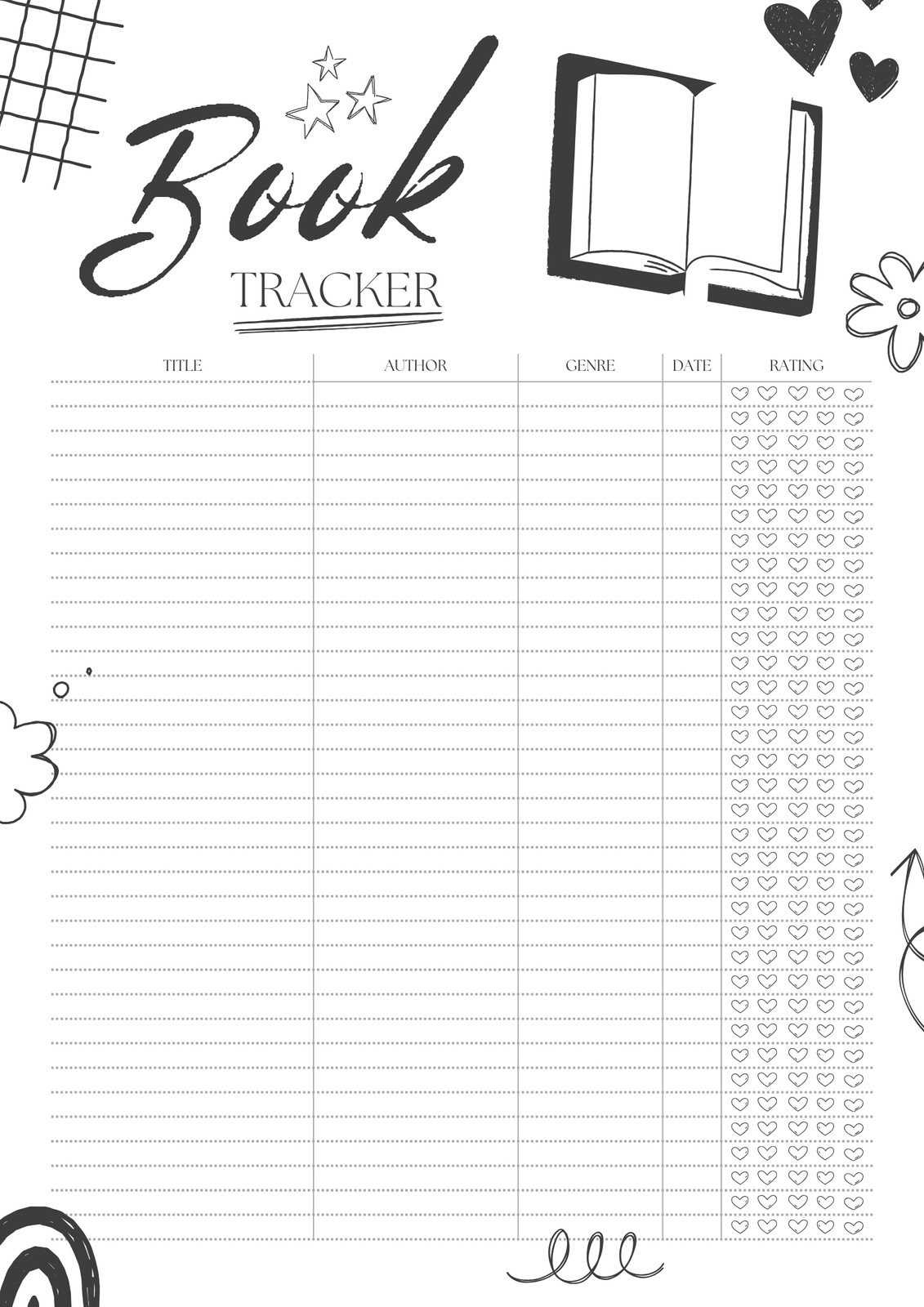
Using a dedicated tool to track your books can be an excellent way to stay motivated and organized. By recording key details about each title, you can monitor your progress, identify your preferences, and set specific reading targets. Consider choosing a template that allows you to record information like the book title, author, number of pages, and a brief overview of each reading session.
When selecting a tool to organize your books, focus on formats that let you keep both simple data and reflective insights. Whether you’re a student aiming to improve comprehension or a casual reader aiming to track your habits, a concise structure can help you evaluate your reading more effectively. Opt for designs that make tracking easy and pleasant, so you’re more likely to continue consistently.
One simple yet powerful method is using a log with space to note personal reflections after finishing a book or chapter. This practice encourages active engagement and reinforces learning. Even a few lines can help you better absorb what you’ve read and keep a mental record of your favorite moments. Plus, having everything written down makes it easy to revisit the books you’ve enjoyed the most.
Organizing Your Reading Journey
To effectively track your progress, create a template that includes basic information such as the book title, author, and start and end dates. This format helps you maintain a structured overview of your reading habits. Keep the design simple so you can quickly fill it in without getting distracted.
Including a brief personal reflection section is an excellent way to retain key takeaways from each book. After completing a reading session, write a short summary of what you learned or how the content resonated with you. This step will help deepen your comprehension and create an ongoing dialogue with the material.
If you are working toward a specific reading goal, such as finishing a certain number of books each month, design a log that tracks progress toward that target. Mark off books as you complete them and update the status regularly. This visual tracking method can help you stay on course and provide a sense of accomplishment.
Another valuable feature is adding a section for rating the books. A simple star rating system (1-5 stars) allows you to quickly assess how much you enjoyed or benefited from a particular book. Over time, this will help you identify patterns in your reading preferences and suggest books that align with your interests.
For even greater personalization, consider including a space for notes or questions that arise during your reading. This can encourage deeper analysis, promote discussion with others, or help you plan what to read next. This technique turns the reading process into a more engaging and thought-provoking activity.
How to Choose the Right Reading Log Template for Your Needs
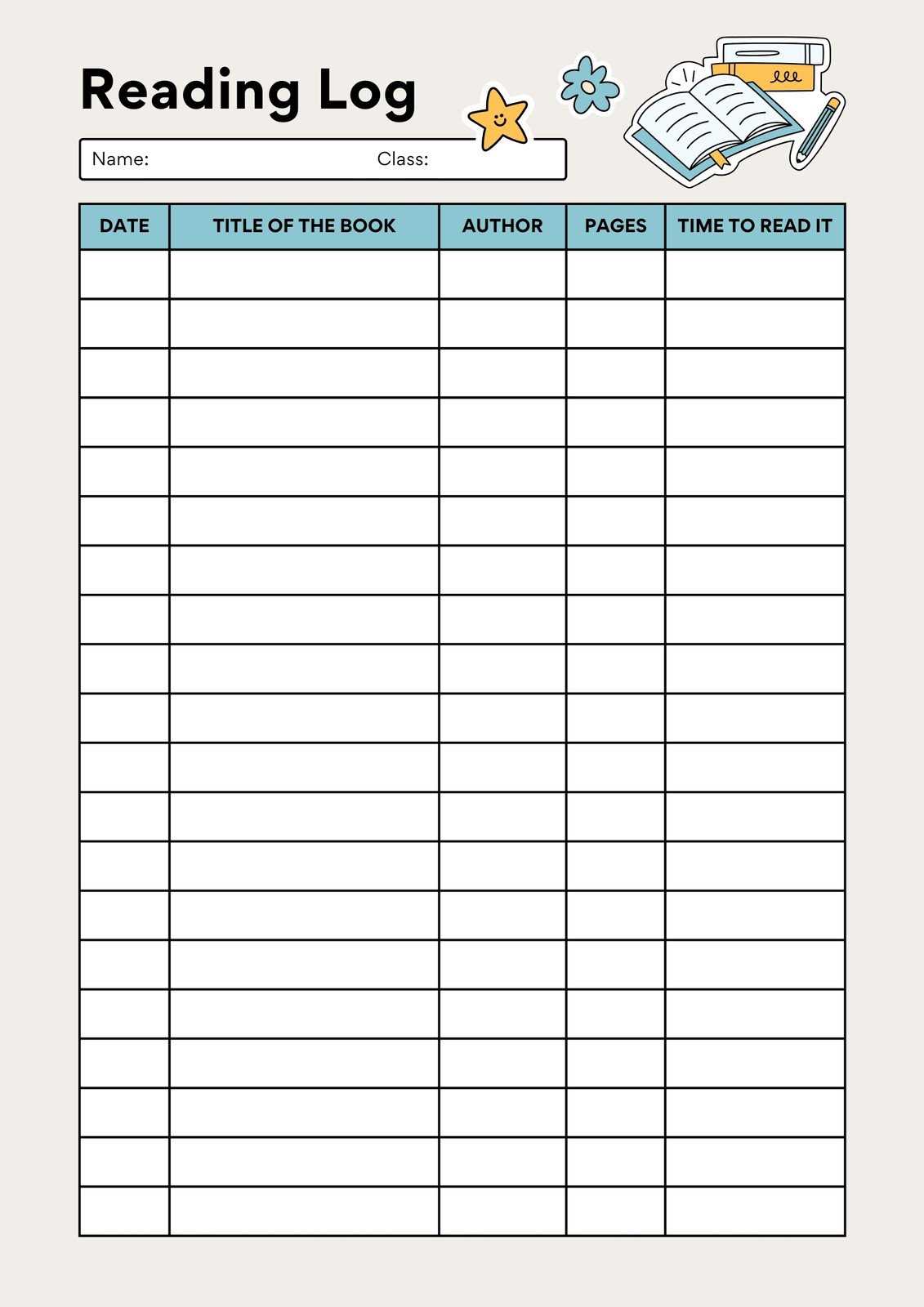
Start by identifying your primary goal. If you’re tracking the completion of books for personal enrichment, a simple layout with basic details like book titles, authors, and completion dates will suffice. Keep the design minimalist to avoid unnecessary clutter.
If you’re aiming for more detailed reflections, consider adding sections for notes and ratings. This format helps capture thoughts, questions, and memorable quotes as you progress through each title. A template with a section for a brief review after finishing each book can also enhance your understanding and retention.
For specific reading challenges or academic purposes, look for a template that includes progress tracking tools. Incorporating a goal section with checkboxes or a visual progress bar will keep you motivated. These features are perfect for structured reading programs or classroom settings where measurable progress is key.