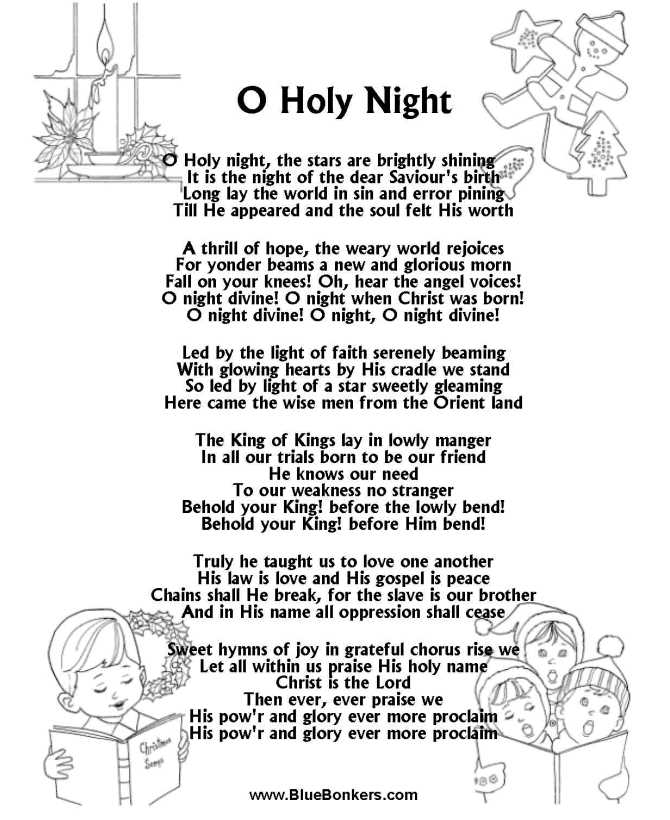
Choose PDF files with clear typography (minimum 12–14 pt font for adults, 16 pt for seniors and children) and standard US Letter or A4 layout to avoid scaling issues during home printing. Select versions with public domain status such as “Silent Night”, “Jingle Bells”, and “O Holy Night” to prevent copyright conflicts at school or community events. Prioritize one-page arrangements per title to eliminate page turns during group performance.
Adjust margins to 0.5–0.75 inches and set line spacing to at least 1.15 for readability under low indoor lighting. Use high-contrast black text on white background; decorative scripts reduce legibility when printed in bulk. For choir use, format verses in two-column layout to reduce paper consumption by up to 40% without shrinking text below readable size. Add chord symbols above lines only if musicians require accompaniment; otherwise remove them to keep the layout clean for participants.
Organize selected carol texts into categorized packets: Traditional (“Joy to the World,” “Hark! The Herald Angels Sing”), Children’s Favorites (“Rudolph the Red-Nosed Reindeer,” “Frosty the Snowman”), and Sacred Hymns. Compile 8–12 titles per booklet, export as a single PDF under 5 MB to simplify email distribution, and print double-sided to cut paper usage in half. For classroom settings, laminate one master copy and reproduce as needed to maintain consistent formatting throughout the season.
Before final printing, run a single test page to confirm alignment and ink density. Laser printers provide sharper text for large batches, while inkjet devices are sufficient for under 30 copies. Store finalized files in cloud folders labeled by year to reuse layouts with minor updates rather than redesigning from scratch.
Free Printable Christmas Song Lyrics for Home School and Church Use
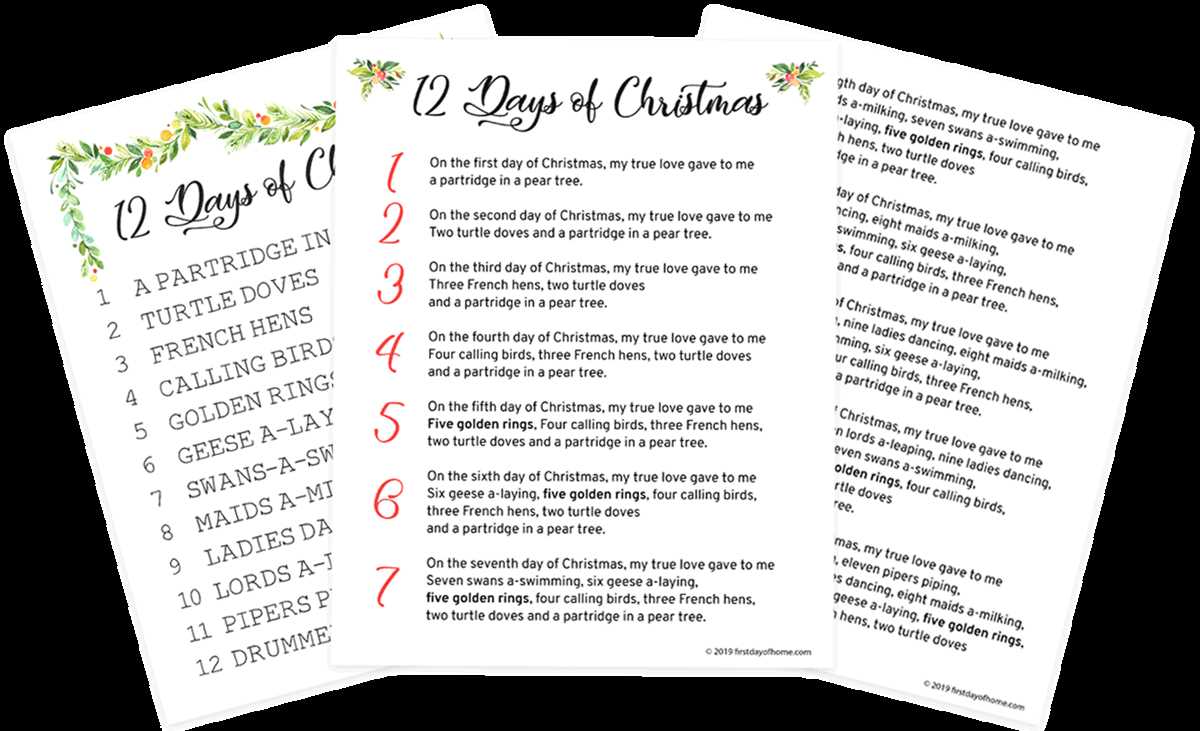
Choose public domain carols first to avoid copyright issues and simplify classroom or congregation distribution. Hymns published before 1928 in the United States are generally safe to reproduce, which makes pieces like “Silent Night,” “Joy to the World,” and “O Come, All Ye Faithful” reliable options for lesson packets, rehearsal sheets, and pew handouts.
For structured learning at home, prepare text sheets with large 16–18 pt font for early readers and double-spaced verses for annotation. Add wide margins so children can underline rhyming pairs, circle archaic vocabulary, and mark breathing points. A two-column layout reduces page count and paper use while keeping stanzas visually separated for memorization drills.
Include a mix of well-known and lesser-used carols to expand musical literacy:
- “Hark! The Herald Angels Sing” for studying metaphor and theological language.
- “The First Noel” to practice narrative sequencing across verses.
- “God Rest Ye Merry, Gentlemen” for analyzing modal melodies and minor tonalities.
- “Angels We Have Heard on High” to work on sustained vowel sounds in the refrain.
For church services, format handouts in black ink on white or cream paper to ensure readability under varied lighting. Keep each piece to one page when possible; if multiple pages are required, place clear page numbers at the bottom right corner. Staple packets along the left margin to allow flat placement on music stands.
Adjust complexity by age group. Younger children benefit from refrains only, repeated several times for fluency. Middle-grade students can handle full multi-verse texts with highlighted keywords. Teen groups may compare different English translations of the same hymn and discuss shifts in meaning or tone.
Organize materials in thematic sets for seasonal progression:
- Advent anticipation selections.
- Nativity narrative pieces.
- Rejoicing and praise hymns.
- Benediction or closing congregational numbers.
Store master PDFs in a clearly labeled folder with version dates, key signatures (if paired with notation), and vocal range notes. This prevents reformatting each year and allows quick updates when adjusting font size or correcting punctuation.
Before distribution, proofread every stanza against a reliable hymnal edition to avoid textual errors that can disrupt group singing. Consistent punctuation, accurate verse order, and standardized spelling maintain clarity during rehearsals and services while reducing confusion among participants.
Where to Find Legally Free Printable Christmas Song Lyrics in PDF Format
Use public domain archives that clearly mark texts as no longer protected by copyright. For example, Project Gutenberg and Hymnary.org host many classic carols published before 1929 in the United States, which places the original words in the public domain. Search by title such as “Silent Night” or “O Come, All Ye Faithful,” verify the publication date, and download the available PDF files generated from verified editions.
Consult university and library digital collections that provide downloadable booklets of traditional holiday carols. Many academic institutions digitize 19th-century hymnals and make them accessible as scanned PDFs. Use search queries like “public domain carol hymnal PDF site:.edu” to filter results to educational domains, then confirm that the source edition predates modern copyright extensions.
Explore church and choral organization websites that explicitly state public domain status for the texts they share. Numerous congregations publish service bulletins and carol booklets in PDF format featuring heritage repertoire. Review the footer or copyright notice to confirm that only the musical arrangement is protected while the original words are cleared for unrestricted use.
Check reputable public domain music repositories such as IMSLP (International Music Score Library Project). Although primarily focused on sheet music, it includes vocal works with complete texts embedded in downloadable PDFs. Filter by composer and confirm that both the composer and lyricist died more than 70 years ago, which typically satisfies U.S. public domain criteria.
Use government or nonprofit cultural heritage portals that digitize historical publications. The Library of Congress digital collections and similar archives provide scans of antique carol books in PDF format. Because these scans reproduce materials published before the copyright cutoff, the textual content can be reused without permission.
Review Creative Commons platforms where contributors release holiday verse under permissive licenses. Websites like Wikimedia Commons often host PDF compilations or transcriptions accompanied by license details. Select materials labeled CC0 or CC BY, and follow attribution requirements where specified.
Avoid downloading from random blogs that provide modern transcriptions without clear rights statements. Contemporary arrangements, translations, and newly edited versions may still be protected, even if the original 19th-century text is not. Confirm publication dates, author death dates, and license terms before saving any PDF for distribution or group use.