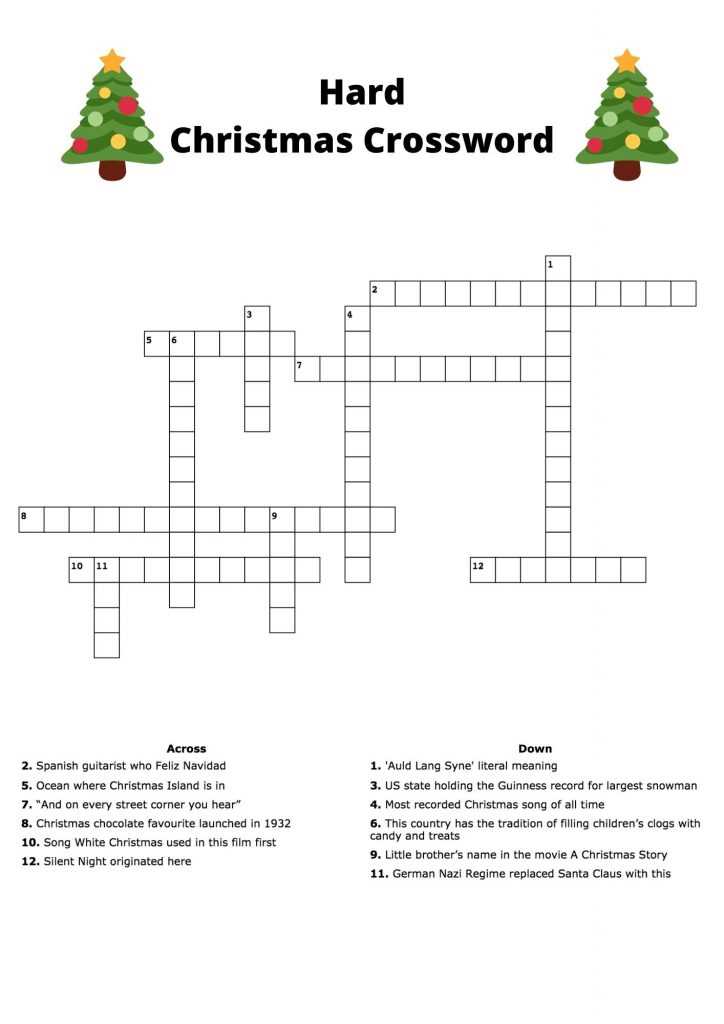
Download a seasonal word puzzle in PDF format with a 12×12 or 15×15 grid to suit the age group and available time. For children ages 7–9, limit the list to 15–18 clues with short answers (3–6 letters). For teens and adults, prepare 30–40 prompts with mixed answer lengths up to 12 letters. This range keeps solving time between 15 and 30 minutes without fatigue.
Choose vocabulary linked to winter customs, gift-giving traditions, festive meals, classic carols, and symbolic decorations.
Holiday Word Puzzle PDF: Practical Guide to Downloading, Customizing, and Using
Download the activity sheet in PDF format with a resolution of at least 300 DPI to avoid blurred letters after printing. Check that the page size matches your paper settings (US Letter 8.5×11 inches or A4 210×297 mm) and disable automatic scaling in the print dialog to preserve the grid proportions. If the file opens in a browser, save it locally before editing to prevent formatting shifts. For classroom use, choose a version with an answer key on a separate page to simplify checking and reduce paper waste.
Customize the puzzle by editing the text in a PDF editor such as Adobe Acrobat or by converting the file to DOCX format for modification in a word processor. Replace generic clues with names of students, family members, or specific seasonal traditions to increase engagement. Keep the grid symmetrical and limit black squares to no more than 20–25% of the total cells to maintain solvability. For younger participants, use shorter words (3–6 letters) and provide visual hints; for teens or adults, expand the vocabulary to 8–12 letters and incorporate cultural references or song titles associated with winter festivities.
Print on 90–120 gsm paper to prevent ink bleed-through, especially if participants will use markers. For double-sided distribution, align margins to at least 0.5 inches and run a single test page before batch printing 20–30 copies. If you plan a group competition, add a time limit (10–15 minutes for a 10×10 grid, 20–25 minutes for 15×15) and prepare small rewards to encourage participation without disrupting the schedule.
Use the puzzle sheet in multiple formats: as a warm-up task during a December lesson, as a table activity during a family dinner, or as part of a themed party station. Laminate one master copy and provide dry-erase markers for repeated use. For remote settings, upload the file to a shared drive and let participants annotate it digitally using built-in comment tools, ensuring the grid remains locked to prevent accidental edits.
How to Choose Christmas Crossword Free Printable by Age Group Difficulty and Answer Format
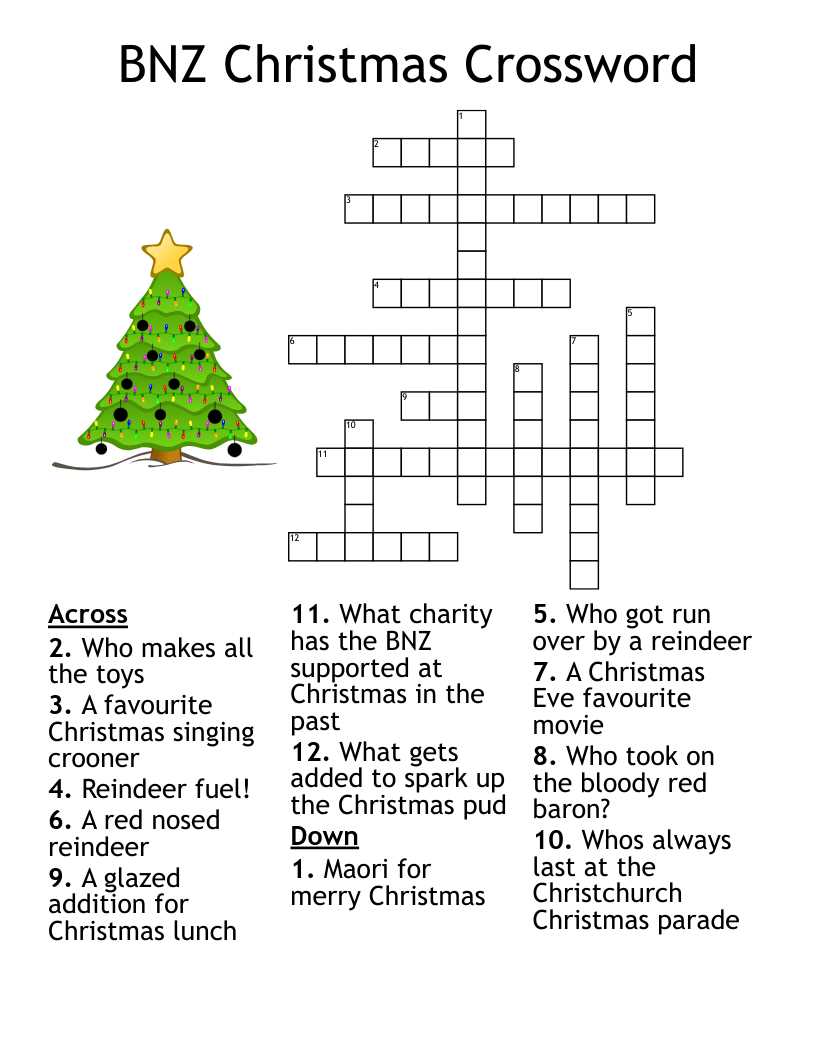
Select a holiday-themed word grid based on the participant’s reading level and vocabulary size, not just age. For ages 4–6, choose picture-supported clue sheets with 6–8 horizontal entries, large 24–28 pt uppercase letters, and no diagonal intersections. For ages 7–9, look for 10–15 clues, simple definitions (one to three words), and a grid no larger than 12×12. For ages 10–12, aim for 18–25 clues with mixed horizontal and vertical entries and a 13×13 or 15×15 layout.
Match difficulty to measurable features instead of labels like “easy” or “hard.”
- Word length: early readers handle 3–5 letter answers; teens manage 7–10 letters.
- Clue type: direct definitions (“Santa’s vehicle”) are simpler than riddles or wordplay.
- Theme density: limit thematic vocabulary to 60% for children; raise to 80% for adults who expect tighter focus.
- Black square ratio: beginner grids work best with 20–25% blocks; advanced layouts may drop below 18% for higher interlock.
For mixed-age groups, download two coordinated puzzle sheets that share a theme but vary in grid size and clue complexity. Keep the younger set at 8–10 clues with a visible word bank placed below the grid. Offer the older group a version without a word bank and add 3–5 bonus clues that require cultural references, such as classic carols or winter traditions.
Choose the answer format according to the setting. For classroom use, opt for versions with a separate solution page formatted on a second sheet to avoid accidental viewing. For home activities, consider editions with answers printed in light gray beneath each clue, allowing self-check without flipping pages. Party settings benefit from large-format answer keys (at least 18 pt font) that can be projected or displayed.
Evaluate layout clarity before downloading. Check that each clue number aligns precisely with its starting square, margins are at least 0.5 inches for standard US Letter paper, and grid lines are 1–1.5 pt thickness for clear photocopying. Avoid decorative backgrounds behind the grid; high-contrast black-on-white designs reduce eye strain and print errors.
Adjust challenge through timing and scoring rules. For children under 8, remove time limits and award one point per correct word. For ages 9–12, set a 15-minute cap and include a two-point bonus for completing the entire grid. Teen and adult groups can use penalty scoring: minus one point for each incorrect entry revealed in the answer sheet.
Before distributing, solve the word puzzle yourself and verify spelling consistency (American vs. British variants), plural forms, and capitalization rules for proper nouns. Confirm that clue phrasing matches the expected answer format–singular vs. plural, past vs. present tense–to prevent ambiguity that slows participants unnecessarily.