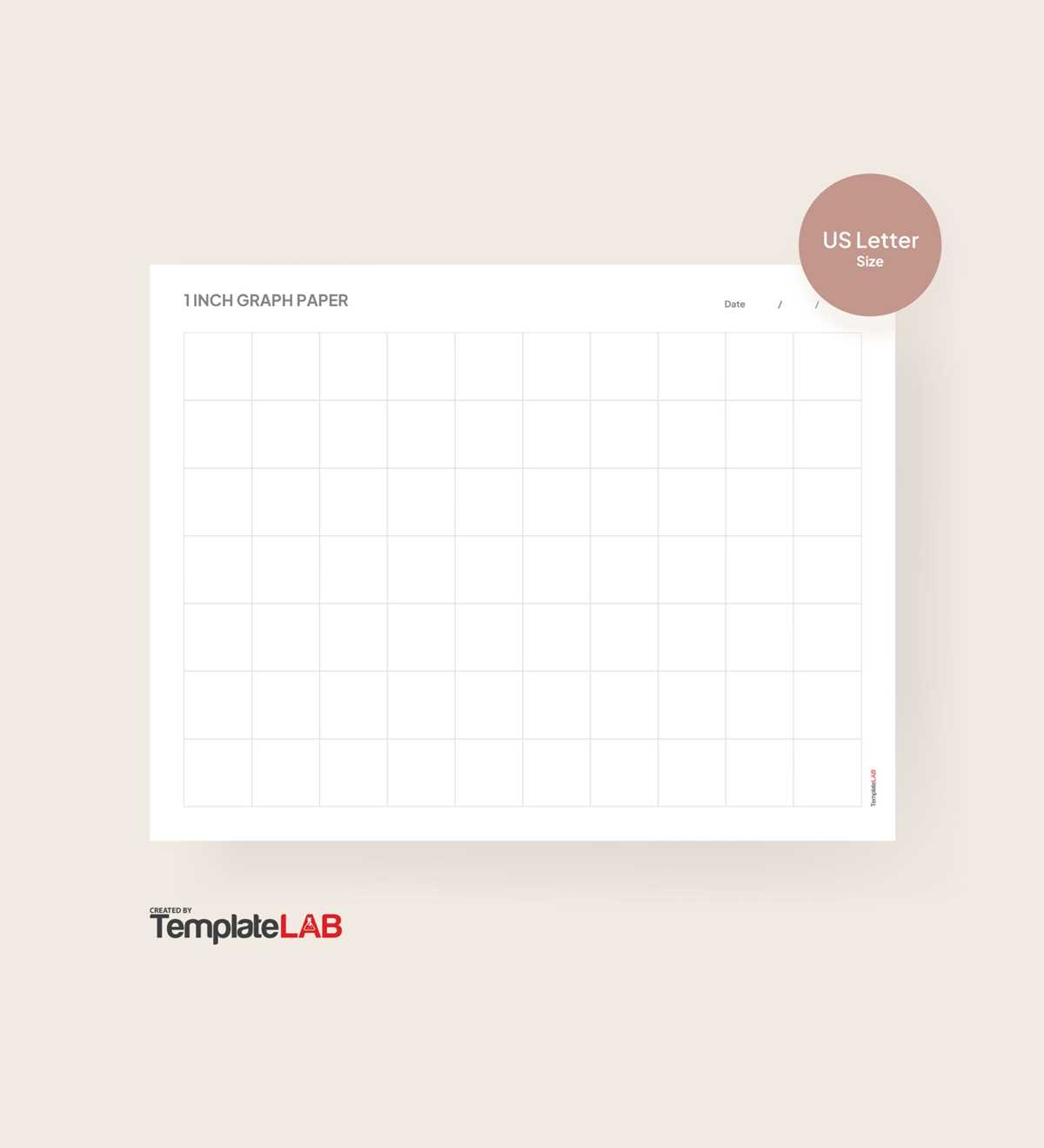
To get started with accurate plotting and number organization, try using customizable grid templates that suit your specific needs. You can easily access ready-made formats or design your own tailored grid layouts by adjusting line spacing and measurement markers. This allows precise placement of data points and can greatly assist in visualizing trends or solving complex equations.
Adjust the scale according to the type of problem you are working on. A smaller grid scale might be more suitable for elementary tasks, while a larger one is ideal for handling advanced calculations or statistical analysis. Using appropriate dimensions prevents overcrowding and ensures clarity, especially when working with high-volume data.
Don’t overlook the importance of grid density. Having too few lines can make it difficult to track variables, while too many can make the sheet overwhelming. It’s best to find a balance based on the complexity of the task at hand.
For those needing to create highly detailed models, experiment with custom sizes and line styles. Certain tasks require thicker lines for better distinction or more spacing between elements to improve accuracy in alignment. Use the tools available to adjust every aspect to create an ideal plotting environment.
Using Grid Sheets for Precise Calculations and Design
For accurate plotting and calculations, choose a grid with uniform spacing. Standard grids feature squares measuring 1cm, 0.5cm, or even 0.25cm. These sizes ensure your points are mapped consistently. Adjusting the dimensions based on project needs helps maintain precision while avoiding clutter.
When working on geometric problems or visualizing equations, it’s beneficial to use a graph with clearly marked axes. Opt for a layout where horizontal and vertical lines form a clear, predictable pattern. The intersection of these lines serves as the starting point for measurement, ensuring no discrepancies when plotting or scaling.
If your task involves visual analysis or charting complex functions, consider sheets that include labeling for both X and Y coordinates. This additional detail makes it easier to align points, trace curves, and interpret intersections quickly without needing extra resources.
For larger projects, such as architectural designs or mapping out larger data sets, larger grids (such as 5cm square grids) provide a broader overview. These layouts can accommodate large-scale diagrams without distorting proportions, allowing accurate scaling while keeping the design organized.
For smaller, more intricate designs, a finer grid provides better clarity. Reducing the grid size improves control over small details, particularly for detailed schematics. Ensure the paper offers enough space to avoid cramped work, which could result in calculation errors or misalignments during design creation.
How to Choose the Right Graph Paper for Different Math Problems
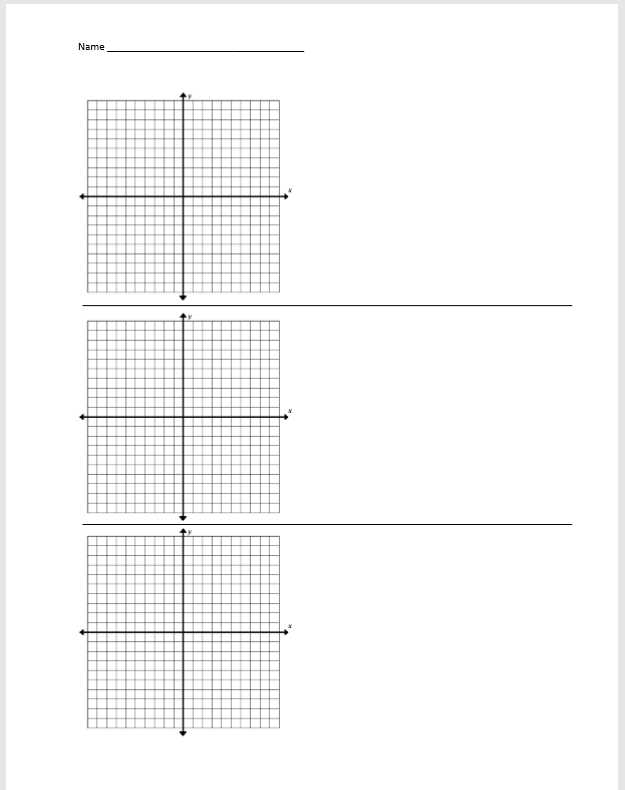
Select the correct layout based on the complexity of your task. For basic linear equations or simple plotting, opt for grids with smaller squares (1/4-inch or 1/8-inch). This size offers clear precision without excessive clutter, making it easier to track points and relationships between variables.
For working with functions that require higher precision or scaling, choose a finer grid. Grids with 1/10-inch squares are particularly useful when zooming in on a section of a curve, allowing for accurate visual representation of small increments.
If dealing with geometric shapes or angles, larger grids with 1/2-inch squares can provide enough spacing to sketch angles, triangles, or shapes clearly while still ensuring that proportional measurements are accurate.
- Simple equations or linear functions: Use a grid with 1/4-inch squares.
- High precision graphing: Opt for 1/10-inch grids.
- Geometrical sketches: Larger squares (1/2-inch) work best.
For problems involving coordinate geometry or Cartesian systems, make sure the paper includes labeled axes. Having the x and y axes pre-drawn can save time, especially in exams or assignments that require quick calculations and graphing.
If you’re working on a problem that requires both vertical and horizontal precision, choose a graph with additional lines that separate different sections (like light lines dividing the space into smaller zones). These markers can help you track specific intervals easily.
For projects that involve drawing curves or plotting advanced functions, look for a graph with larger squares and slightly thicker lines. The additional space helps reduce the visual clutter of intersecting lines, making curves or complex relationships easier to interpret.
Lastly, consider the quality of the material. If you plan to use colored pencils or markers for clarity, thicker or more textured sheets can prevent smudging and make your work more durable, ensuring that your graphs stay intact over time.