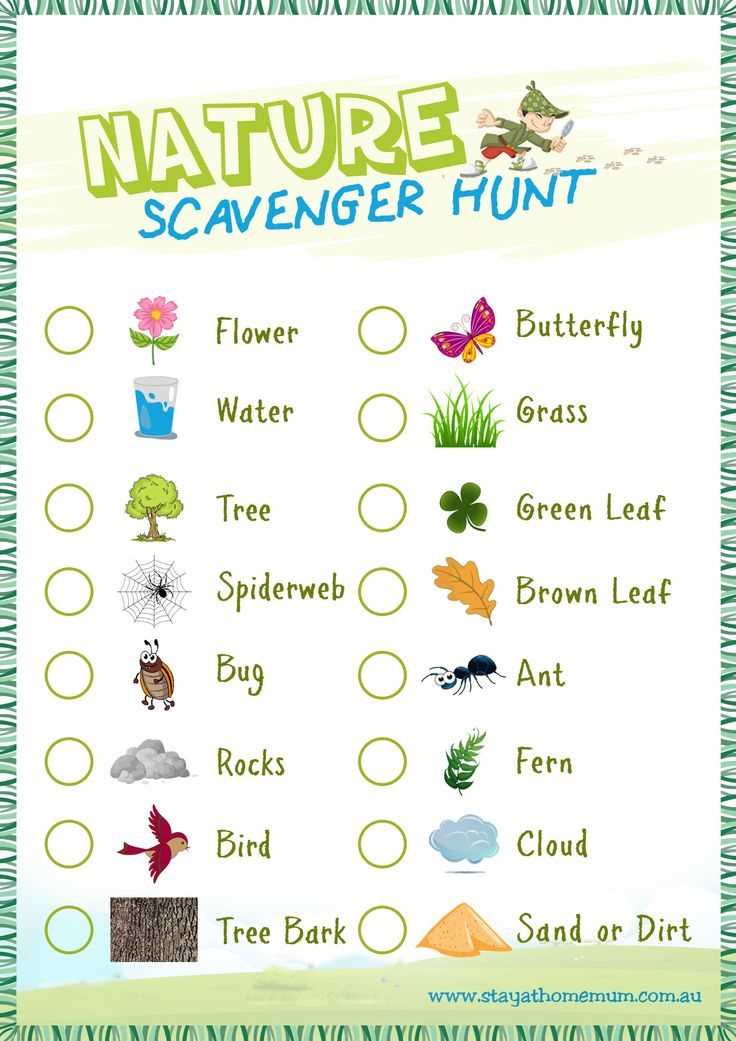
To create an exciting outdoor exploration activity, start by preparing a detailed checklist of things for kids to find in their environment. This could include leaves, rocks, flowers, or specific wildlife. Make sure the list is clear and easy to understand for all ages, and consider grouping items by type, such as colors, shapes, or textures.
Once your list is ready, print it out in an engaging format. Use large fonts and colorful designs to capture children’s attention. You can even personalize the activity by adding items related to the location or season, making it more relevant and fun.
Incorporate a time limit to make it more interactive. Challenge the kids to complete the activity in under an hour and reward them with small prizes or certificates to celebrate their efforts. This keeps the activity fun, engaging, and educational.
How to Create a Fun Outdoor Exploration Checklist
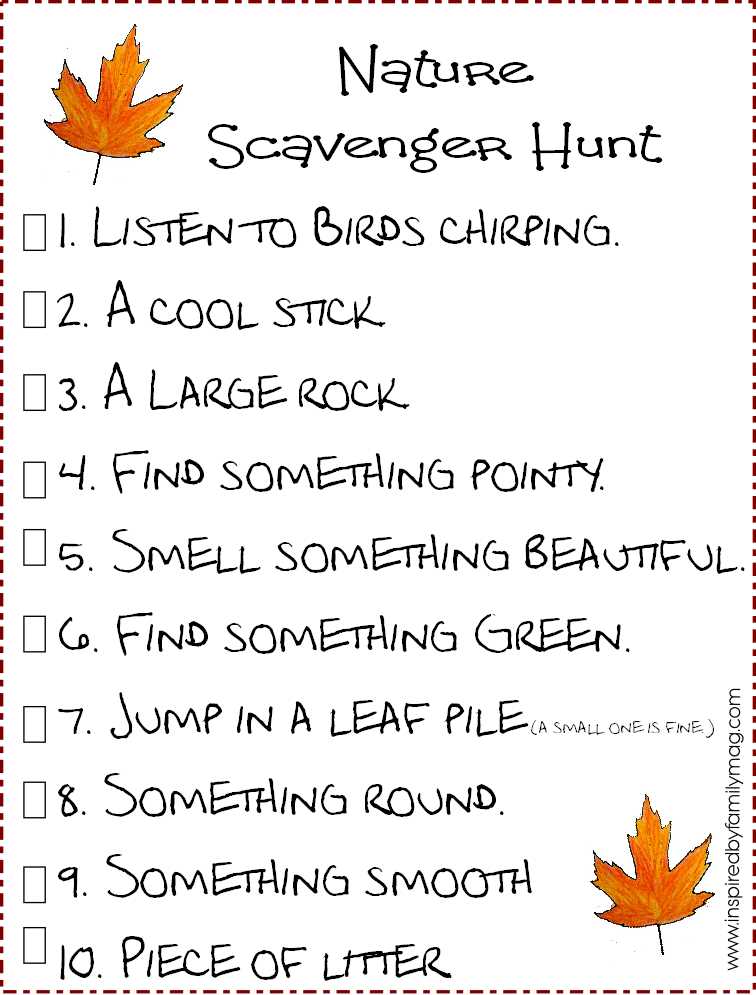
Start by selecting items that can be easily found in your chosen outdoor environment. These could include natural elements like different types of leaves, tree bark, rocks, or animal tracks. Make sure the items are age-appropriate for the participants. For younger kids, use large, easily identifiable items, while older participants can look for more specific or challenging objects.
Organize the list by categories, such as plants, wildlife, and environmental features. This makes the activity more structured and helps kids focus on different aspects of their surroundings. For example, under plants, you could list types of flowers, trees, or shrubs, while for animals, you could include bird feathers or signs of insects like webs or footprints.
Print the checklist with simple and clear instructions. Make it visually appealing by using bright colors or images of the items to help children recognize them more easily. You can also add a space for them to check off items as they find them, creating a sense of accomplishment as they progress.
Consider adding a small educational element to the activity. Include brief descriptions or fun facts about each item on the list. For example, if you include a pinecone, add a note about how it helps trees reproduce. This transforms the activity into a learning experience, allowing kids to explore and understand their environment better.
Finally, set a time limit or challenge the group to find as many items as possible within a specific area. This adds excitement and turns the activity into a friendly competition. Rewarding children with small prizes or certificates for completing the activity can encourage enthusiasm and participation in future outdoor explorations.
How to Create an Engaging Outdoor Exploration Checklist
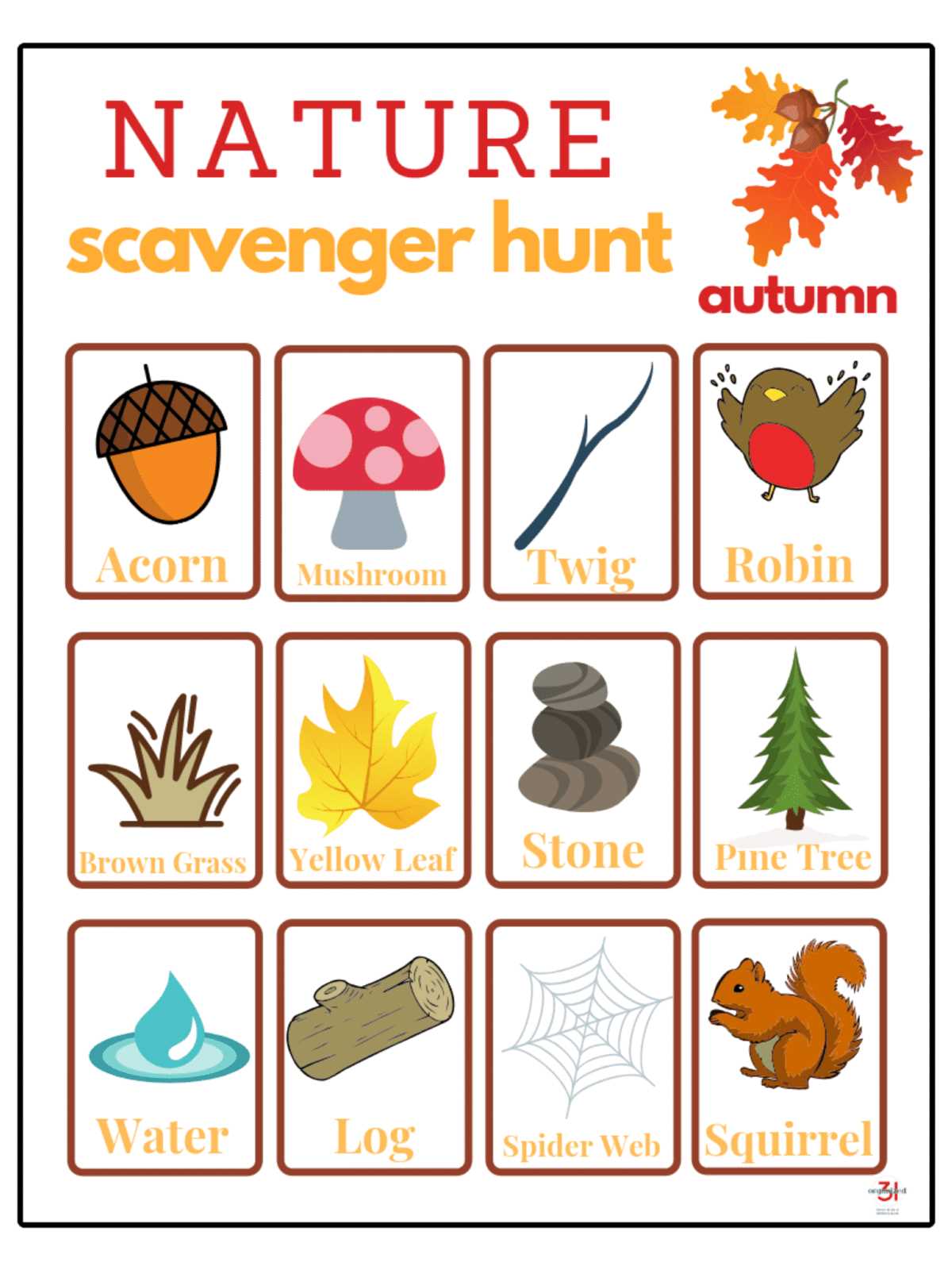
To create a truly engaging activity, start by focusing on a variety of easily recognizable items. Select objects that are commonly found in the area, such as various types of leaves, flowers, or insects. This allows participants of all ages to participate and keeps the experience fun and interactive. Incorporating elements of both flora and fauna creates a more dynamic and exciting checklist.
Incorporate different difficulty levels. For younger participants, include simple objects like smooth rocks, colorful flowers, or bird feathers. For older participants, challenge them with harder-to-find items like specific types of tree bark, moss, or animal footprints. Tailoring the list to different age groups keeps everyone involved and engaged in the activity.
Include a variety of categories, such as “Items Found on Trees”, “Wildlife Evidence”, and “Environmental Features”. This organization helps participants focus their attention on specific types of discoveries and adds structure to the experience. With categories like “Sounds in the Air” or “Textures to Feel”, participants can use all their senses to explore, making it more immersive.
Design the list with visuals. Including small images or illustrations of the items next to their names helps young children recognize them more easily. For older children or adults, you could include a brief description or fun fact about each item. This educational twist makes the experience more than just a game; it becomes an opportunity for learning as well.
Set a time frame for the activity. This can turn it into a friendly competition and adds a sense of urgency and excitement. A time limit encourages participants to focus and explore more quickly, leading to a more dynamic and active experience. Alternatively, leave the activity open-ended for those who want to take their time and really enjoy the surroundings.
For an added element of fun, incorporate a reward system. After participants find a certain number of items, give out small rewards like stickers, nature-themed prizes, or certificates. This positive reinforcement will keep participants motivated and engaged throughout the activity.
Lastly, encourage participants to document their findings. Whether through photography, sketches, or taking notes, capturing what they find allows them to reflect on the experience later. This makes the activity feel more like an adventure and provides a lasting memory of the day.