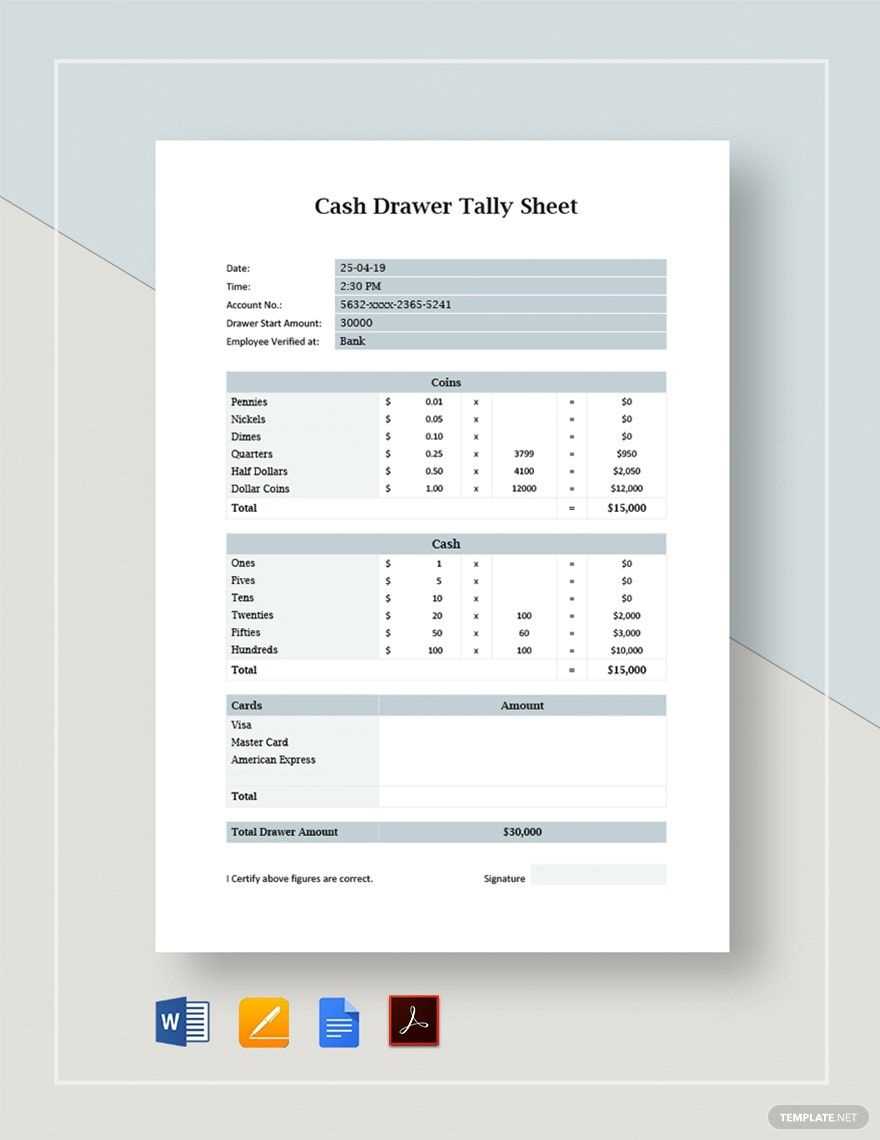
Use a well-organized register reconciliation template to record every denomination at the end of each shift; this reduces discrepancies by up to 30% in small retail environments. A properly formatted document should include separate columns for coins, bills, opening balance, and verified totals. This layout allows supervisors to review figures in under two minutes and quickly flag irregularities.
For best results, design the form with pre-labeled denomination rows (for example: pennies, nickels, dimes, quarters, and each bill value). Add a dedicated field for the employee’s name, terminal ID, and time stamp. Retail audits show that including these identifiers cuts anonymous errors almost in half because accountability becomes traceable at a glance.
Leave enough white space between numeric fields so entries remain readable even when written quickly during busy closing routines. Many store managers prefer a landscape orientation with bold subtotal lines, since it minimizes arithmetic mistakes and speeds manual verification. Consistent use of the same reconciliation form across all shifts builds a reliable paper trail and simplifies end-of-week balancing.
Before putting the template into daily use, test it during a mock shift and confirm that totals can be calculated without rewriting figures. A well-planned register log should allow any supervisor to verify the till in under five minutes while maintaining a clean, audit-ready record.
Blank Free Printable Cash Drawer Count Sheet: Practical Usage Guide
Use a register reconciliation template at the end of every shift and require staff to record denominations separately rather than entering a single total. This simple rule reduces arithmetic mistakes and makes discrepancies visible within seconds. Keep the form on a clipboard near the POS terminal and mandate signatures from both the operator and the supervisor to create accountability.
For daily operations, complete the register log in a fixed sequence: coins first, then low-value bills, then high-value notes, and finally non-currency items such as gift certificates or coupons. Enter figures immediately after physical verification rather than relying on memory. If the variance exceeds your preset tolerance (many retailers use ±$2–$5), recount once and document the difference instead of adjusting numbers to force a match. Store completed records by date in a dedicated binder or secure digital archive so that audits can trace patterns like recurring shortages on specific shifts.
To improve control, review totals weekly and compare them with POS reports to identify training gaps or procedural weaknesses. High-volume locations benefit from color-coded versions of the register audit form for different shifts, which speeds up sorting and reduces filing errors. Replace worn copies frequently and keep a small stack ready near each till station so staff never improvise with scrap paper.
How to Structure a Blank Cash Drawer Count Sheet for Daily Register Reconciliation
Divide the form into three clear blocks: header identification, denomination breakdown, and reconciliation summary. This layout allows the person balancing the till to move logically from recording context to verifying totals without jumping between fields.
The header must capture transaction context with precision. Include fields for register ID, operator name or ID number, business date, shift period (open, mid, close), and starting float. Place these items in a single horizontal row so supervisors can scan them quickly during audits. Avoid leaving open text areas; instead, use labeled boxes to reduce handwriting ambiguity.
Next, design the denomination table with a strict vertical structure. Each row should represent one currency unit, and each column should guide the calculation. Use this sequence:
- Denomination value
- Quantity observed
- Extended total (value × quantity)
- Verification initials
List denominations from highest to lowest to reduce arithmetic mistakes. For U.S. registers, a practical order is: $100, $50, $20, $10, $5, $1, followed by rolled coins and loose coins. Provide prefilled denomination labels rather than empty lines to speed up routine balancing.
Below the denomination grid, insert a subtotal band that automatically guides the user through reconciliation. This area should include: expected amount from POS, physical money total, variance, and reason code. Place the variance field in bold or boxed formatting so discrepancies stand out during review. Add a short checklist beside it with common causes such as “change error,” “refund,” or “price override.”
Include a dual-signature section at the bottom. One line is for the employee performing the tally; the second is for the supervisor verifying it. Add time stamps next to both signatures. This small structural choice reduces disputes and creates a traceable audit trail during shrink investigations.
Keep spacing tight but readable. Use fixed-width numeric boxes, right-aligned currency fields, and consistent row heights. Avoid decorative elements; clarity speeds up end-of-shift balancing and lowers manual entry mistakes across high-volume retail environments.