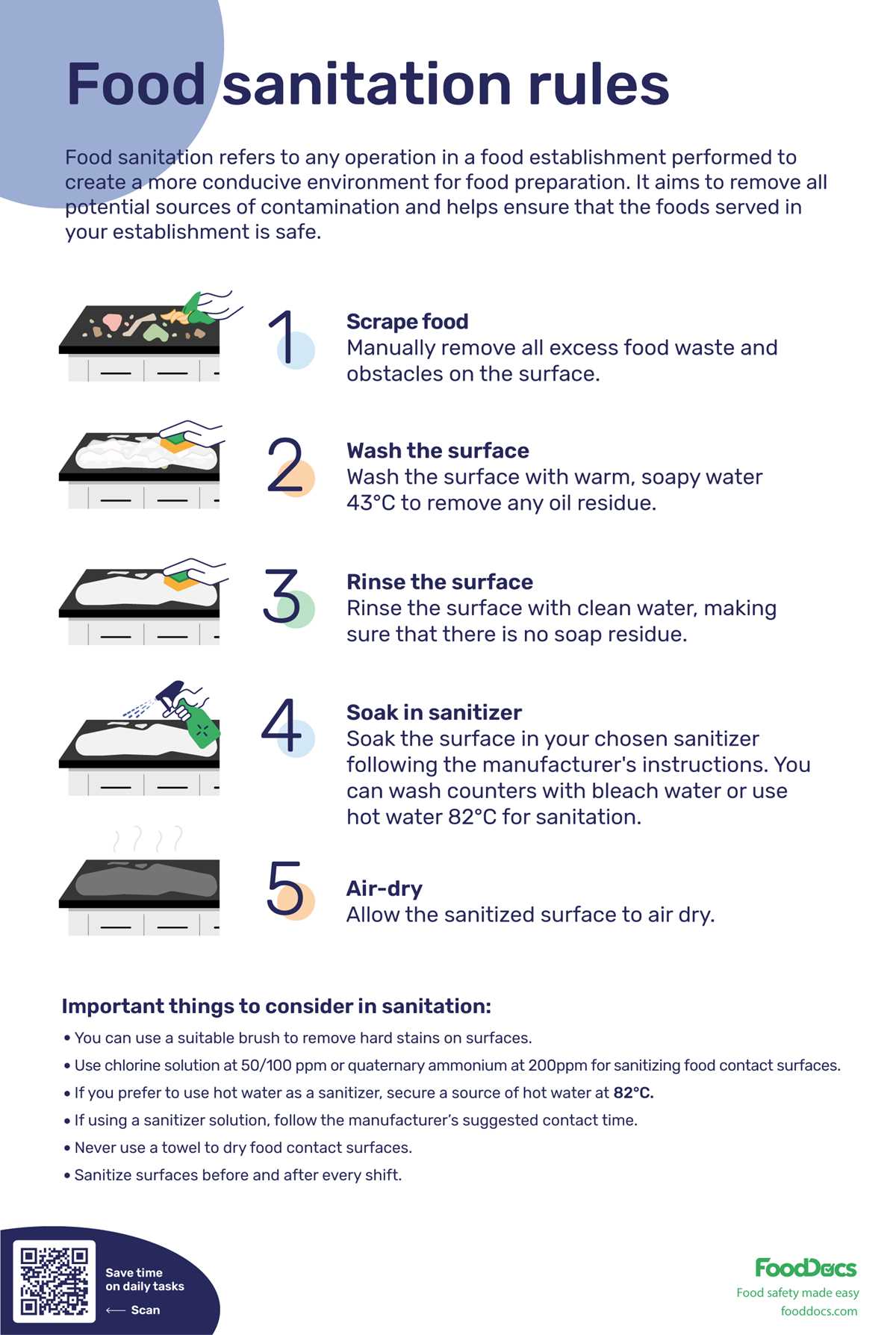
Use A3 or US Letter hygiene charts with clear icons and step-by-step visuals for handwashing, surface sanitizing, and temperature control; place them at sinks, prep tables, cold storage doors, and delivery zones to reduce cross-contamination risks by up to 30% according to industry audits. Choose high-contrast layouts (black on white or dark blue on white) with minimum 24-pt headings so instructions remain legible from 1–2 meters away.
Select designs that reference HACCP flow principles and include numeric targets: chilled storage at ≤4°C (40°F), hot holding at ≥63°C (145°F), reheating to ≥74°C (165°F) for at least 15 seconds. Add allergen charts listing the 14 regulated allergens in the EU and the 9 major allergens recognized in the US, formatted in a simple grid to support quick checks during service.
Prioritize multilingual versions–English, French, Spanish, or Arabic–when staffing is diverse, and opt for vector PDF files at 300–600 DPI to avoid pixelation on larger formats. Laminate sheets with 80–125 micron film or use wipe-clean polypropylene so they withstand daily sanitizers containing 0.1% sodium hypochlorite without fading. Mount materials at eye level (about 150 cm from the floor) and review content quarterly to reflect updated guidance from local health authorities.
Free Printable Food Safety Posters for Kitchens, Cafeterias, and Food Trucks
Download high-resolution hygiene charts in A4 and US Letter size from official public health portals such as local health departments and the FDA’s retail guidance pages, then print them in color and laminate for prep zones, dishwashing stations, and service counters. Choose PDFs at 300 DPI to keep text sharp at arm’s length and mount them at eye level near sinks and refrigeration units.
For commercial kitchens, prioritize wall charts that display safe cooking temperatures, cold storage ranges (0–4°C / 32–40°F), and hot holding thresholds above 60°C / 140°F. Place temperature reference sheets directly beside ovens and reach-in coolers so staff can verify readings without leaving their station. Use bold typography with minimum 24 pt headings to maintain legibility in steam-filled or low-light environments.
School cafeterias benefit from visual handwashing guides that break down the 20-second scrub process into numbered steps with clear illustrations. Position these near every sink used by kitchen teams and student volunteers. Add allergen awareness charts listing the major eight allergens and cross-contact prevention reminders beside serving lines to reduce accidental exposure.
Mobile vendors should select compact signage formatted for half-letter or A5 sheets to fit tight interiors. Mount sanitation checklists near prep counters and attach magnetic temperature logs to refrigerator doors for quick daily documentation. Weather-resistant sleeves protect printed materials from humidity and grease buildup inside trucks.
Choose designs that rely on icons and color coding rather than dense paragraphs. Red blocks can indicate high-risk temperature zones, blue for chilled storage, and green for hand hygiene checkpoints. Avoid glossy paper in high-heat areas; matte stock reduces glare under stainless steel lighting.
Rotate wall materials quarterly to prevent fading and replace any sheet with curled edges or illegible text. Archive master PDF files on a shared drive so managers can reprint updated versions after regulatory changes. Keep a dated revision mark in the footer to track compliance during inspections.
Before display, verify that each chart aligns with regional health codes and includes metric and Fahrenheit values where applicable. Clear, accurately formatted reference sheets reduce training time for new hires and provide inspectors with visible proof of operational standards.
Where to Download Free Printable Food Safety Posters That Meet Local Health Department Requirements
Download compliance-ready kitchen hygiene charts directly from official public health websites, not design blogs. Local authorities publish high-resolution PDFs aligned with inspection standards, including handwashing steps, temperature control charts, allergen notices, and illness reporting policies. These files are formatted for A4 and US Letter sizes and usually include revision dates and regulatory references, which inspectors expect to see on displayed materials.
In the United States, obtain approved signage from agencies such as the
- Check the Environmental Health section of your city or county website.
- Verify that the document references the current retail code year.
- Confirm required display size (many jurisdictions specify minimum A3 or 11×17 inches).
- Look for multilingual versions if your staff language mix requires them.
In the United Kingdom, use materials published by the
For Canada and Australia, download wall signage from
- Search using your exact jurisdiction name plus “environmental health signage PDF”.
- Download only PDF files hosted on official government domains (.gov, .gov.uk, .gc.ca, .gov.au).
- Check the footer for update year and regulatory citation.
- Print at 100% scale without resizing to preserve compliance formatting.
Avoid generic infographic sites that omit regulatory references or modification dates. Inspectors frequently verify that displayed charts match current local code language, including specific temperature thresholds, reporting obligations for vomiting or diarrhea incidents, and allergen labeling rules. Official public health portals remain the most reliable source for compliant kitchen wall materials.