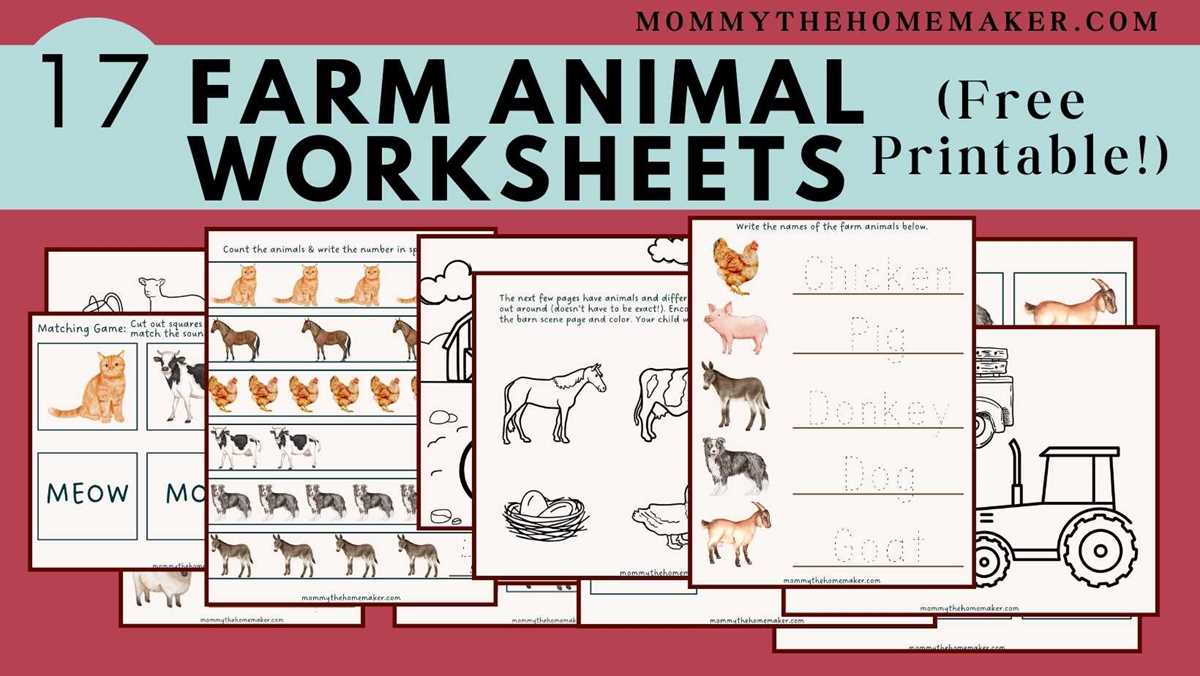
Introduce children to animal-themed exercises that enhance both their cognitive and motor skills. Activities involving farm animals, shapes, and counting help young learners connect real-world concepts to visual representations. These exercises can easily be adapted to various skill levels and make learning interactive and enjoyable.
Focus on activities that promote recognition of animals, their sounds, and their environments. Simple tasks, like matching animals to their sounds or learning to count using farm-related objects, can develop foundational knowledge. These exercises also promote fine motor skills through activities such as tracing and coloring.
Incorporate creative activities that allow children to express themselves. Using animal shapes for cutting and pasting, or encouraging drawing and crafting based on the theme, helps improve hand-eye coordination and creativity. By providing a variety of tasks, children can stay engaged and excited about learning through hands-on experience.
Guide to Animal-Themed Learning Activities for Young Children
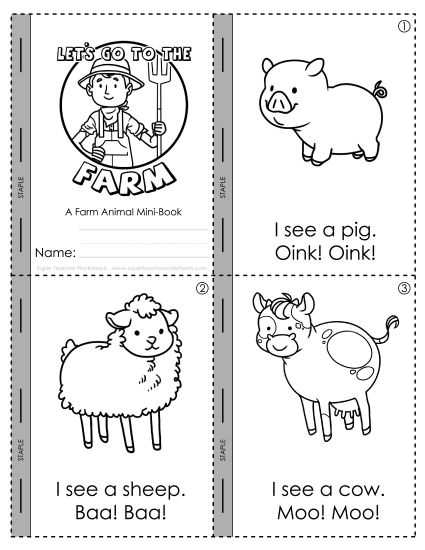
Start with simple, interactive tasks that allow children to engage with images of common animals. Activities such as matching animals to their habitats, identifying animals by their sounds, or connecting them with their corresponding colors help build recognition and understanding. These exercises can be easily tailored to suit different learning styles and help young minds grasp basic concepts like counting, sorting, and categorizing.
Include a mix of activities that focus on creativity and motor skills. Cutting out shapes, drawing animals, or assembling pictures of farm life not only develops hand-eye coordination but also encourages children to express their ideas. Additionally, these activities can be adapted to include patterns, letters, and numbers, enhancing both literacy and numeracy in a playful, engaging way.
How to Use Animal Learning Sheets to Teach Sounds
Start with clear, simple illustrations of animals alongside the corresponding sound each one makes. Use activities where children can match an animal to its sound. For example, provide pictures of a cow, a duck, and a dog, and have the child associate them with the sounds “moo,” “quack,” and “woof.” This method helps children build a connection between the visual and auditory cues, reinforcing both recognition and recall skills.
Incorporate interactive games where children repeat the sounds of animals as they point to the corresponding images. Encourage mimicking the sounds to make the learning process more engaging. This approach strengthens their listening skills and pronunciation while making the activity enjoyable.
To deepen their understanding, introduce the concept of animal habitats. Present pictures of animals in their natural settings and ask questions such as “What sound does a cow make in the barn?” or “What noise do chickens make in the henhouse?” This adds a layer of context and encourages children to think about the environment where these animals live.
Consider using a progression where children first learn animal names and then move to identifying sounds. Initially, ask them to point to the animal in a picture and say its name. Once they are familiar with the names, transition to associating sounds, helping them build a complete sensory experience that links sight, sound, and language.
Introduce activities like matching games or memory cards featuring both animal images and sounds. These can be paired in sets where the child has to find the matching image and sound. These types of games promote critical thinking and memory skills while reinforcing their understanding of animal sounds.
Expand learning by introducing animal songs or rhymes that include sound words. Simple rhymes like “Old MacDonald Had a Farm” can be used to emphasize the sounds of different animals, making learning a fun, musical experience that children can sing along to.
As children progress, incorporate writing exercises where they can trace the names of animals while also drawing their sounds. This combines literacy, drawing, and auditory learning, helping to reinforce both writing skills and knowledge of animal sounds.
Finally, create opportunities for children to play pretend, such as acting out animal movements and sounds. This will allow them to internalize the information in a creative and kinesthetic way, ensuring that they are not only hearing and seeing the animals but also physically engaging with the material.