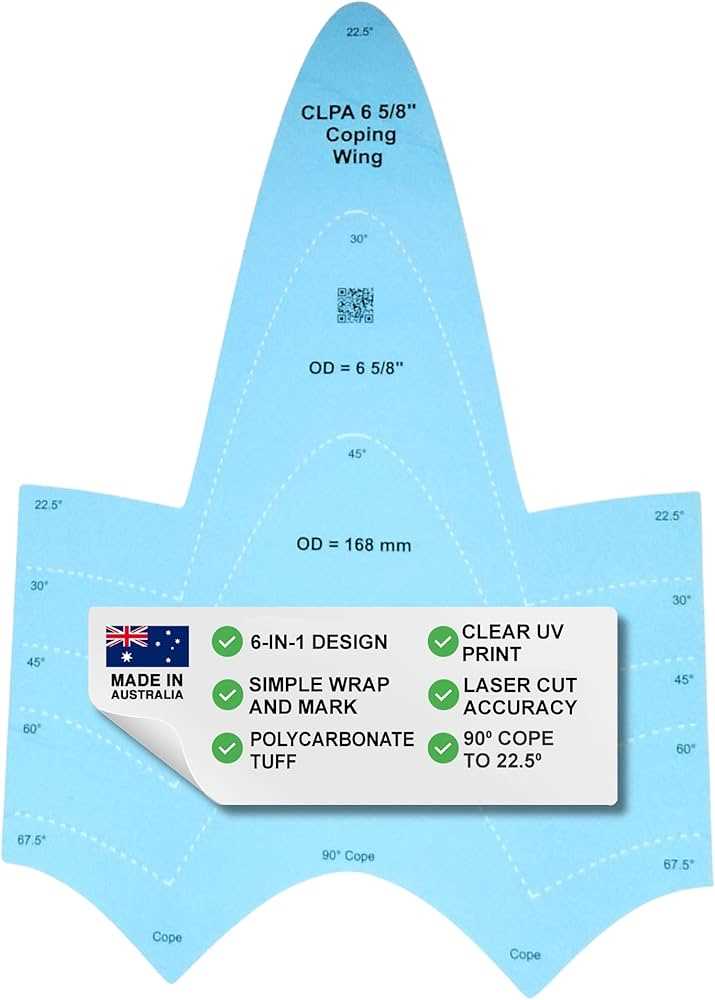
Start by selecting the right design based on the diameter and material of your tubes. For a secure fit, ensure the dimensions are accurate and match the specific requirements of your project. Precise measurements are key to a clean and effective installation.
Measure the circumference of the pipes and decide on the type of connection you want to create. Templates with clear, marked lines for cutting help guide your work and make the process more straightforward. A proper template allows you to easily replicate the same design for multiple installations.
Next, transfer the design to your material, using the template as a guide. Whether you are cutting through metal or a flexible material, this step ensures consistency. Make sure to carefully follow the contours marked on the guide, adjusting your cuts as necessary to match the pipe’s shape perfectly.
Finally, once the fitting is complete, check the alignment and integrity of your work. Templates provide a visual reference, reducing the risk of errors in the final installation. With these guides, the fitting will not only be precise but also durable, ensuring a strong connection.
Guide to Using Templates for Pipe Fitting
First, gather the necessary materials and select a design that fits the size and shape of your tube. Using a well-detailed guide, carefully transfer the outline onto the fitting material, ensuring the measurements align perfectly with the pipe diameter. Mark clearly the cutting lines and shapes, so that each section can be trimmed without error.
After cutting the material, check for consistency in your cuts to ensure a tight and secure fit. The guide helps maintain symmetry, reducing mistakes during the process. Once the fitting is in place, check for alignment, making sure the connections are secure and the angle is correct. A precise match to the design leads to a better, long-lasting result.
How to Choose the Right Template for Your Pipe Size
To select the correct guide for your tube, first measure the outer diameter of the material. Ensure you use a caliper for accurate results, as slight inaccuracies can lead to a poor fit. Once the size is noted, match it with the corresponding design, which should match the specific tube circumference closely.
If the pipe has an irregular shape or non-standard diameter, you may need to modify the selected pattern to accommodate those variations. Look for guides that offer flexibility or adjustable dimensions, which allow for slight modifications without compromising the fit.
Additionally, pay attention to the wall thickness. Some guides are designed to fit specific wall thicknesses, which could affect the fitting’s overall stability. Choose a design that aligns with both the pipe’s diameter and the thickness of the material to ensure durability and strength.
Lastly, ensure the material used for the guide is suitable for your project’s environment. If the work requires exposure to high temperatures or chemicals, opt for a more durable material that can withstand such conditions without degrading or losing shape.