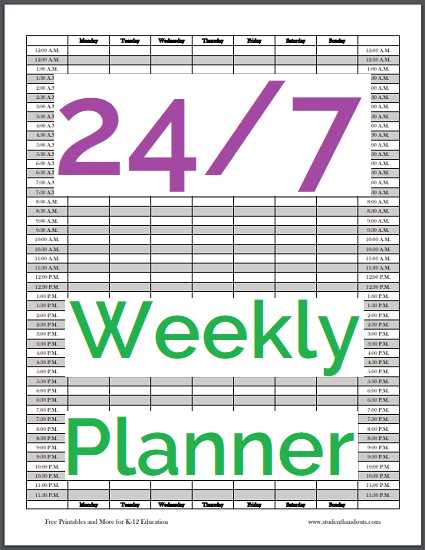
Use a structured time organizer with clear one-hour divisions to track activities, meetings, and personal tasks. Choose a format that includes both weekdays and weekends for balanced planning. Print on A4 or US Letter paper for easy handling and note-taking.
Highlight priority tasks using colored pens or markers to distinguish work, study, and leisure blocks. Add start and end times for each activity to maintain realistic daily goals and prevent overlaps. Leave space for brief notes or reminders.
Consider using multiple sheets for different purposes, such as one for professional commitments and another for household chores or fitness routines. Rotate pages weekly to monitor progress and identify patterns in time usage.
Weekly Hourly Schedule Printable
Use a detailed time chart with one-hour divisions to organize tasks, appointments, and personal activities. Select a template that covers seven days and includes early morning to late evening slots to capture all commitments. Print on thick paper to allow note-taking with pens or markers without bleeding.
Follow these steps to make the most of your planner:
- Fill in fixed appointments first, such as work hours, classes, or medical visits.
- Assign time blocks for meals, exercise, and breaks to maintain energy levels.
- Highlight priority tasks using colored markers to separate urgent from routine activities.
- Leave blank spaces for unexpected tasks or flexible time adjustments.
Keep multiple sheets for different purposes, such as one for professional obligations and another for household chores or personal projects. Update the charts at the start of each day to stay on track and review completed tasks in the evening to adjust upcoming plans effectively.
How to Fill a Weekly Hourly Template to Plan Daily Tasks
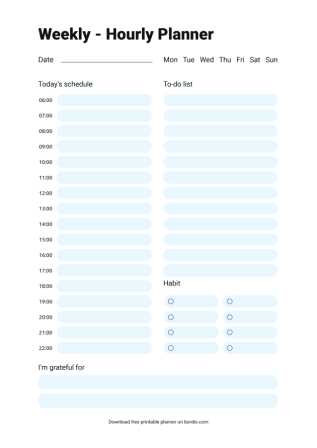
Start by entering fixed commitments such as work shifts, classes, or appointments into the time grid. Use consistent colors or symbols to mark different categories, which makes it easier to identify overlapping or free periods at a glance.
Next, allocate time for essential routines including meals, exercise, and breaks. Block 30–60 minute intervals for each activity to create realistic time slots, and leave short gaps between tasks to accommodate transition periods or unexpected delays.
Finally, fill remaining spaces with flexible tasks like personal projects, reading, or household chores. Review and adjust entries daily to track progress and maintain balance, ensuring both professional responsibilities and personal goals are managed efficiently.