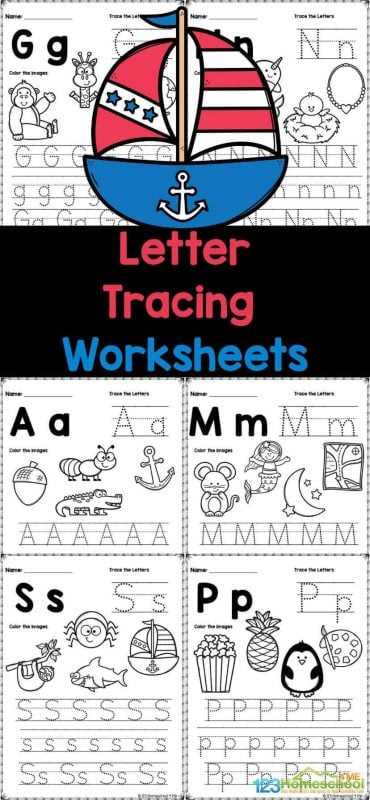
Start with simple exercises that focus on basic strokes and shapes. These activities are the foundation for building letter recognition and formation. Choose exercises that are easy to follow, with clear examples and plenty of space for practice.
Gradually introduce a variety of shapes and lines to enhance control over writing instruments. Use large, easy-to-follow patterns that guide the child’s hand movements. As they become more confident, move on to smaller shapes and more complex exercises.
To keep practice fun, incorporate creative tasks like drawing objects or shapes alongside their written forms. This helps reinforce the connection between what they are writing and the visual world around them. Consider mixing in playful elements like colors or stickers as rewards for completed tasks to maintain enthusiasm.
Guidelines for Letter Formation Practice

To start with, focus on offering exercises that encourage the development of clear, structured symbols. Provide outlines of the alphabet with empty spaces where children can trace the lines and curves. This will help them grasp the correct stroke order. Ensure the font used is simple, avoiding cursive styles at first, to allow for better control over each character.
Incorporate activities that require children to trace over dotted or dashed lines, allowing them to visualize and practice proper formation. Use a mix of large and small sizes for each figure, giving them the opportunity to master both. The key is to make the practice both challenging and achievable, enhancing motor skills through repetition.
- Incorporate varying thickness in the guidelines for extra precision.
- For advanced learners, add more complex patterns and progressively reduce the size of the figures.
- Consider introducing letters in groups with similar strokes (e.g., “b,” “d,” “p,” “q”) to help them learn common patterns.
Once the basics are mastered, encourage independent practice by having learners fill in empty spaces. This method reinforces memory and boosts confidence in writing. Make sure they receive positive feedback to help solidify the connection between their effort and progress.
How to Choose the Right Letter Tracing Pages for Beginners
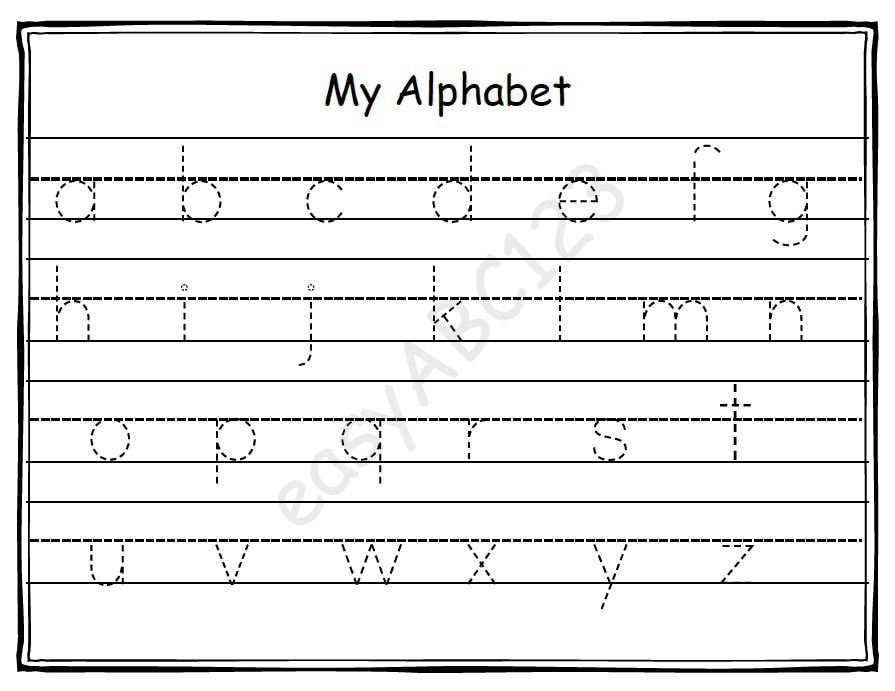
Focus on materials that present simple outlines of symbols, avoiding excessive detail or complexity. Clear, bold lines should guide the writing process, with enough space for beginners to easily follow and form shapes. Start with large fonts that allow for greater precision and hand control.
Look for designs that use dotted or dashed lines, helping beginners learn the correct stroke order and practice each figure step by step. The layout should clearly separate each character, making it easier for young learners to distinguish between different forms and keep track of their progress.
- Choose tools that incorporate different stroke styles, such as straight, curved, and diagonal lines, to build versatility in writing.
- Select materials that progressively reduce the outline thickness as learners gain confidence, allowing them to rely on muscle memory.
Opt for pages that are engaging and fun, featuring minimal distractions. Adding interactive elements like animals or familiar objects can make the practice more enjoyable and keep attention focused on forming each shape correctly. Keep the experience motivating by providing clear milestones for improvement.