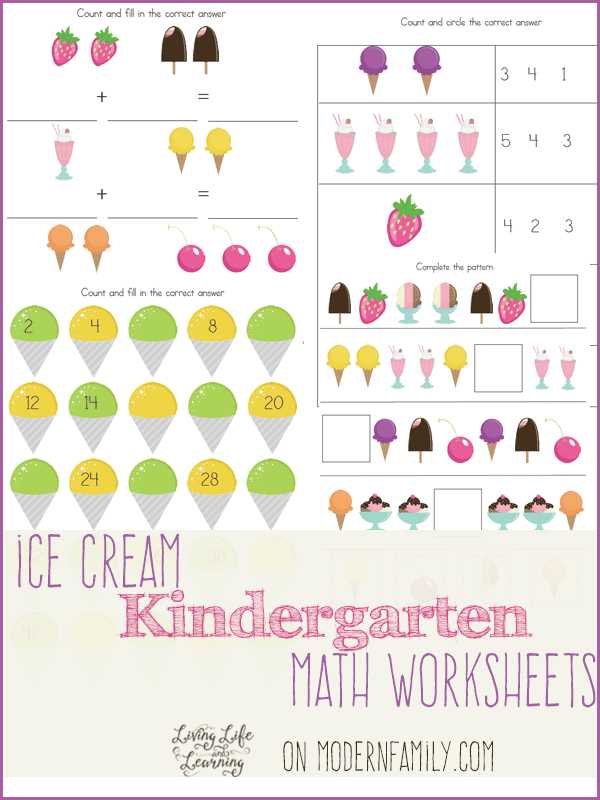
To boost your child’s basic number skills, begin by incorporating hands-on tasks that allow them to practice simple addition, subtraction, and pattern recognition. Engage them with simple exercises that require them to count objects, match numbers to quantities, or solve small equations in creative ways. This will help develop their understanding of the core concepts while keeping the process enjoyable.
For reinforcing these skills, try worksheets that focus on visual aids and interactive components. Include exercises where children can trace numbers, draw lines between related numbers, or circle groups of objects that represent certain totals. By doing this, they can grasp number relationships better while developing their fine motor skills.
Additionally, consider exercises that incorporate real-world scenarios like grouping objects into categories or measuring items using everyday objects. This not only solidifies their mathematical knowledge but also introduces the concept of applying these skills outside of academic settings.
HTML
Helpful Practice for Young Learners
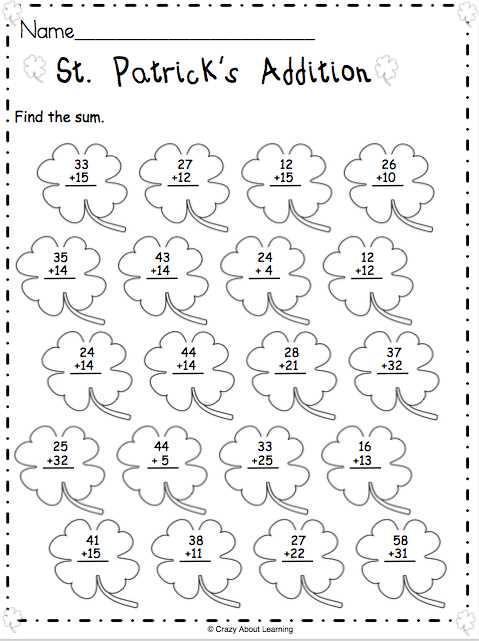
To support early learners in understanding basic numbers, incorporate activities with addition and subtraction problems. Providing exercises that use visual aids like pictures and objects enhances comprehension and engagement. A child can benefit from tasks that require them to count objects, such as apples or pencils, and solve simple addition problems like 3 + 4 by counting the items physically.
Another key focus for this age group is number recognition and sequencing. Have them match numbers to their respective quantity by drawing lines to connect them with groups of objects. For example, linking the number 5 to a set of 5 stars helps solidify their understanding of how numbers correlate to quantities.
- Count and match numbers with corresponding groups.
- Work on patterns using simple objects or numbers (e.g., alternating between 2, 4, 6, and so on).
- Introduce basic comparisons like greater than, less than, and equal to.
Incorporating basic word problems can further strengthen their critical thinking skills. A simple problem might ask, “Tom has 3 oranges and buys 2 more. How many does he have now?” These exercises encourage children to think beyond just calculations, fostering problem-solving abilities.
Building fluency in counting forwards and backwards is another useful task. Encourage learners to say numbers in sequence, starting from a given number, or to count backward from 20 to 1. These activities increase numerical fluency, which is vital as they move forward in their studies.
- Count forward and backward from various starting points.
- Explore skip counting (by 2s, 5s, and 10s).
- Practice number order with games or card sorting.
HTML
Where to Find Printable Resources for Young Learners
Explore websites like Education.com and Teachers Pay Teachers for high-quality exercises designed to reinforce early arithmetic skills. These platforms offer a wide array of themed tasks focusing on addition, subtraction, and number recognition, all tailored for children just beginning their educational journey.
Local library websites and school district portals are excellent resources for downloading materials. Many educational institutions provide downloadable activities that align with specific curricula, giving parents and teachers access to worksheets suitable for their students. These are often organized by learning objectives and provide a targeted approach to early learning.
Other great options include interactive blogs and homeschooling communities. Many experienced educators and parents share creative sheets that go beyond traditional exercises, offering fun games and puzzles. These resources not only challenge kids but also make learning more enjoyable, encouraging them to engage with numbers in dynamic ways.