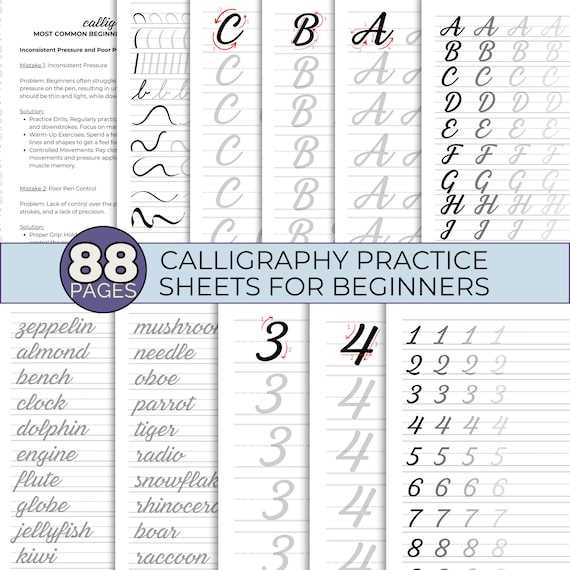
Start by practicing basic strokes and forms before moving on to more complex designs. This will help develop muscle memory and a consistent flow in your writing. Focus on mastering simple shapes, such as straight and curved lines, to improve control over your pen.
Look for reliable resources that offer guided templates with clear instructions. Structured pages, featuring letter patterns and example styles, can help you grasp the nuances of letterforms while you work on spacing and alignment. These guides are designed to make learning more intuitive by breaking down each stroke and shape.
Use free resources to avoid spending unnecessary time or money on materials. Many websites offer downloadable documents that you can print and start using immediately. Search for those that provide variety in font styles, from basic scripts to decorative styles, to keep your practice sessions engaging and diverse.
Guide to Hand Lettering Practice for New Learners
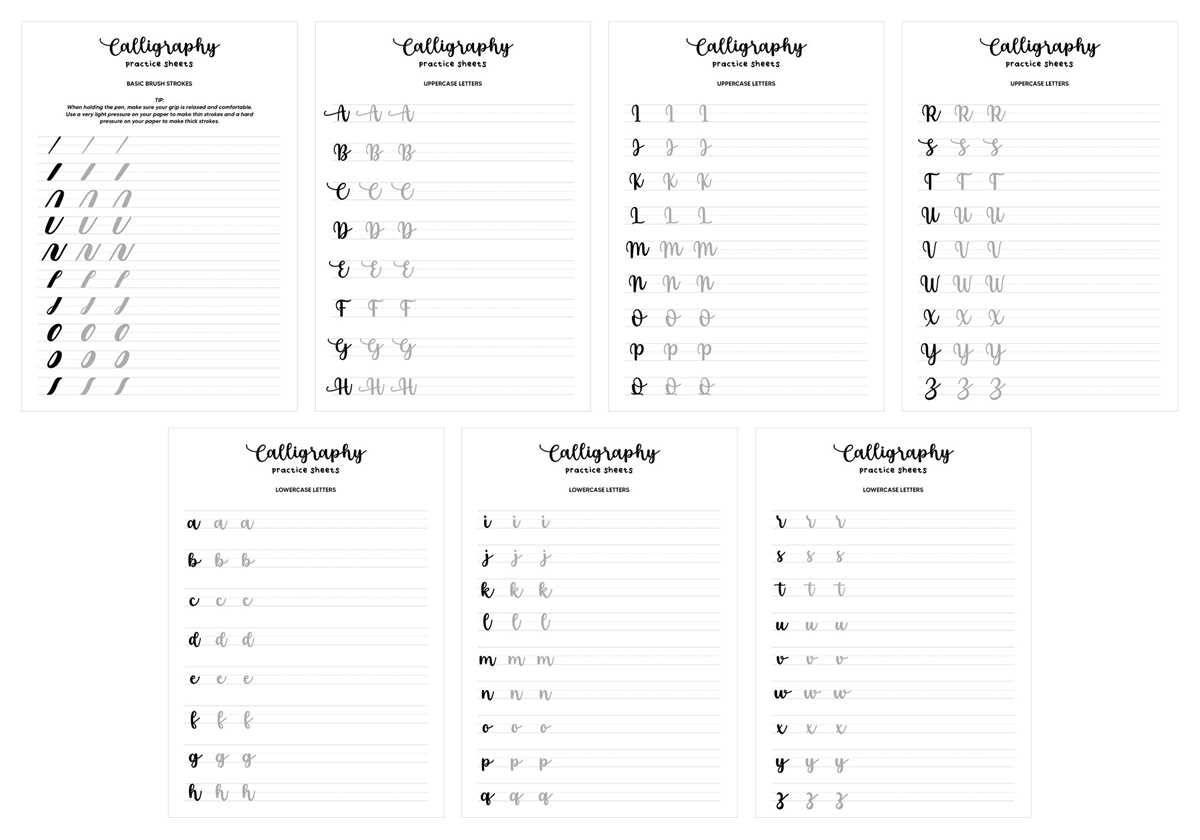
Begin by mastering basic strokes. These form the foundation of any design, helping you control the pen and build consistency in your writing. Focus on straight, curved, and diagonal lines. Practice each type repeatedly to gain fluidity and confidence.
Once comfortable with individual strokes, move on to combining them into simple letters. Start with basic alphabets and work through them methodically. Avoid rushing, as building strong letterforms ensures better results in the long term.
Incorporate proper spacing between each character. This will help maintain readability and visual appeal. Use a consistent guide, whether it’s a lined sheet or a dotted format, to ensure uniformity in spacing and alignment.
Make use of available templates to assist in forming correct letter shapes. These often include examples that showcase each letter’s movement, providing valuable insights into the flow and rhythm of writing.
To improve your precision, experiment with different tools like brushes, markers, and fountain pens. Each tool has its own way of handling, and practicing with them will expand your skills. Pay attention to how the pen interacts with the paper.
Gradually progress to more intricate scripts. Begin incorporating flourishes and stylistic elements once you feel confident with basic writing. This will add character to your design and let you express your creativity.
Consistency is key. Set aside time daily for practice, even if it’s just for a few minutes. Regular repetition will ensure steady progress and help refine your technique.
Don’t forget to review your work. Take time to compare your letters with reference guides, noting areas for improvement. Patience and perseverance will eventually yield impressive results.
How to Choose the Right Practice Sheets for Lettering
Start by selecting templates that match your current skill level. If you’re new, choose resources that focus on basic strokes and simple shapes. These will help you build a solid foundation before moving on to more advanced styles.
Look for guides that feature consistent and clear letterforms. Templates that show each letter with proper spacing, alignment, and proportions are crucial for developing correct technique. This will ensure that your writing maintains uniformity and legibility.
Consider the type of writing style you want to master. If you’re focused on a particular script, like cursive or modern design, find templates that reflect those styles specifically. This will allow you to directly apply your practice to your desired look.
Pay attention to the paper type and layout of the guides. Opt for designs that allow you to trace over lines or show the letter flow. Sheets with dotted or dashed lines can help guide your hand and keep strokes in the right direction.