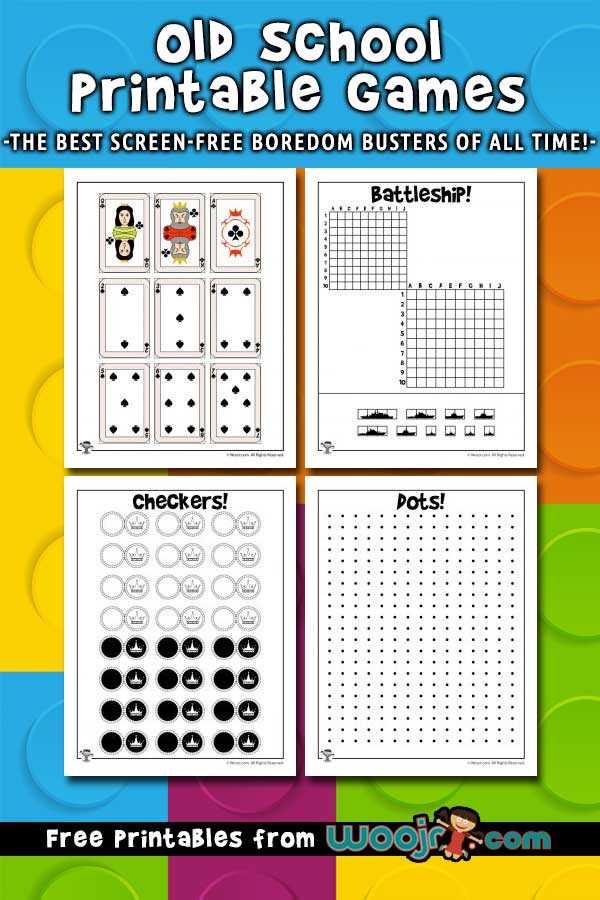
Download activity sheets in PDF format at 300 DPI and print them at actual size to keep text, grids, and puzzle lines sharp on A4 or US Letter paper. Choose black-and-white layouts to save ink and allow children to add their own colors.
Select tasks based on age group. Preschool learners benefit from simple matching cards, dot-to-dot drawings, and large-format bingo boards, while elementary students handle crosswords, math challenges, word searches, and logic puzzles with smaller text blocks.
Use 24 lb paper for single-use worksheets and 32 lb cardstock for reusable board activities. Laminate frequently used sheets and pair them with dry-erase markers to extend durability during classroom or party use.
Organize files into labeled folders such as puzzles, party activities, and educational worksheets. Store printed sets in zip bags with dice, tokens, or answer keys so materials remain ready for quick setup during lessons or rainy-day playtime.
Printable Games for Kids
Choose PDF activity sheets at 300 DPI and set your printer to 100% scale to keep grids, answer boxes, and puzzle lines sharp on A4 or US Letter paper. Black-and-white layouts reduce ink usage and allow children to customize designs with crayons or markers.
Select challenges based on age and skill level. Preschoolers handle matching cards, simple mazes, and large bingo boards with clear symbols, while elementary students engage with word searches, crosswords, math drills, and logic tasks that use smaller fonts and tighter spacing. Keep text size above 14 pt for early readers to improve clarity.
Print single-use worksheets on 24 lb paper and reusable board activities on 32 lb cardstock. Laminate frequently used sets and pair them with dry-erase markers to extend durability. Store complete activity packs in labeled envelopes with dice, tokens, and answer keys so materials stay organized and ready for classroom lessons, birthday parties, or rainy-day play sessions.
How to Choose Age Appropriate Printable Games for Preschool and Elementary Kids
Select activity sheets with large images, minimal text, and bold outlines for preschool learners aged 3–5. Matching pairs, simple mazes, tracing paths, and picture bingo boards work best when symbols measure at least 1–1.5 inches wide. Keep instructions under two short sentences and use fonts above 16 pt to support early recognition skills.
For elementary students aged 6–10, choose puzzles that require reading, counting, or logical thinking such as word searches with 8–12 vocabulary terms, crosswords with clear clues, math challenges using addition and subtraction within 100, and strategy board tasks with simple rule sets. Increase grid density gradually and keep font size between 12–14 pt for readability. Review each sheet to confirm instructions match grade-level abilities and avoid overly complex layouts that may cause frustration.